10 Email Marketing Platforms for Mattress Businesses
A Presidents' Day promotion on a queen hybrid goes out to the full list. The discount holds. Three weeks later the returns start, because buyers who never stood on a floor model didn't understand what a 2-inch transition layer does for the feel of the mattress. The sale looked healthy on the day and cost money by March.
Email is the cheapest way to close that gap before the purchase and the cheapest way to prevent it after. Retailers know it. In 2025, 78.76% of retail and ecommerce marketers reported using email as a marketing channel, according to MoEngage's cross-channel marketing research.
The platform you pick decides what you can do with the channel. A tool wired to your store and POS can fire a layer-comparison email when someone abandons a king hybrid. A tool that only batches newsletters sends the same blast to retail buyers, dealer accounts, and RSAs, then wonders why unsubscribes spike. Clean the list before you blame the creative, and use something built to sort customer emails automatically when one database spans consumers, dealers, and warranty contacts.
Here are ten platforms, judged on sleep-trial returns, floor-model promotions, dealer lists, and the long research window on hybrid and foam.
How These Email Marketing Platforms Were Judged
Every tool below answers the same four questions. Can it keep consumer and dealer lists apart, does it handle post-purchase and return flows, can you prove a campaign influenced a purchase, and what happens to the bill when the list reaches 40,000 names. None of them win all four.
1. Klaviyo
Klaviyo is the default for bedding brands selling direct. It builds a profile per customer and ties campaigns and flows to browsing, orders, and lifetime value, which is exactly the data a six-week mattress consideration cycle generates.
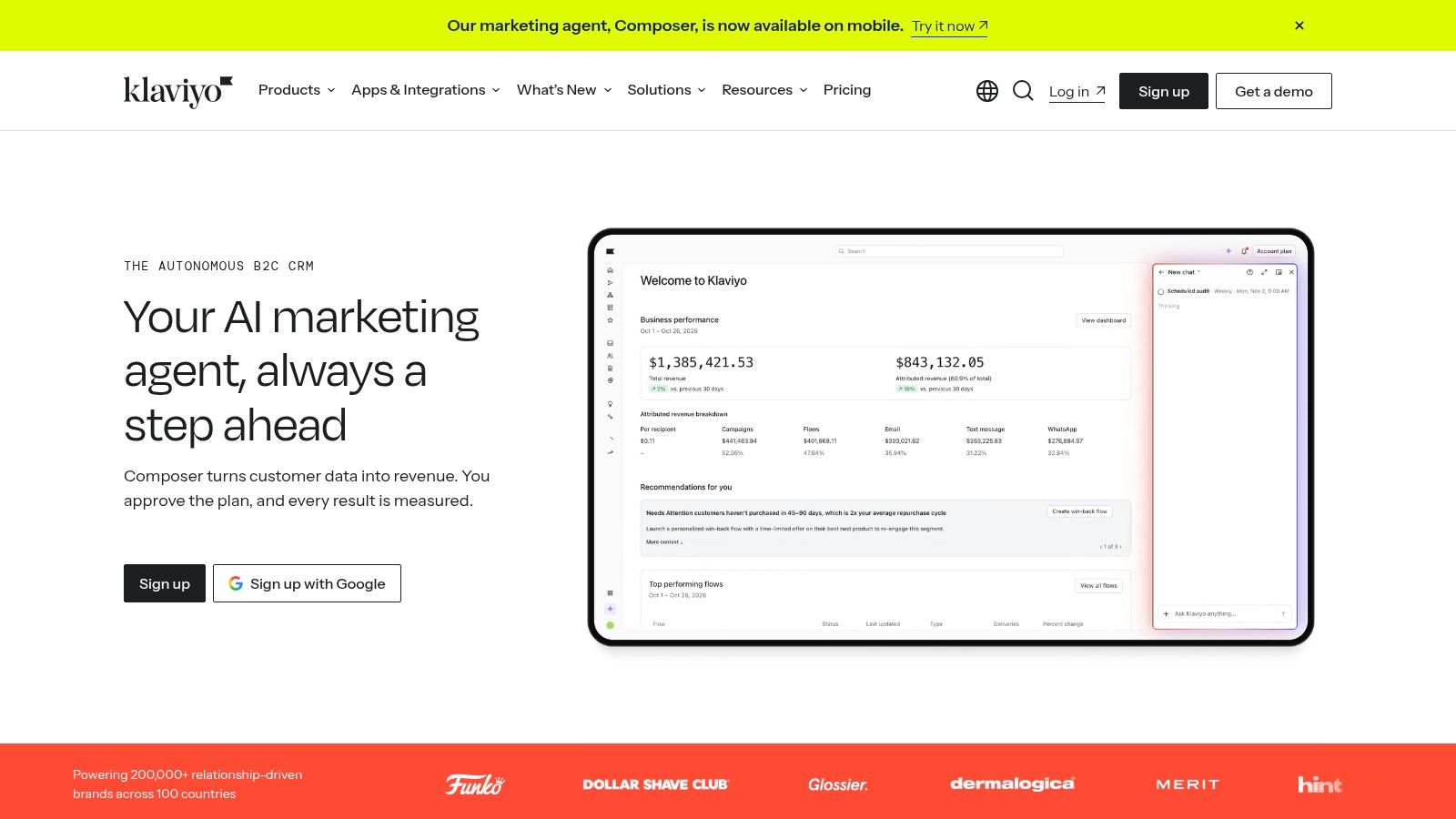
Behavior-based journeys carry the value. In a 2025 North American benchmark analysis covering 17.3 billion emails sent through a marketing platform, behavior-based and journey-based personalization produced the strongest combination of open rates, click-to-open rates, conversions, and unsubscribe outcomes, according to MoEngage's email marketing benchmarks. That's the machinery Klaviyo sells, and it's what a DTC brand needs when first visit to a $1,500 purchase runs six weeks.
Where Klaviyo Earns Its Keep
Layer education without resending: A browse trigger on a hybrid profile sends the cutaway render and a coil-count comparison, not another 10% off.
Sleep-trial follow-up: Tag the purchase date and send the break-in guidance at day 14, not day one, when the buyer is still sleeping on it in the living room.
Dealer lists stay separate: Keep retail consumers and dealer accounts in different flows so a floor-model promo never lands in a buyer's inbox.
Trade-off: pricing scales with profiles, so a 40,000-contact retailer list gets expensive. If you send four newsletters a month and nothing else, you're paying for automation you never build. Start with our guide to email marketing for retailers to decide which flows come first, then look at Klaviyo.
2. Mailchimp
Mailchimp remains the easiest place to send a good-looking email without a designer. A regional retailer with 4,000 names, an event calendar, and one person running marketing can be live in an afternoon.
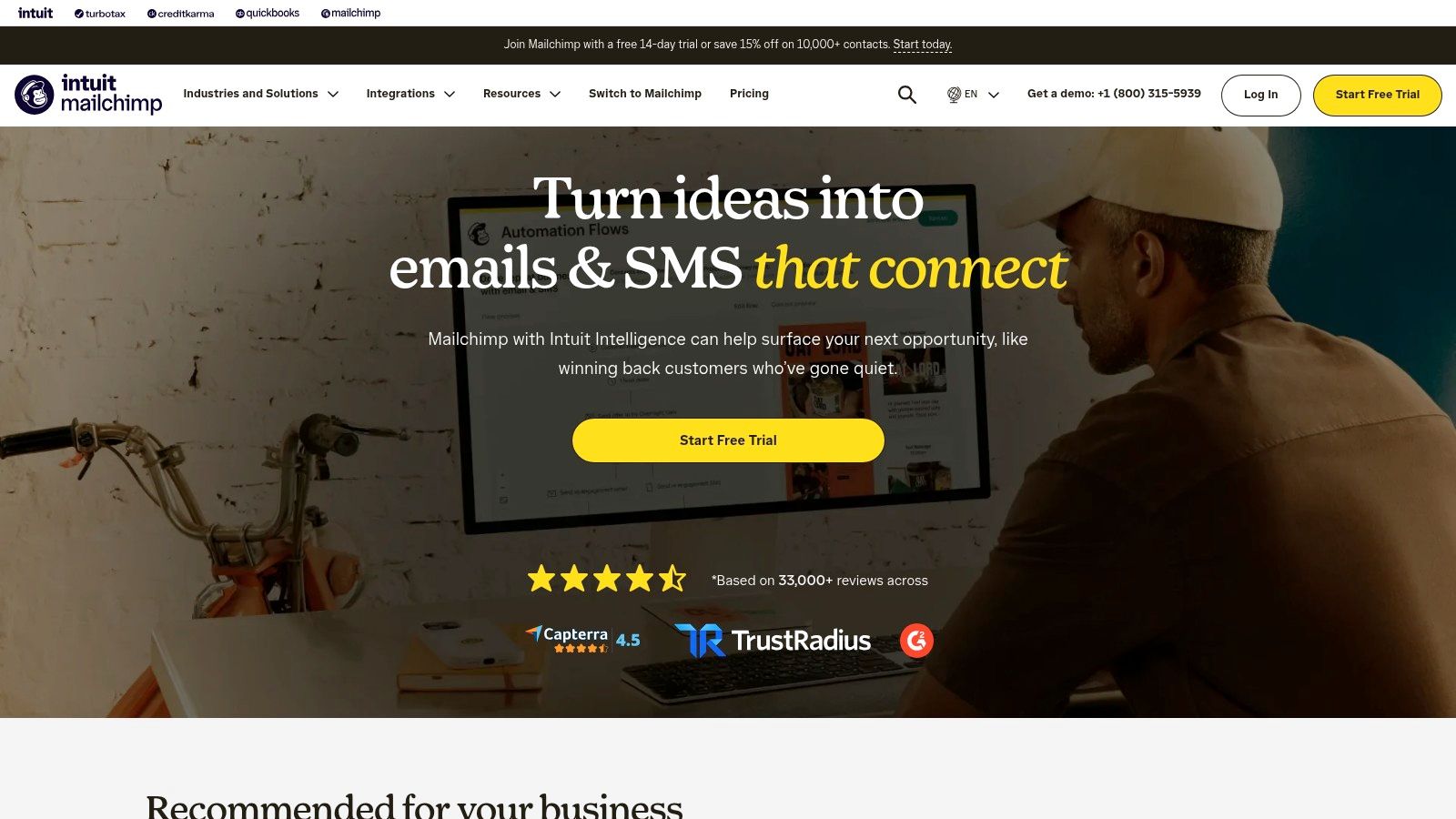
Newsletters are real work, and open rates still tell you whether subject lines land. In 2024, 67.1% of surveyed marketers reported an average email open rate above 20%, according to Mailmodo's State of Email 2024 survey. Treat that as a rough floor for a healthy consumer list, not a target, because privacy features on Apple Mail inflate opens across segments you can't isolate.
Where it fits bedding:
Floor-model and event promos: Signup forms at the showroom counter, a landing page for a "king for the price of a queen" weekend, and scheduled sends while the store is closed.
Dealer and consumer separation: Tags and groups keep RSA updates out of the consumer list, provided someone enforces the rule monthly.
Reporting the owner can read: Campaign dashboards make sense to a store owner who doesn't live inside marketing software.
Trade-off: automation is thinner than the commerce-first tools, and pricing and sending allowances move with contact count and plan tier, so a growing list means checking the bill each year. Fine for newsletters, cramped for a full sleep-trial lifecycle. Mailchimp.
3. Brevo
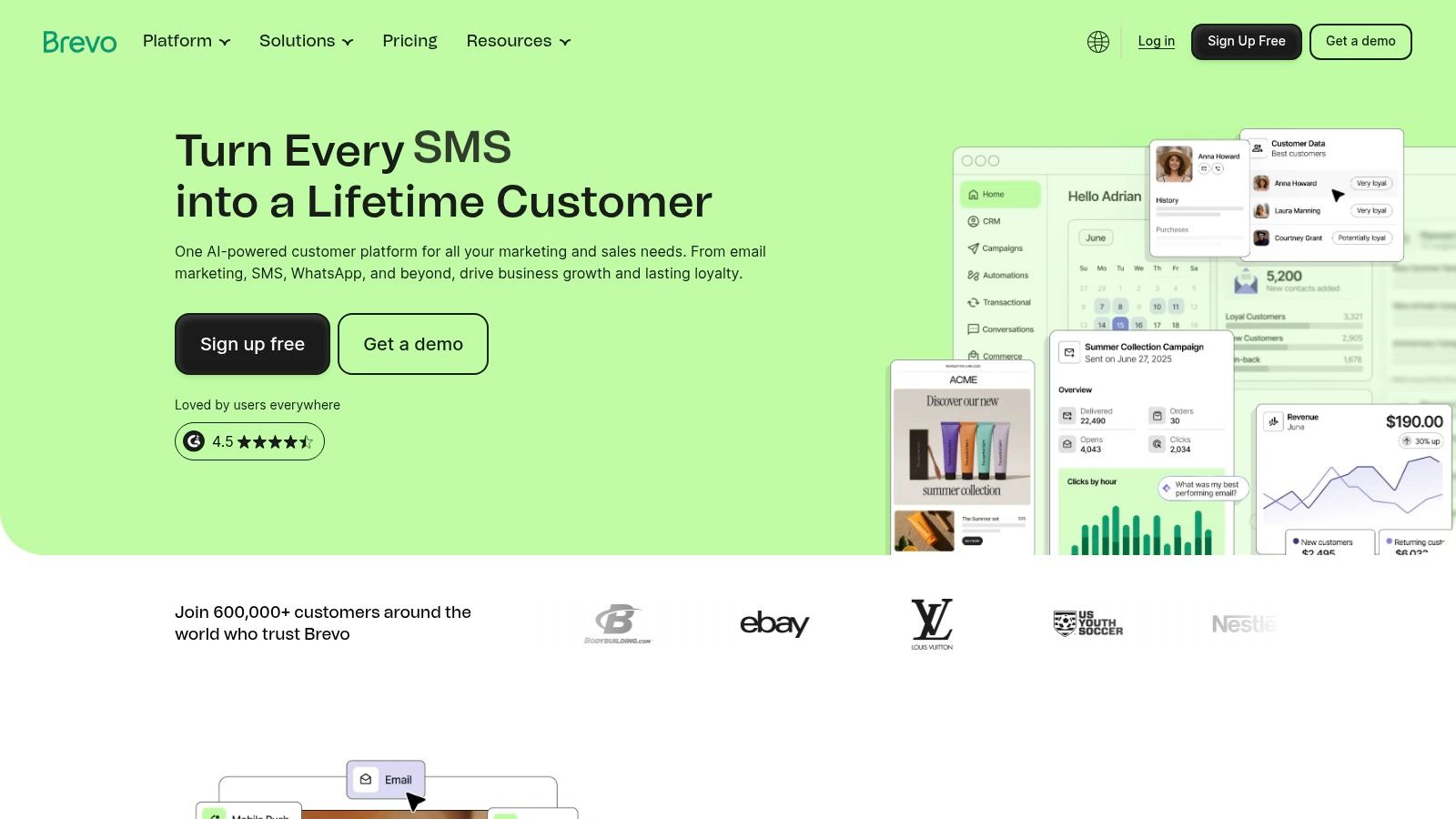
Brevo prices on send volume more than contact count, which suits a manufacturer sitting on a large dealer and warranty database that mails twice a month. Transactional order and warranty messages live in the same account as campaigns, so suppression rules apply once.
What Delivery Data Says About Your List
The DMA's 2025 email benchmarking report, drawn from anonymized data across seven email service providers, put the 2024 overall delivery rate at 98.0%, rising to 99.2% for business-to-consumer email, with open rates at 35.9% and unique click rates at 2.3%. Read the click number twice. Two people in a hundred click, which means a floor-model promo earns its keep on segmentation, not on the send button.
One suppression list: Unsubscribes from campaigns and transactional sends should land in the same place.
SMS and WhatsApp as add-ons: Useful for showroom appointment reminders, less so if you only need email.
Free tier: 300 sends a day, enough to test a welcome flow before anyone signs an invoice.
A delivery rate that slides below benchmark is a list problem before it's a creative problem. Check bounces and authentication, then look at the oldest segment.
Trade-off: templates are plainer than the design-led tools, and advanced automation sits on higher tiers. Brevo. Our walkthrough on how to improve email deliverability covers the authentication steps to run before your next send.
4. ActiveCampaign
ActiveCampaign is the tool to point a manufacturer at when one list holds retail buyers, independent dealers, and sales reps who each need a different sequence. Automation is the product, not a side feature.
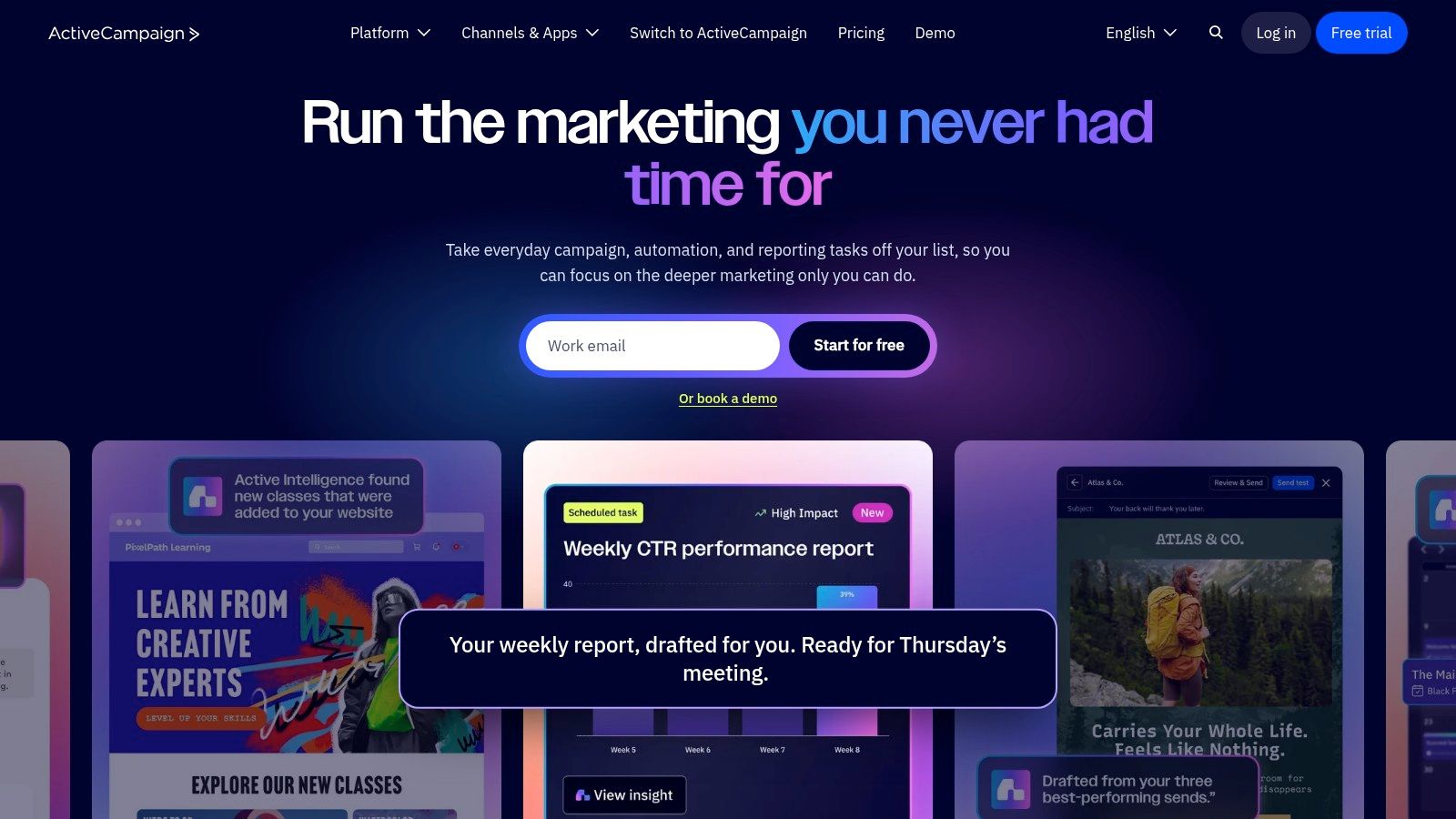
The payback math explains the budget line. Marketers reported an average return of $36 for every $1 invested in email in 2020, against $42 in 2019, still roughly a 3,600% return, according to industry reporting on Litmus figures. The same reporting cites a Statista estimate that the global email marketing market was worth $7.5 billion in 2020, projected to reach $17.9 billion by 2027. Money follows workflow, not templates.
Where it earns the setup time:
Dealer onboarding: A new account gets the spec sheet, the floor-model order form, and co-op advertising rules in a sequence with defined exits.
Rep follow-up: Website visits and email clicks score a prospect, and a rep gets a task when a dealer opens the spring program three times.
Branching by category: Hybrid, foam, and adjustable base interest trigger different content without three separate lists.
Trade-off: somebody has to build it. Budget a week for the first real workflow, and expect pricing to climb with contact volume and feature tier. ActiveCampaign. If you're mapping sequences from a blank canvas, start with email marketing drip campaigns.
5. Constant Contact
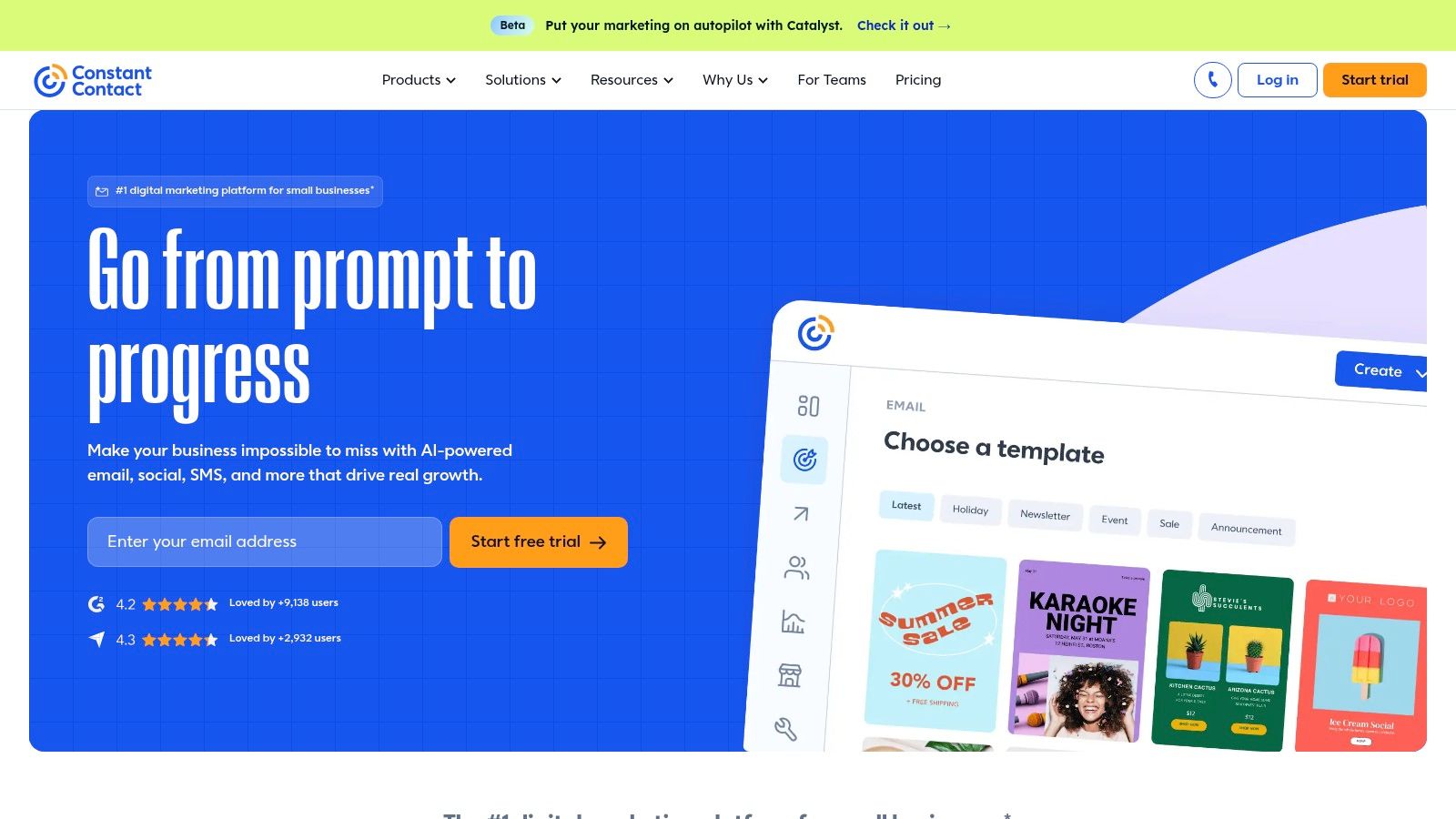
For a single-store retailer or a small regional chain, Constant Contact does the job without a marketing hire. Campaign creation is forgiving, the mobile app lets an owner schedule a weekend promo from the sales floor, and support answers the phone.
Compliance deserves as much attention as design. The FTC's CAN-SPAM compliance guide requires accurate headers, no deceptive subject lines, a clear opt-out, and honored requests within 10 business days, with a civil penalty of up to $53,088 per violating email. For a retailer sending Presidents' Day, Memorial Day, and Labor Day offers, that's exposure per email, not per campaign.
The Small-Retailer Checklist
Subject lines: "Save 20% on queen hybrids" is fine. "Your order is ready" on a promo is a deception problem.
Opt-out that works: Test it quarterly with a real address, not just at launch.
Store-level lists: Keep each location's list separate so an unsubscribed customer doesn't reappear through a second store's import.
Trade-off: no permanent free plan, monthly send allowances depend on plan and contact count, and automation is basic until you move up a tier. Constant Contact.
6. MailerLite
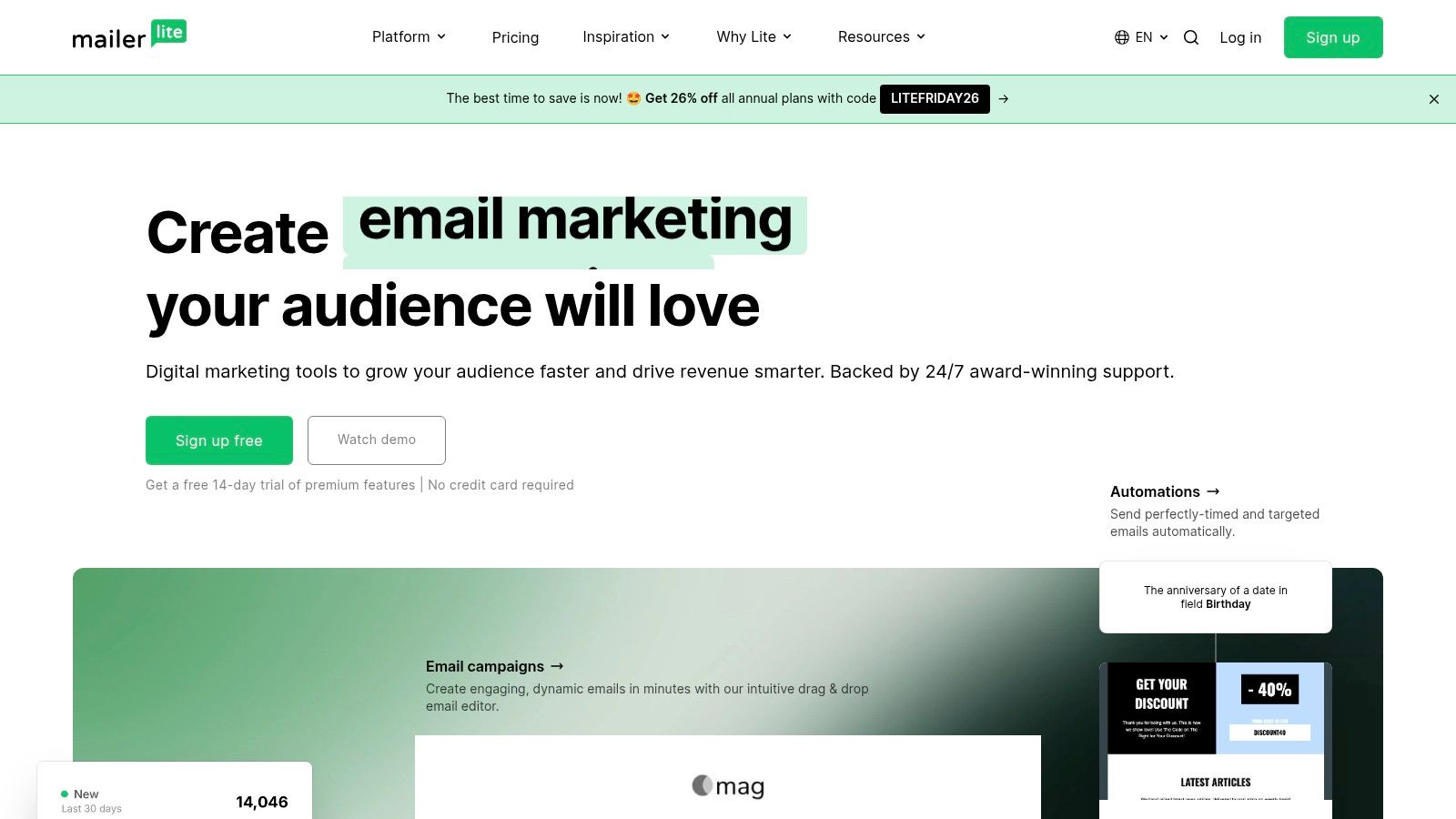
MailerLite fits the sleep startup with a landing page, a growing list, and no budget for a suite. Forms, landing pages, automation, and digital product sales share one account, and pricing tracks active subscribers.
Its real argument is the channel itself. The Radicati Group's email statistics report put worldwide email users above 4.1 billion in 2021, projected to pass 4.5 billion by the end of 2025, with daily traffic rising from 319.6 billion messages in 2021 to a projected 376.4 billion in 2025. A startup doesn't need a niche channel. It needs discipline inside a crowded one.
Launch sequencing: A new pillow or topper gets a waitlist form, a landing page, and a three-email launch flow.
Education before product: Comfort, materials, and sleep-position content builds a list while the product page is still in design review.
Cheap to be wrong: Swapping a template or rebuilding a form costs hours, not a replatform.
Buying rule: if your list is under 5,000 names and you run fewer than five flows, choose the tool you'll actually open on a Tuesday over the one with the longest feature page.
Trade-off: reporting and branching thin out once you need cohort analysis or holdout tests, and pricing moves as the subscriber list grows. MailerLite.
7. HubSpot Marketing Hub
HubSpot makes sense when email is one step in a sales process, which describes most mattress manufacturers selling through dealers, plus a good number of component and textile suppliers working the same accounts for years.
Email sits next to the CRM record. When a dealer's buyer changes, or an account goes quiet after a showroom visit, the contact history already lives beside the campaign that touched them.
Consent Is a Manufacturer Problem Too
UK rules require consent for unsolicited marketing email to be freely given, specific, informed, and unambiguous, with the sender identified and the consent request kept separate from unrelated terms, per the ICO's guidance on the PECR email marketing rules. That guidance is equally blunt about ownership: using a bulk-email platform doesn't transfer legal responsibility to the platform.
That matters where bedding brands collect data:
Trade-show badge scans: A scanned badge is not automatic permission for promotional email.
Dealer portal sign-ups: Portal access is not marketing consent, so capture the second one separately.
Quote and sample requests: Add a marketing permission checkbox to the form and state the purpose plainly.
Trade-off: costs rise sharply at higher tiers, contact rules need review, and the platform is oversized if you only send newsletters. HubSpot Marketing Hub.
8. Omnisend
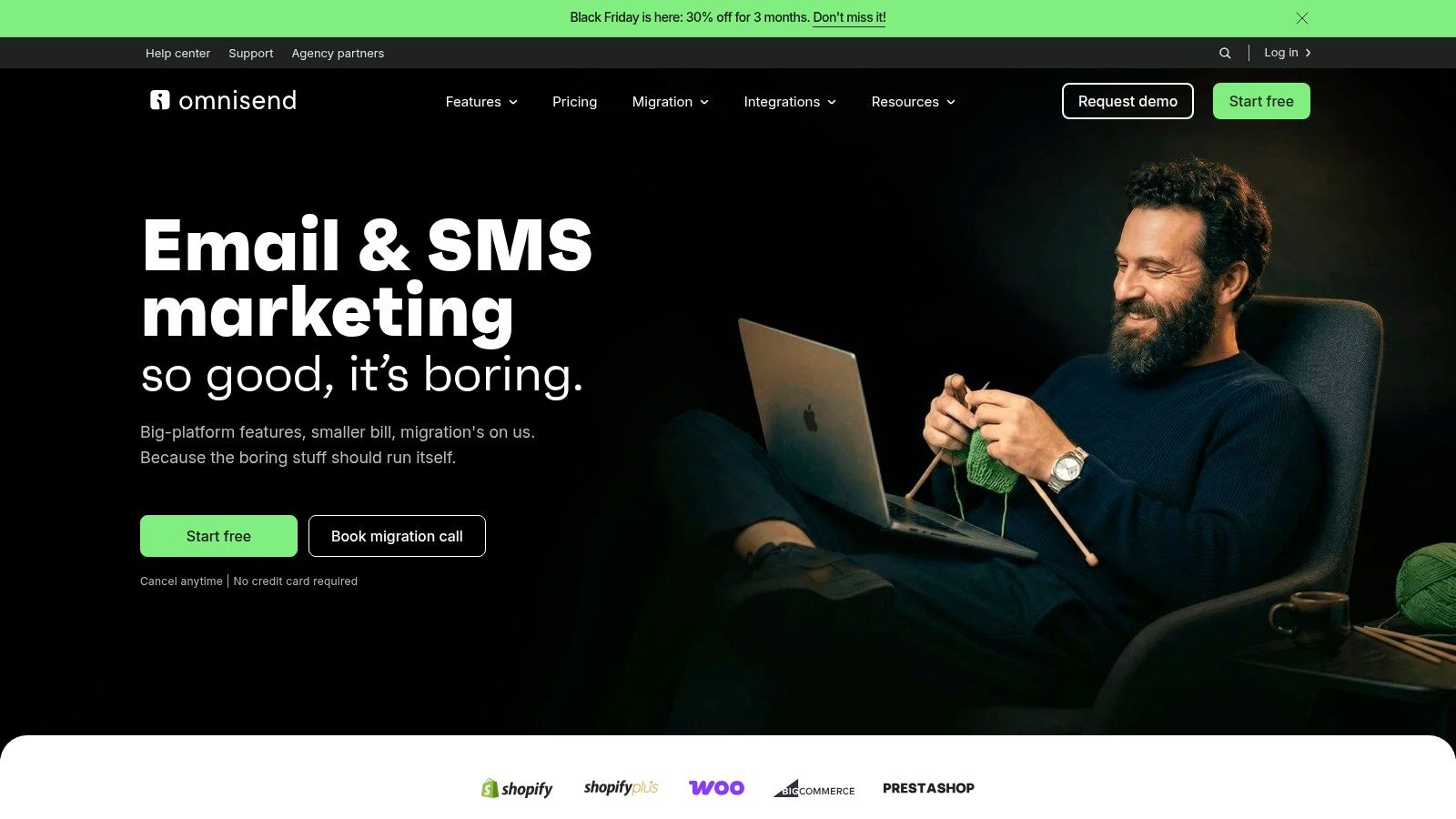
Omnisend is built for stores, so a DTC bedding brand on Shopify or BigCommerce gets abandoned-cart, browse-abandon, and post-purchase flows without assembling them from parts. Channel mixing is the pitch: email plus web push, with SMS depending on plan.
Suppression is the underrated part. The FTC has treated missing opt-out functionality as an enforcement matter, and its CAN-SPAM rule notice records Experian Consumer Services agreeing to pay a $650,000 civil penalty in a settlement involving marketing emails sent without a required opt-out method. The same rule bars sending to an opted-out recipient after the 10-business-day processing window. For a store, that means the suppression list has to reach every flow, including the cart recovery you built last spring.
Three checks before you commit:
Suppression sync: Unsubscribe in a campaign, then confirm the post-purchase flow skips that address.
Return-driven branch: Sleep-trial returns need their own path that pauses promotional sends while the return is open.
Catalog logic: A flow recommending a mattress to someone who bought one last month wastes a send and reads as noise.
Trade-off: pricing climbs with contact count, SMS terms shift with plan and subscription timing, and none of it matters if you don't sell online. Omnisend.
9. GetResponse
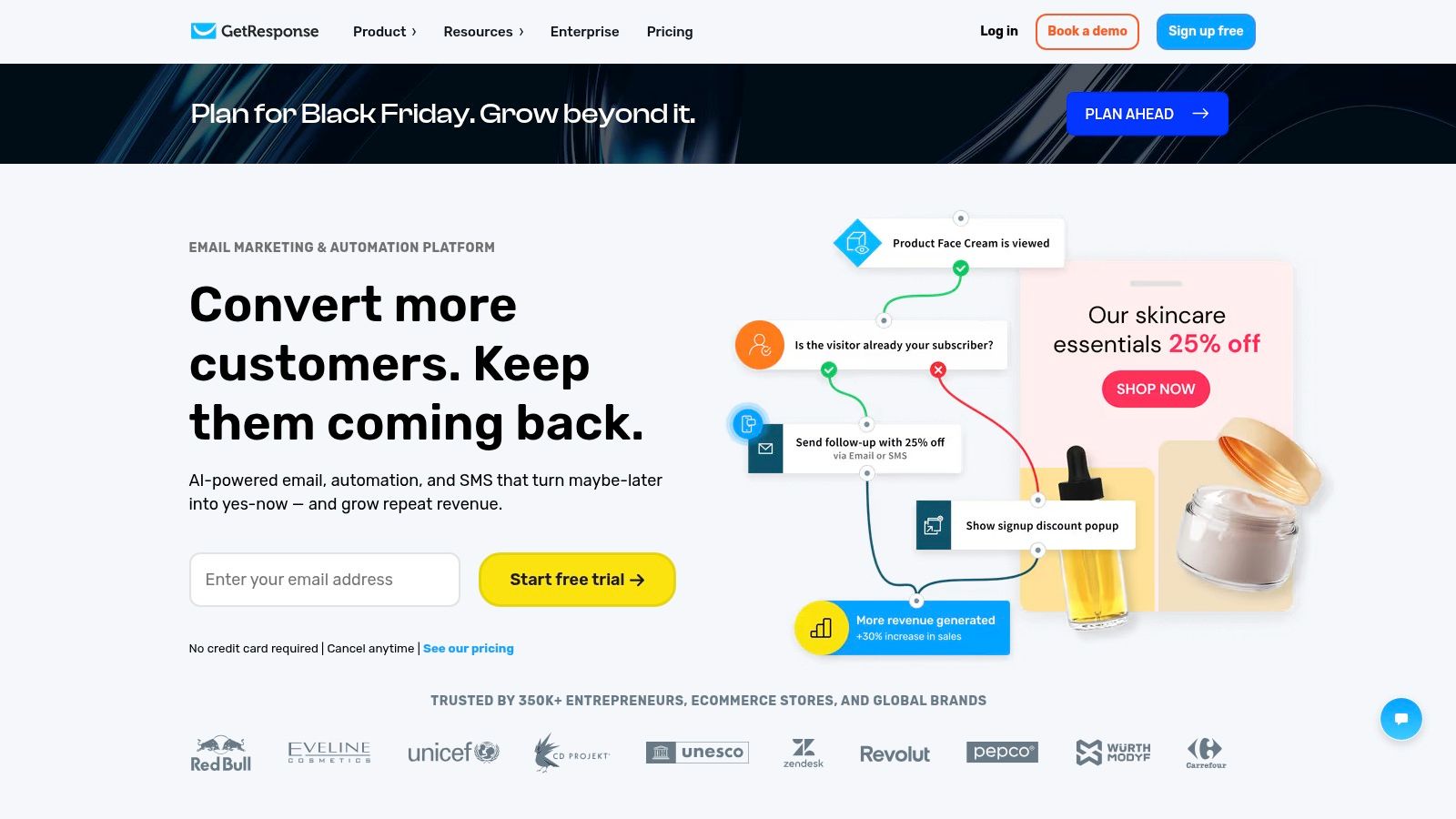
GetResponse bundles campaigns, automation, landing pages, and webinar hosting. The webinar piece is more useful for bedding than it sounds: a "how to spec a hybrid" session for RSAs, or a dealer briefing on the spring program, runs in the same tool that sends the follow-up.
Accessibility is where template libraries often fail. An analysis of more than 443,000 emails found 99.89% contained issues rated serious or critical, with missing language attributes, direction attributes, and presentation roles among the common failures, according to Knak's analysis of email accessibility and AI. Bedding campaigns lean on cutaway renders, layer diagrams, and comparison charts, which is exactly the content that breaks for a screen reader when the alt text reads "image1."
Alt text with information in it: "Cross-section of a 13-inch hybrid showing 8-inch pocketed coil unit and 2-inch transition foam" beats a product name alone.
Logical heading order: One H1 per email, H2s for sections. Editors that let you drag a heading block anywhere will produce nonsense for assistive tech.
Dark mode and mobile previews: Check every template both ways before launch, not after the complaint.
Tooling catches the mechanical failures, not the contextual ones. Alt text and hierarchy still need a person who knows how the mattress is built.
Trade-off: pricing depends on list size, plan, and billing choice, and advanced features sit on higher tiers. GetResponse.
10. Campaign Monitor
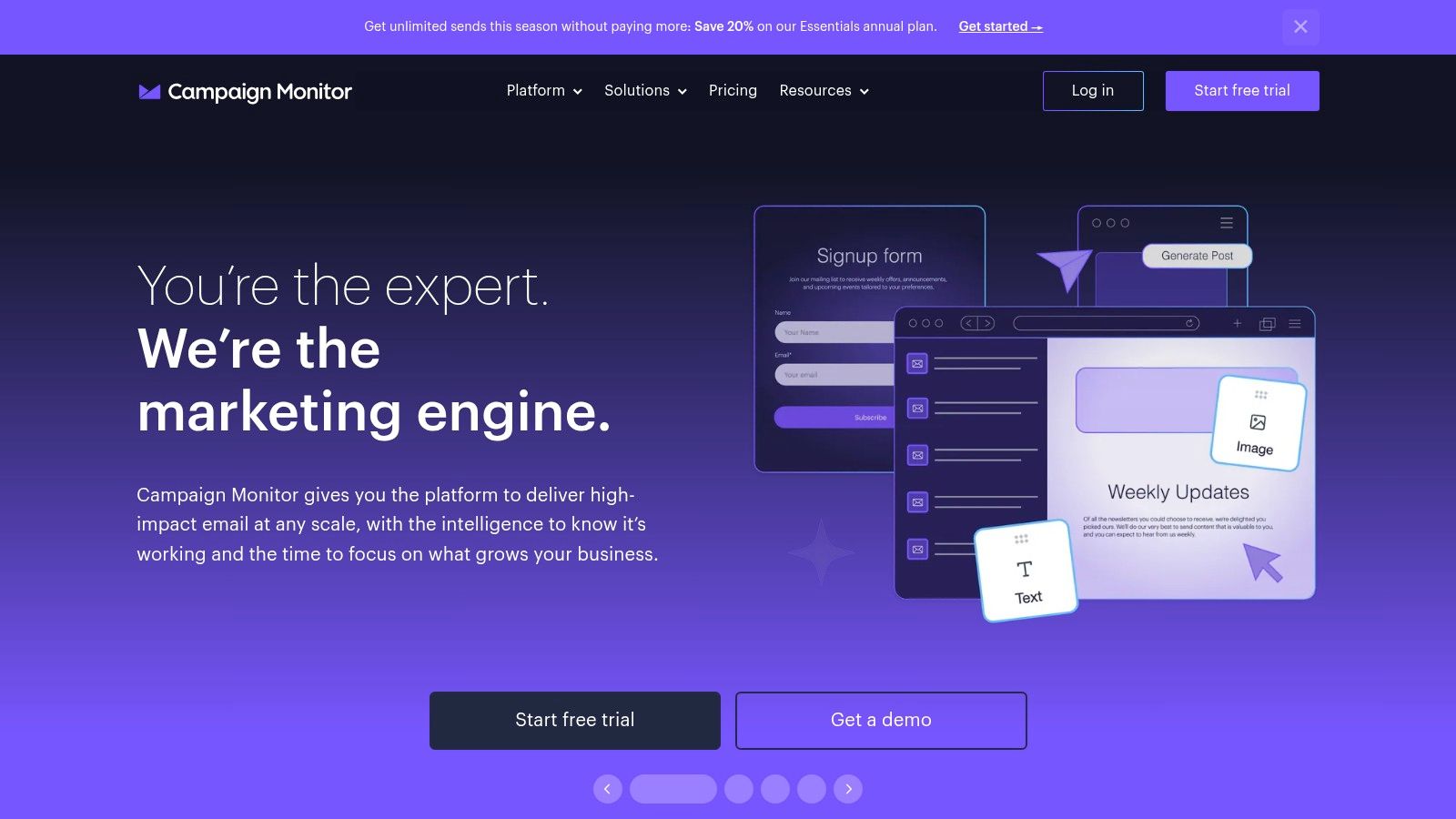
Campaign Monitor is a design-and-delivery tool, and that focus shows in template control, editing permissions, and scheduling across time zones. For a bedding brand with a strict look book and dealer co-branding rules, approval permissions matter more than a feature list.
Measure What Opens Can't Tell You
Privacy features interfere with tracking pixels, so open rate is the least dependable number in your dashboard. The 2025 Road to Inbox deliverability survey found 57.4% of respondents monitored open and click rates, 53.1% monitored delivery rate, and only 39.5% monitored unsubscribe rate. The metric skipped most often is the one that predicts list decay.
Build reporting around signals that survive privacy changes:
Click-to-site and page depth: Which product pages a retailer's customers reach after a floor-model email.
Store-locator interactions: A stronger purchase signal than an open for anything promoting a showroom.
Quote requests and sample orders: For manufacturers, the conversion event is a form submission, not a click.
Cohort and holdout comparison: A segment that gets no email, measured against one that does, answers what last-click attribution can't.
Trade-off: contact-count pricing, fewer native ecommerce workflows than Klaviyo or Omnisend, and some capability depends on integrations. Campaign Monitor. If brand consistency across dealer and consumer sends is the sticking point, read email marketing design.
How the 10 platforms compare for bedding businesses
Two columns drive most of the decision here: pricing basis and ecommerce depth. A bedding brand carrying a large list of sleep-trial leads pays differently on per-contact billing than on per-send billing, and the gap widens once showroom and dealer lists get folded in.
Read the free-option column as a test budget, not a long-term plan.
Item | Free option | Pricing basis | Best fit for bedding businesses | Ecommerce depth |
|---|---|---|---|---|
Klaviyo | Free plan available | Profile count and sending volume | Mattress retailers and bedding brands using behavior-based email and SMS | High: commerce data, shopping behavior, and sales-linked automations |
Mailchimp | Limited free plan | Audience size and plan | Businesses sending newsletters, promotions, and standard automated campaigns | Moderate: ecommerce integrations and marketing automation |
Brevo | Free plan with up to 300 email sends per day | Email volume; some tiers also limit contact storage | Businesses with sizable lists that send less frequently or use several channels | Moderate: transactional messaging and marketing automation |
ActiveCampaign | 14-day trial | Contact volume and feature needs | Businesses needing detailed customer journeys and sales follow-up | Moderate: behavioral automation and CRM, with multichannel features depending on plan |
Constant Contact | Free trial; no permanent free plan | Plan, contact count, and email allowance | Local mattress retailers promoting store offers, events, and products | Basic to moderate: campaign tools, with more automation on higher tiers |
MailerLite | Free plan available | Active subscriber count and add-ons | Smaller bedding businesses growing an audience and sending regular updates | Moderate: forms, landing pages, automation, and online-selling tools |
HubSpot Marketing Hub | Free tools available | Paid tier and plan limits | Manufacturers and B2B bedding businesses connecting lead generation with CRM | Moderate: CRM, forms, landing pages, and expanding automation |
Omnisend | Free plan available | Contact count and plan | Online mattress and bedding retailers linking customer messages to store activity | High: ecommerce campaigns, store integrations, and shopping-related automation |
GetResponse | Free plan plus a trial of paid features | List size, plan, and billing choice | Businesses combining email campaigns with lead capture and landing pages | Moderate: campaign automation and online-business features vary by plan |
Campaign Monitor | No permanent free plan; pay-per-campaign billing | Contact count and selected tier | Bedding businesses prioritizing consistent branded campaigns and dealer updates | Basic to moderate: integrations available, but less ecommerce-focused |
Trial windows rarely outlast a long consideration cycle. Treat them as evaluation periods for deliverability, automation setup, and how cleanly each platform handles a return-triggered suppression, not as a substitute for the plan you will pay for.
Matching Your Platform to Your Sales Cycle
Start with how your customers buy. A feature comparison can't tell you whether a 100-night trial or a dealer floor-model order drives your revenue, and that answer reshapes the shortlist before you open a pricing page.
Direct-to-consumer bedding brands. Cart abandonment, sleep-trial returns, and post-purchase education are the whole job, and they need commerce-level data attached to every profile. Klaviyo is the usual answer, with Omnisend as the leaner option if your catalog and flows stay simple. Whichever you pick, build a return branch that pauses promotional sends the moment a trial turns into a return. A discount email landing mid-return reads as careless, and careless costs you the second purchase.
Dealer-driven manufacturers. Your list is accounts and reps. ActiveCampaign and HubSpot fit better because the contact record belongs next to the sales conversation: a dealer opening a spring program email should produce a task for a rep, which is what a CRM-linked platform does that a pure email tool can't.
Brick-and-mortar retailers. Two jobs: drive showroom traffic and keep the local list warm between events. Constant Contact or Mailchimp handles both without a marketing hire, and live support matters when the person sending is also covering the floor on a Saturday.
Sleep product startups. One product, a small list, no budget for a suite. MailerLite or Brevo gets you sending and testing without annual pricing you can't justify.
Then test before you sign. Give two shortlisted platforms the same real promotion, the same segment, and the same creative. Compare clicks, store-locator opens, quote requests, and unsubscribe rate; opens won't survive the comparison. Whatever you pick, build the list with intent. A mattress purchase runs on a research window measured in weeks, a dealer relationship runs for years, and one database holding both without separation will eventually send a Memorial Day consumer discount to your largest account.
Bedhead Marketing helps mattress brands, bedding manufacturers, and retailers grow through digital marketing, eCommerce strategy, and product visualization. If your email program depends on imagery that sells the layer build, with cutaways, layer diagrams, and room scenes that show scale on a phone screen, that is a conversation worth having before you write another campaign.
Bedhead Marketing works with mattress manufacturers, retailers, and emerging bedding businesses, helping them run email marketing alongside digital marketing, eCommerce strategy, and product visualization so the creative and the campaign come from the same place. Visit BEDHEAD to talk through your email program.