Website Development and SEO Services for Mattress Brands
The popular advice is to build a beautiful mattress website first and “do SEO later.” That approach fails more often than mattress brands admit. A polished digital showroom can't attract organic visitors if its product architecture is unclear, and it won't convert mobile shoppers if high-resolution room scenes, interactive layer visuals, or comparison tools make the page slow and unstable.
Website development and SEO services need to work as one commercial system for bedding brands. Search visibility brings qualified buyers to the site, while product education, visualization, technical performance, and retailer pathways help those buyers choose between memory foam, hybrid mattresses, adjustable bases, and different comfort levels. Organic search remains a major traffic source in established markets, accounting for 53% of website traffic, compared with around 15% for paid search and near 5% for social media, according to BrightEdge's organic traffic research.
That matters even more for a category where shoppers research extensively before visiting a showroom or placing an order. A mattress page must explain foam layers, ticking, quilt construction, gusset details, edge support, and warranty terms without overwhelming the buyer. The code underneath must make those details accessible to search engines, AI assistants, and people using phones.
Why Mattress Brands Need Integrated Web Development and SEO
A visually impressive mattress website doesn't automatically rank, and ranking doesn't automatically produce profitable sales. The strongest bedding platforms connect information architecture, technical SEO, product storytelling, and conversion design before development begins.
A manufacturer may have excellent hybrid construction and a meaningful comfort story, yet bury that information inside a JavaScript configurator that search crawlers struggle to interpret. A retailer may invest in premium lifestyle photography, then serve oversized hero images that delay the product page on mobile. In both cases, the problem isn't a lack of marketing effort. It's a disconnect between the brand story and the platform delivering it.
Mattress sites also have a more complicated sales journey than many product categories. Some visitors want to buy online. Others are comparing models before visiting a brick-and-mortar store. A third group is researching a specific problem, such as pressure relief, motion isolation, a cooling cover, or an appropriate mattress for an adjustable base.
The practical test: every important product claim should be easy for a shopper to understand, easy for a crawler to find, and easy for a sales associate to reinforce.
A brand shouldn't publish disconnected articles to create volume. topical authority for mattress websites becomes useful. Its site should organize related knowledge around sleep needs, constructions, materials, sizing, care, warranties, and buying decisions, with clear links back to relevant product and retailer pages.
The commercial case for this integration is substantial. The global SEO services market was estimated at USD 74.9 billion in 2025, with a projection of USD 83.98 billion in 2026 and USD 148.86 billion by 2031, according to Mordor Intelligence's SEO market analysis. Those projections don't guarantee results for an individual mattress brand, but they show that search infrastructure has become a core business investment rather than a last-minute promotional add-on.
A mattress website should therefore be planned around three connected questions:
Can search engines discover it? Product categories, model pages, educational content, and store locations need a logical path through the site.
Can shoppers understand it? A Digibun showing foam layers may communicate construction faster than several paragraphs of copy.
Can the platform move people forward? Calls to find a retailer, compare models, request a quote, or add a mattress to cart must remain visible and usable.
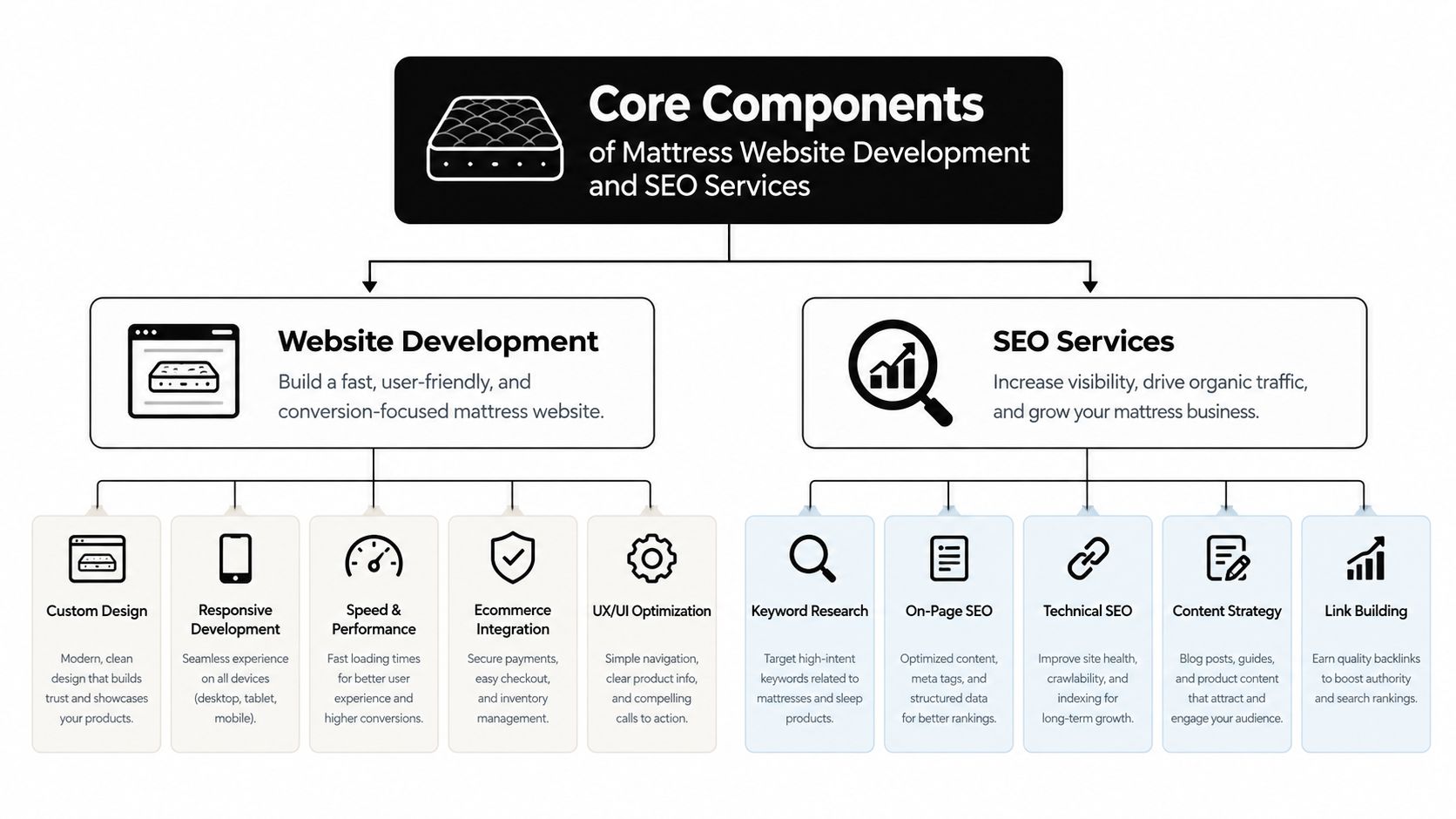
Core Components of Mattress Website Development and SEO Services
A complete service package for a bedding brand should cover more than a visual redesign and keyword list. It should connect product data, content, code, imagery, analytics, and sales objectives.
Product visualization that supports performance
Mattresses are difficult to sell online because much of their value is hidden. A shopper can't feel the quilt, inspect the gusset, or see how a hybrid mattress combines coils and foam through a standard product photograph.
Useful 3D assets include:
Digibuns: Layered visuals that reveal the internal construction, such as comfort foam, transition foam, support cores, and coil units.
Silhouettes: Clean product images that make model comparisons easier and give category pages a consistent visual language.
Room Scenes: Lifestyle renders that show scale, bedroom context, and styling without requiring a new photoshoot for every variation.
The technical requirement is simple but often mishandled. These assets should enhance the page rather than block it. Developers need responsive image delivery, defined image dimensions, descriptive alternative text, and sensible loading behavior so a dramatic room scene doesn't delay the product information a shopper came to read.
Semantic product content
Semantic HTML helps organize information according to its meaning, not just its appearance. Product names, headings, specifications, prices, availability, reviews, and FAQs should have clear structural relationships.
That structure also helps AI systems interpret a product's identity and purpose. A page that consistently describes a mattress as a medium-feel hybrid with a quilted ticking, reinforced edge, and compatible foundation gives machines a clearer entity to understand than a page built around vague phrases such as “premium sleep technology.”
Search, UX, and measurement
The complete system should include:
Category architecture for mattress types, firmness levels, sizes, sleep positions, and shopping needs.
Product detail page templates that support construction education, comparison, reviews, retailer discovery, and ecommerce actions.
Technical SEO controls for metadata, canonicals, redirects, structured data, sitemaps, and indexation.
Content strategy that answers real buyer questions and connects informational pages to commercial destinations.
Analytics implementation that separates organic discovery, product engagement, retailer clicks, lead forms, and transactions.
A useful starting point for planning templates and page modules is this mattress website template guide. The right template isn't the one with the most visual effects. It's the one that gives every model enough space to explain its construction while keeping the buying path clear.
How Technical SEO and Site Architecture Drive Bedding Sales
Technical SEO determines whether a mattress catalog can be found, understood, and presented without friction. The work starts in the development environment, not after the new site has launched.
Build around crawlable product paths
Google recommends reducing duplicate URLs, using descriptive paths, applying canonical tags to indexable pages, and making pages reachable through standard anchor links and XML sitemaps, as explained in its ecommerce URL structure guidance.
For a bedding catalog, that means a structure such as a clear mattress category leading to a specific model page is generally easier to interpret than a collection of parameter-heavy URLs generated by filters. Size and firmness selectors can be useful for shoppers, but they shouldn't create an uncontrolled set of near-identical pages that compete with the primary product URL.
A manufacturer with dealer and retailer pathways needs the same discipline. A model page should explain the product once, then direct visitors to appropriate purchase options. If nearly identical copy appears across many dealer pages, canonical and indexation decisions become important. If local showroom pages matter, each location needs distinct and useful information, not a thin variation of the same template.
Treat Core Web Vitals as design constraints
Google's recommended Core Web Vitals thresholds are LCP at 2.5 seconds or less, INP under 200 milliseconds, and CLS under 0.1, according to BigCommerce's technical SEO guidance.
For mattress websites, the common pressure points are predictable:
A large room scene or hero image can delay Largest Contentful Paint.
A heavy product configurator or third-party script can hurt Interaction to Next Paint.
Late-loading reviews, badges, comparison tables, or 3D components can create Cumulative Layout Shift.
The solution isn't to remove every rich asset. It's to prioritize the first useful experience. Reserve space for dynamic components, load below-the-fold media later, compress images appropriately, and avoid adding scripts that don't support discovery, education, or conversion.
Make architecture serve the buying decision
A shopper comparing two hybrids shouldn't have to return to the main navigation after reading one product page. Internal links should connect related models, construction guides, firmness explanations, warranty content, and retailer options.
This is especially important for high-consideration purchases. A good architecture lets a visitor move from “best mattress for side sleepers” to a sleep-position guide, from there to a relevant medium-feel model, and then to a store locator or cart. SEO creates the entry point, but architecture determines whether the visit becomes useful.
The Conversion Impact of Speed and Mobile Optimization
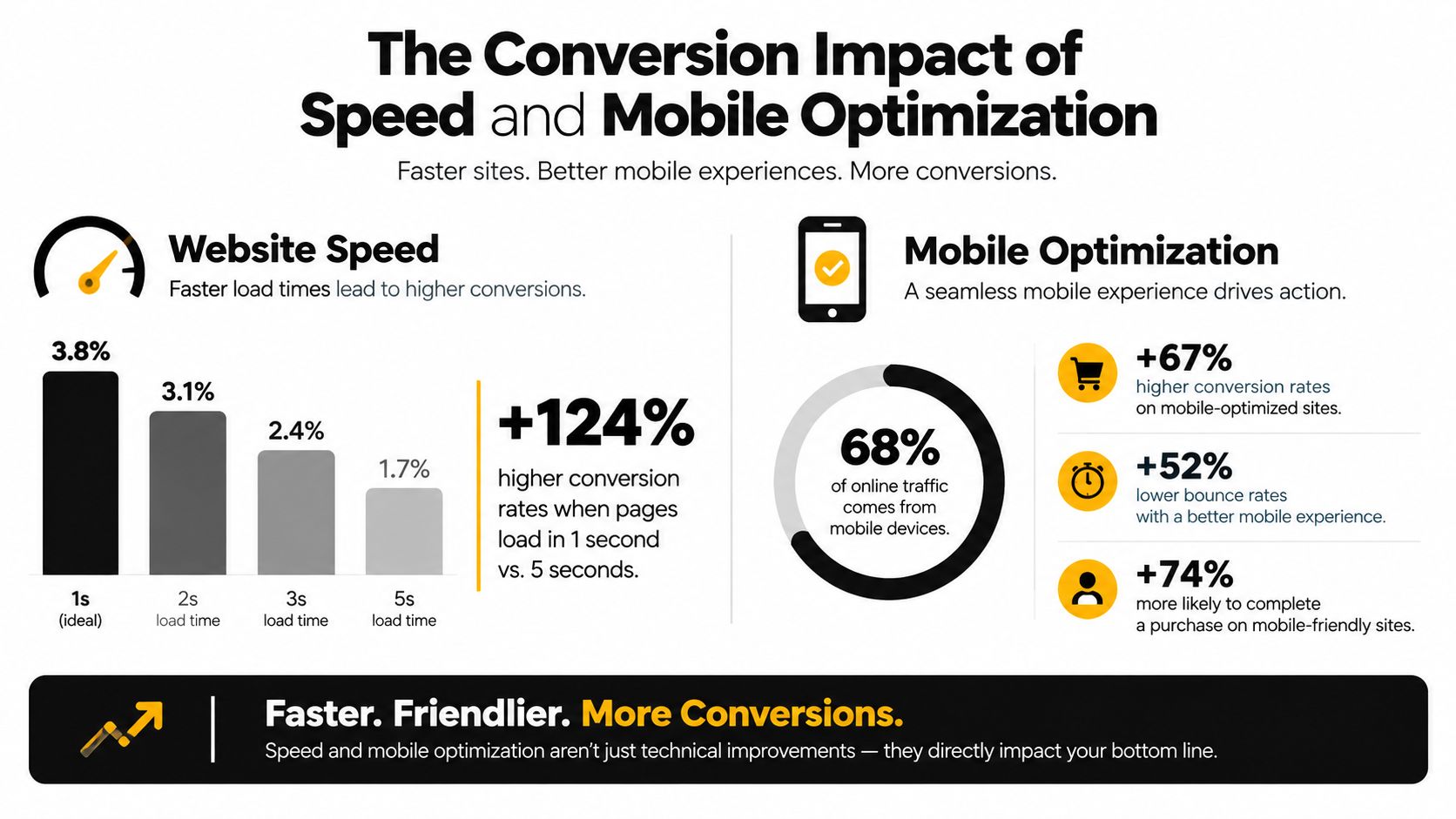
Mobile performance isn't a decorative technical concern for mattress retailers. It affects whether a shopper reaches the product explanation, loads a comparison table, opens a Digibun, or abandons the site before choosing a retailer.
A 2026 web-design dataset reports that 90% of websites, approximately 1.2 billion sites worldwide, use responsive design, according to Hostinger's web design statistics. Responsive layouts are now a baseline expectation. A mattress brand that still treats mobile as a reduced desktop experience will struggle with dense specification tables, long product pages, sticky purchase controls, and interactive visuals.
Design for the mobile research journey
Many visitors won't begin with a direct purchase. They may arrive from a search result, review a mattress's construction, check available sizes, compare firmness, and then look for a nearby showroom.
A mobile product page should make those actions obvious:
Construction: Show foam layers, coils, ticking, and quilt details without requiring horizontal scrolling.
Comparison: Keep firmness, height, support, and warranty information readable on narrow screens.
Retailer discovery: Put store availability and location tools close to the product decision.
Purchase actions: Keep cart, quote, or retailer buttons accessible without covering essential content.
Visual proof: Use compressed Silhouettes and Room Scenes, with interactive detail available when the shopper requests it.
The responsive design explanation from Bedhead Marketing is a useful reference for teams reviewing whether their current layout adapts properly across devices.
Speed has a direct commercial role
Portent found that a page loading in 1 second can achieve a conversion rate roughly 3 times higher than a page loading in 5 seconds, and 5 times higher than one loading in 10 seconds, as reported in its site speed conversion research.
Mobile shoppers also face a clear abandonment risk. One 2026 source cites that 53% of mobile visitors leave a site that takes more than 3 seconds to load, according to Colorlib's site speed statistics.
Those figures should change the order of operations on a redesign. Before adding another animation, quiz, pop-up, or interactive layer viewer, test whether the existing page loads quickly enough for the buyer to see the product. Speed work can include image compression, script reduction, lazy loading, font control, and layout reservations for reviews or product selectors.
A faster site also supports better showroom handoffs. If a customer researches a mattress on a phone in the parking lot, then opens the same page while testing the floor model, the content should load cleanly and reinforce the sales associate's explanation rather than create another obstacle.
Evaluating Agencies for Your Mattress Brand Digital Growth
A generalist agency may build an attractive ecommerce site. A mattress specialist is more likely to understand why the construction story, showroom pathway, margin structure, and dealer relationship all affect the digital brief.
The distinction appears in small decisions. A generic agency may treat “hybrid mattress” as a keyword to place in a title tag. An industry-focused team understands that the term describes a construction category and needs supporting information about coils, foam comfort layers, edge support, feel, height, foundation compatibility, and intended buyer.
Compare the working model
Generalist agency | Mattress-focused partner |
|---|---|
Starts with broad ecommerce patterns | Starts with the brand's models, channels, and sales process |
Treats imagery as a design deliverable | Connects Silhouettes, Digibuns, and Room Scenes to education and conversion |
May use a generic product template | Builds around ticking, quilt, gusset, foam, coil, and comfort information |
Often separates development from SEO | Plans crawlability, content, and measurement inside the build |
May need repeated category explanations | Understands manufacturers, retailers, private label, and DTC operations |
This doesn't mean every generalist agency is unsuitable. It means the mattress company needs to test the partner's category fluency before signing a statement of work.
Questions worth asking before the pitch becomes a project
Ask how the agency would handle products with multiple sizes, comfort choices, foundations, and retailer destinations. Ask where canonical tags, redirects, structured data, XML sitemaps, and analytics will be managed. Ask how it will protect page speed when adding a high-resolution Room Scene or interactive Digibun.
Review the portfolio for more than attractive screenshots. Look for evidence of clear product education, mobile usability, useful internal links, accessible content, and a sensible path from search landing page to purchase or showroom visit.
Teams comparing providers may also find this resource on hiring an e-commerce SEO agency useful, particularly when assessing technical scope, reporting expectations, and ecommerce experience.
Look beyond rankings
A specialist should discuss organic visibility, but it shouldn't stop there. Search results increasingly include answers, product information, and AI-generated summaries that may satisfy a query without sending a click. The site still needs clear entities, consistent terminology, accessible product facts, and strong first-party content so search engines and AI systems can interpret the brand accurately.
Bedhead Marketing operates as a digital marketing agency, 3D design studio, brand development organization, expert consultancy, and sales training resource focused exclusively on the mattress and bedding industry. Its work spans manufacturers, brick-and-mortar and ecommerce retailers, private label brands, and sleep product startups.
Structuring Your Website Development and SEO Implementation Roadmap
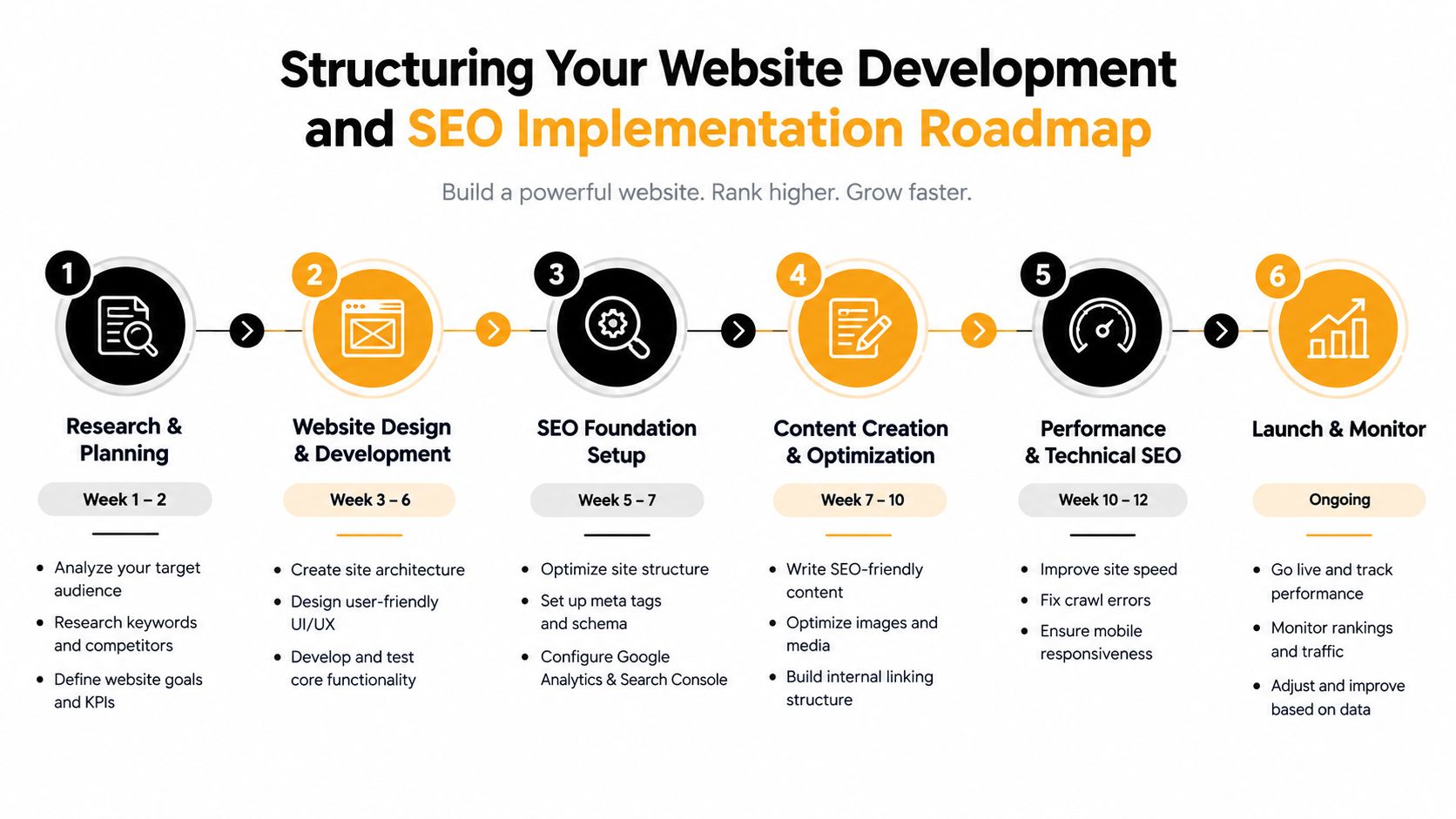
A site rebuild should follow a controlled sequence. Launching a new design without protecting URLs, analytics, product data, and search signals can create unnecessary revenue risk.
Discovery defines the commercial structure
Start with a technical audit, organic landing-page review, competitor analysis, product inventory, and stakeholder interviews. Include sales associates and retail operators in the process. They know which questions shoppers ask on the floor, which claims need clarification, and where online expectations fail to match the showroom experience.
Document:
Current assets: Product pages, guides, store pages, backlinks, rankings, conversion paths, and imagery.
Catalog logic: Mattress types, models, sizes, firmness levels, accessories, foundations, and retailer relationships.
Customer questions: Sleep position, cooling, motion transfer, pressure relief, adjustable bases, care, delivery, and returns.
Measurement needs: Organic entrances, product engagement, dealer clicks, quote requests, cart actions, and completed transactions.
Wireframe before styling
Create the information architecture and wireframes before final visual design. A product detail page should show where construction diagrams, comparison details, reviews, warranty information, FAQs, and purchase actions will live.
At this point, decide which content belongs in crawlable HTML and which interactions can remain progressive enhancements. A hidden tab that only appears after a script runs may be visually neat, but it shouldn't conceal the product facts that search engines and shoppers need.
Build, migrate, and verify
Development should include reusable templates, semantic markup, optimized media, structured data, internal links, and technical SEO controls. Test Digibuns and Room Scenes on real mobile conditions, not only on a fast office connection.
During migration, map old URLs to the closest relevant new destinations. Implement required 301 redirects, preserve valuable content, update internal links, generate XML sitemaps, and check canonicals. Don't redirect every discontinued model to the homepage. Send shoppers and crawlers to a relevant successor, category, or educational page.
Launch with measurement already working
Analytics shouldn't be added after launch. Use this analytics implementation guide to plan events and reporting before development is complete.
A practical roadmap looks like this:
Audit: Establish the current technical, content, and commercial baseline.
Plan: Map products, audiences, URLs, templates, and conversion events.
Design: Wireframe mobile and desktop paths around product education.
Build: Integrate SEO controls, semantic content, optimized imagery, and tracking.
Migrate: Test redirects, canonicals, sitemaps, forms, retailer tools, and checkout.
Monitor: Review crawl issues, speed, organic landing pages, engagement, and revenue signals after launch.
Post-launch work matters because real shoppers expose problems that staging environments miss. Review search data, site searches, support questions, returns feedback, and showroom comments. If buyers repeatedly ask what a “medium” feel means or whether a model works with an adjustable base, the answer belongs on the relevant page, not only in a sales script.
Strategic Next Steps for Your Bedding eCommerce Platform
Treat the website as part of the mattress product, not as a separate brochure. The shopper experiences the page before touching the floor model, and the retailer often inherits the expectations created online.
Start with a focused internal review. Select several important mattress pages and check whether each one has a clear URL, crawlable copy, fast media, useful construction visuals, mobile-friendly comparisons, retailer or cart actions, and accurate measurement. Then review the entry pages bringing organic visitors and ask whether those pages lead naturally to a model, a store, or a meaningful next step.
Prioritize bottlenecks instead of commissioning content blindly. If search engines can't reach the product pages, fix architecture first. If the pages load slowly, improve media and scripts before adding more interactive features. If shoppers understand the product but hesitate to buy, improve visualization, comparison tools, returns information, and showroom handoffs.
AI visibility deserves a place in that review. Modern sites need clear, consistent product entities that people, search engines, and AI systems can interpret. Repeating a keyword won't explain the difference between a quilted memory foam mattress and a pocketed-coil hybrid. Precise product facts, semantic structure, helpful answers, and consistent terminology will do more.
Bedhead Network, or BEDNET, is free for mattress industry professionals at www.BedheadNetwork.com. It provides marketing insights, news updates, networking, training resources, an industry directory, and business tools for the people building and selling sleep products.
Bedhead offers mattress-specific website development, SEO, product-page optimization, paid media, content strategy, 3D Digibuns, Silhouettes, Room Scenes, brand development, and sales training for manufacturers and retailers. If you're evaluating product imagery, site speed, search visibility, or the path from online research to showroom purchase, visit BEDHEAD to discuss a practical review of your platform.