Social Media Marketing Strategy for Mattress Brands
A mattress brand can have a strong product, healthy showroom relationships, and a well-built ecommerce site, yet still publish social content that looks interchangeable with every other bedding company. The usual symptoms are familiar: polished static images that explain nothing, short bursts of activity followed by silence, and campaigns judged by likes instead of qualified traffic, retailer inquiries, or sales influence.
A practical social media marketing strategy for mattress brands has to reflect how people buy sleep products. Shoppers compare ticking, quilt patterns, gussets, foam layers, firmness, support, warranties, and price. Couples debate comfort preferences. Retailers need content that helps sales associates move floor models. DTC shoppers need enough visual and technical clarity to feel confident before they order a product they can't test in person.
Why Generic Social Media Advice Fails Mattress Brands
A bedding company launches a new hybrid mattress. The marketing team photographs the finished bed in a bright bedroom, adds a lifestyle caption, and posts the same asset to Instagram, Facebook, and TikTok. A few people like it. Almost nobody understands what makes the mattress different.
That approach fails because a mattress isn't a quick-decision product. The buyer may discover the brand during late-night scrolling, compare specifications on a product page, visit a showroom, speak with a partner, and return to social media for reassurance. A single attractive image rarely answers the questions that stand between interest and purchase.
The buying journey is slower than the feed
Fashion brands can sometimes create urgency around a new look. Mattress brands need to create confidence. The audience wants to know how the surface feels, what sits beneath the quilt, how the foam layers work together, and why the price makes sense.
That doesn't mean mattress content should be dry. It means the creative needs a job. A close-up video of a hand compressing a comfort layer can explain feel. A layered product visual can show construction. A room scene can help a shopper picture the mattress in a home. A retailer-focused clip can demonstrate how the product should be presented on a showroom floor.
Practical rule: If a post looks attractive but gives the buyer no better reason to trust, compare, visit, or click, it's decoration rather than strategy.
Stop treating every platform as one publishing surface
A mattress manufacturer may need educational video for shoppers, product activation tools for retailers, and brand credibility for private-label partners. Those audiences can overlap, but they don't have identical questions or buying intent.
Short-form video deserves serious attention because platform benchmarks consistently identify video and Reels as strong engagement formats. The Socialinsider social media benchmarks report engagement benchmarks of about 2.60% for TikTok, 0.48% for Instagram, and 0.15% for Facebook in one 2026 dataset, while another benchmark places Reels at 2.7%, ahead of carousels at 1.4% and static images at 1.3%. Those figures aren't a reason to publish random videos. They're a reason to test product demonstrations, comfort explanations, and visual comparisons instead of relying on static hero photography alone.
Influencer activity can help when the creator has credible access to a relevant sleep, home, wellness, or retail audience. It needs clear vetting, useful briefs, and realistic expectations. A practical starting point is this performance influencer marketing guide, especially when you're assessing whether a partnership can provide more than borrowed attention.
Defining Your Mattress Audience and Channel Fit
A mattress audience profile shouldn't begin with a broad age range and a stock lifestyle photograph. It should begin with the decision someone is trying to make.
A replacement buyer may be searching for pressure relief after years with an aging mattress. A couple may be negotiating different firmness preferences. An ecommerce-first shopper may be comparing coil systems, foam density, height, trial terms, and delivery details. A retailer may be looking for content that helps a sales associate explain a floor model without opening the mattress or relying on technical jargon.
Map intent before choosing channels
Use customer conversations, reviews, showroom questions, search data, product returns, and sales team feedback to identify the language buyers already use. Then group those observations by intent:
Comfort intent: The shopper wants to understand feel, firmness, pressure relief, and motion transfer.
Construction intent: The shopper wants to see the relationship between ticking, quilt, foam layers, coils, edge support, and the gusset.
Value intent: The shopper wants evidence that the mattress justifies its price and fits the household's needs.
Retail intent: The operator wants content that supports floor-model presentation, product activation, local traffic, and sales conversations.
Partner intent: A manufacturer, component supplier, or private-label buyer wants confidence in production expertise, consistency, and brand support.
Your buyer persona framework can turn those observations into usable profiles. Keep each persona tied to a business action. “Interested in better sleep” is too vague to guide creative. “Comparing hybrid mattresses online and needs a clear explanation of support layers before visiting a retailer” is useful.
Match the buyer's mindset to the platform
YouTube and Facebook often support deeper consideration because shoppers can watch demonstrations, read comments, revisit explanations, and share content with a partner. Instagram and TikTok can create discovery, show product use, and make technical benefits easier to absorb through short-form creative. LinkedIn has a different role for manufacturers, suppliers, retail groups, and industry relationships.
Pew's 2025 U.S. social media usage research identifies YouTube and Facebook as widely used platforms in the United States, while also documenting meaningful age differences across networks and growing use of platforms including TikTok, Instagram, WhatsApp, and Reddit. The practical conclusion is simple: choose channels based on buyer behavior, not pressure to be everywhere.
Start with two or three platforms that match your priority audience and your production capacity. Build platform-specific versions of the same underlying message. A foam-layer explanation might become a longer YouTube demonstration, an Instagram carousel, a TikTok cut, and a Facebook post that answers common showroom questions. The message remains consistent, but the execution respects the channel.
Building Content Pillars That Move Mattress Buyers
Random posting creates a full feed without creating a useful buying journey. A repeatable content system gives the creative team a way to answer recurring questions while giving the audience a clear reason to return.
Four pillars work well for many mattress brands, provided each one reflects the actual product and sales model.
Product education makes construction understandable
A hybrid mattress can contain several material stories, but shoppers don't need a factory lecture. They need a clear answer to a practical question.
Show the product from the inside out:
A Digibun-style layered image can reveal the sequence of foam layers, coils, insulators, and edge components.
A short video can connect construction to a feel or support benefit.
A carousel can compare two builds without forcing the reader to interpret a dense specification sheet.
A cutaway animation can show how a quilt and comfort system contribute to the surface experience.
The language should stay accurate. Don't promise that a certain construction will solve every sleeper's discomfort. Explain what the component is designed to do, then direct the shopper to a retailer, fit guide, or product page for the next decision.
Proof gives the audience something to evaluate
Proof is more useful than praise. A product claim becomes easier to assess when the brand shows the mattress in context.
Use side-by-side comparisons, installation footage, retailer demonstrations, customer questions, and close-up details of ticking, quilting, handles, gussets, and edge finishing. Room Scenes can show scale and styling without pretending that lifestyle imagery proves performance. Silhouettes can provide clean product views for comparison ads, retailer listings, and social posts where background clutter would distract from the shape.
A strong proof post might show how two mattresses differ in construction, then invite the viewer to compare firmness, height, materials, or intended sleeper profile. It should lead to a useful next step, not merely announce that the product is “premium.”
Lifestyle content creates fit
A mattress is sold as a product, but chosen as part of a room, routine, and relationship. Show realistic bedrooms, adjustable bases where relevant, bedding combinations, delivery moments, and the small details that help a buyer imagine ownership.
Good lifestyle creative doesn't need to hide the product. It can show the quilt pattern, side panel, gusset, and profile clearly while placing the mattress in a credible home. For ecommerce brands, this visual context helps compensate for the absence of a showroom visit. One Harris Poll survey reported that 60% of online shoppers are more likely to buy a product shown in 3D or AR, as summarized by Fibbl's ecommerce product visualization resource. That supports investing in photorealistic 3D assets where traditional photography can't efficiently show construction, configuration, or room placement.
Trust content proves category knowledge
Trust content can feature retailer education, manufacturing processes, product development, sales training, care guidance, and responses to common questions. It should make the brand easier to believe, not just more visible.
A manufacturer might publish a short explanation of how its team translates a specification into a retail selling story. A retailer might show how its sales associates compare feels without overwhelming shoppers. A startup might explain why it selected a particular hybrid construction and how the product is supported after delivery.
One asset can serve several channels. For fast product-video variations, a team may also browse ClipNova's video generator as part of its production toolkit, while keeping the product claims, brand standards, and final review under human control. For guidance on customer-led creative, use this resource on creating user-generated content.
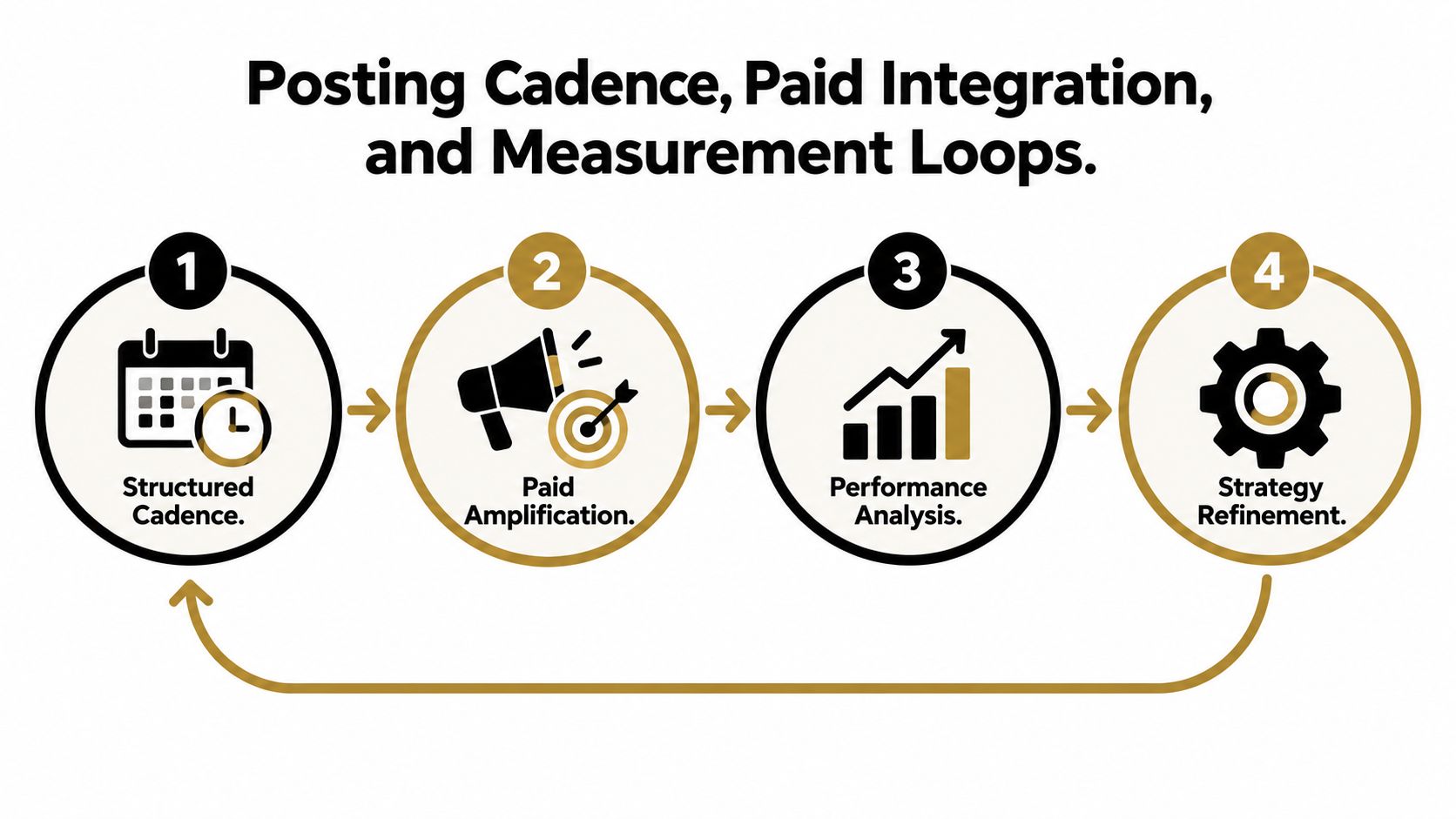
Posting Cadence, Paid Integration, and Measurement Loops
A mattress brand can spend heavily on production and still disappear from buyers' feeds if publishing happens only in occasional bursts. The answer is a repeatable rhythm that the team can sustain, paired with paid distribution that gives useful content more reach. Cadence should support the buying journey, from first questions about hybrid construction to showroom visits and DTC product comparisons.
Buffer's social media benchmark research reports median monthly publishing volumes of about 35 posts on Facebook, 17 on Instagram, 8 to 9 on TikTok, and 9 on X. It also reports a 6.5% median engagement rate on LinkedIn, while Hootsuite places general average engagement at 1% to 3%, with above 3% considered strong. Treat these figures as directional benchmarks, not quotas. A retailer with regular showroom demonstrations may sustain a different rhythm from a component supplier with a smaller creative library.
Build cadence around useful formats
Set a baseline your team can maintain, then review whether higher frequency is improving qualified actions or merely producing repetition. Fewer posts that explain a mattress clearly are usually more defensible than a larger stream of static product images with little new information.
A practical cadence can include:
Education: Explain construction, firmness, feel, care, and comparison questions. Hybrid mattresses often require clear visual and verbal explanations because shoppers cannot judge layers from a single room photograph.
Proof: Recut demonstrations into platform-native videos, carousels, and retargeting assets. Show compression, edge support, material details, or delivery preparation where those details help a buyer evaluate the product.
Retail support: Align content with floor-model arrivals, product training, local events, and sales priorities. Give showroom staff assets they can share or use during a customer conversation.
Brand presence: Show people, manufacturing processes, partnerships, and the standards behind the product.
Promotion: Use offers selectively, with a clear reason to act and a landing page that matches the message.
Let paid social amplify evidence
Paid social works best when it extends content that has already shown signs of buyer interest. Start with organic posts that earn meaningful saves, shares, comments, profile visits, or product-page clicks. Adapt those concepts for prospecting, retargeting, retailer lead generation, or product-specific campaigns, rather than paying to distribute every post equally.
A DTC mattress brand may need separate creative for new prospects, product-page visitors, and shoppers who watched a comparison video without purchasing. A broad lifestyle asset can introduce the brand. A Digibun or Silhouette visualization can answer a construction question for someone comparing hybrid mattresses. Room scenes can support product recognition, while demonstrations and customer proof can address hesitation closer to conversion.
Manufacturing budgets have become more performance-conscious. Bedhead Marketing reports that manufacturing marketing budgets rose from 6.7% of annual revenue in 2024 to 9.5% in 2025, a 42% increase, in its manufacturer marketing strategies article. That shift increases the cost of weak testing. Define the audience, creative question, budget, and success measure before launch so a higher spend produces learning instead of scattered impressions.
Wire social activity to commercial outcomes
Engagement can signal interest, but it is not revenue. Track the path from post to landing page, email capture, retailer inquiry, showroom appointment, product interaction, and purchase wherever the business can connect those events. Follow this analytics implementation guide to set up the tracking layers before campaigns launch.
Use:
UTM parameters: Separate platform, campaign, audience, creative, and placement.
CRM fields: Record social as an original or influencing source where appropriate.
Assisted conversion views: Include earlier social interactions instead of relying only on the final click.
Creative-level reporting: Compare education, room scenes, testimonials, and offers by qualified action.
Retail feedback: Ask stores which campaigns drove questions, visits, or product requests.
HubSpot's social media strategy guidance notes that 20.6% of marketers cite measuring ROI as a top challenge, only about a third can clearly connect social activity to revenue, and many teams still rely mainly on native platform analytics. Mattress purchases often involve multiple sessions, devices, and decision-makers. Last-click reporting can therefore undervalue the content that built confidence before a shopper visited a showroom or returned to a product page.
Review the same core measures consistently. Change one variable at a time where possible, such as the hook, format, audience, landing page, or budget. If every variable changes together, the result cannot identify what improved performance.
Sample Content Calendar and Execution Templates
Strategy becomes useful when a marketing manager can open a calendar and know what needs to be produced next. A mattress brand doesn't need a stream of unrelated posts. It needs a manageable sequence that answers buyer questions in different ways and gives paid campaigns a library of credible creative.
A four-week cycle can work as a starting structure:
Week | Editorial focus | Example asset | Commercial role |
|---|---|---|---|
First | Product construction | Digibun layer breakdown of a hybrid mattress | Explain differentiation |
Second | Sleeper scenarios | Carousel comparing support needs and comfort preferences | Help shoppers self-identify |
Third | Proof and activation | Retailer demonstration, installer footage, or customer-led content | Build confidence |
Fourth | Offer or event | Retail promotion, showroom event, or seasonal message | Create a reason to act |
Turn one concept into a useful asset family
Suppose the central idea is a hybrid mattress designed to combine responsive support with a more cushioned surface. Don't publish one image and move on. Build a small family of assets:
Short video: Open with the buyer question, show the layers, and explain the intended feel.
Carousel: Use separate panels for the quilt, comfort system, support core, and edge construction.
Room Scene: Place the finished mattress in a realistic bedroom with the product profile visible.
Retail asset: Give sales associates a concise comparison graphic they can use near the floor model.
Paid variation: Use the strongest visual with a focused message for prospecting or retargeting.
This approach reduces production waste while preserving platform fit. The video can lead with movement, the carousel can support careful comparison, and the room scene can reinforce ownership context.
Connect calendar entries to tracking
Every planned post should have a purpose, destination, and success measure. A product education post may send qualified traffic to a construction page. A retail demonstration may support store locator visits or partner inquiries. A promotional asset may drive a product-page session, but the team should still monitor whether visitors engage with specifications, shipping details, trial terms, and return information.
Use a consistent naming system for campaigns and creative versions. The best social media ads guidance can help teams evaluate the relationship between the offer, visual, audience, and landing page rather than treating the ad as an isolated design.
Keep community management in the workflow. Questions about firmness, foundation compatibility, delivery, returns, and heat shouldn't sit unanswered while the team plans the next post. In bedding, a helpful response can become the next educational asset, especially when several shoppers ask the same thing.
Common Mattress Social Strategy Mistakes and Fixes
Mattress brands tend to repeat a small set of expensive mistakes. Most aren't caused by a lack of effort. They're caused by applying a general social playbook without adapting it to the category.
Publishing the same post everywhere
A square product photo with identical copy doesn't respect the difference between a YouTube search, an Instagram save, a TikTok viewing session, and a Facebook discussion.
Fix: Keep the product truth consistent, but change the opening, format, length, caption, and call to action for each channel.
Relying on static product photography
A finished mattress image can show color and shape, but it rarely explains foam layers, hybrid construction, edge support, or why the product costs what it does.
Fix: Add Digibuns, Silhouettes, Room Scenes, close-up demonstrations, and layer comparisons. Use photography for finish and context, then use visualization for information that a camera can't show cleanly.
Chasing trends that don't fit the buyer
A trend can produce views without creating confidence. If the creative makes the mattress look like a prop, it may weaken the product's credibility with a considered buyer.
Fix: Borrow the format or pacing when useful, but anchor the idea in a real question about comfort, construction, value, delivery, or retail experience.
Measuring likes instead of intent
Likes are easy to report and difficult to connect to revenue. They shouldn't be the only signal for a high-consideration product.
Fix: Track saves, shares, comments that reveal buying questions, click-through rate, qualified leads, showroom actions, assisted conversions, and sales where available.
Spreading the budget too thin
A brand can be technically present on many platforms while producing too little useful content for any of them.
Fix: Concentrate on the two or three channels that match your priority buyers. Expand only after the team can sustain quality, response management, and measurement.
Next Steps to Execute Your Mattress Social Media Plan
Audit current channels against mattress-specific goals, then choose two core platforms where your buyers research and compare. Define four content pillars, build a monthly calendar, and tag every campaign with UTMs that connect social activity to product pages, retailer inquiries, showroom actions, and sales signals. A specialist team can support the visual and operational gaps, from 3D product visualization and Digibuns to paid campaign execution, SEO, and mattress retail sales training. For structured education, explore Bedhead University.
Mattress professionals can also join BEDNET, a free hub with marketing insights, industry news, networking, training resources, an industry directory, and business tools.
If your social content needs clearer product storytelling, stronger 3D visualization, or campaigns tied to the actualities of mattress retail and DTC buying, BEDHEAD can help plan and execute the work. Visit the site to discuss social strategy, paid media, product imagery, SEO, or sales activation for your mattress brand.