How to Reduce Product Returns: A Mattress Playbook
A mattress return rarely starts at pickup. It starts when a shopper looks at a queen hybrid online, guesses at firmness, height, and foundation fit, and buys something that was never right for the room or the body. Fixing that guesswork is where How to Reduce Product Returns becomes a product-page discipline, not a reverse-logistics exercise.
Sort Your Returns by Reason Before Changing Anything
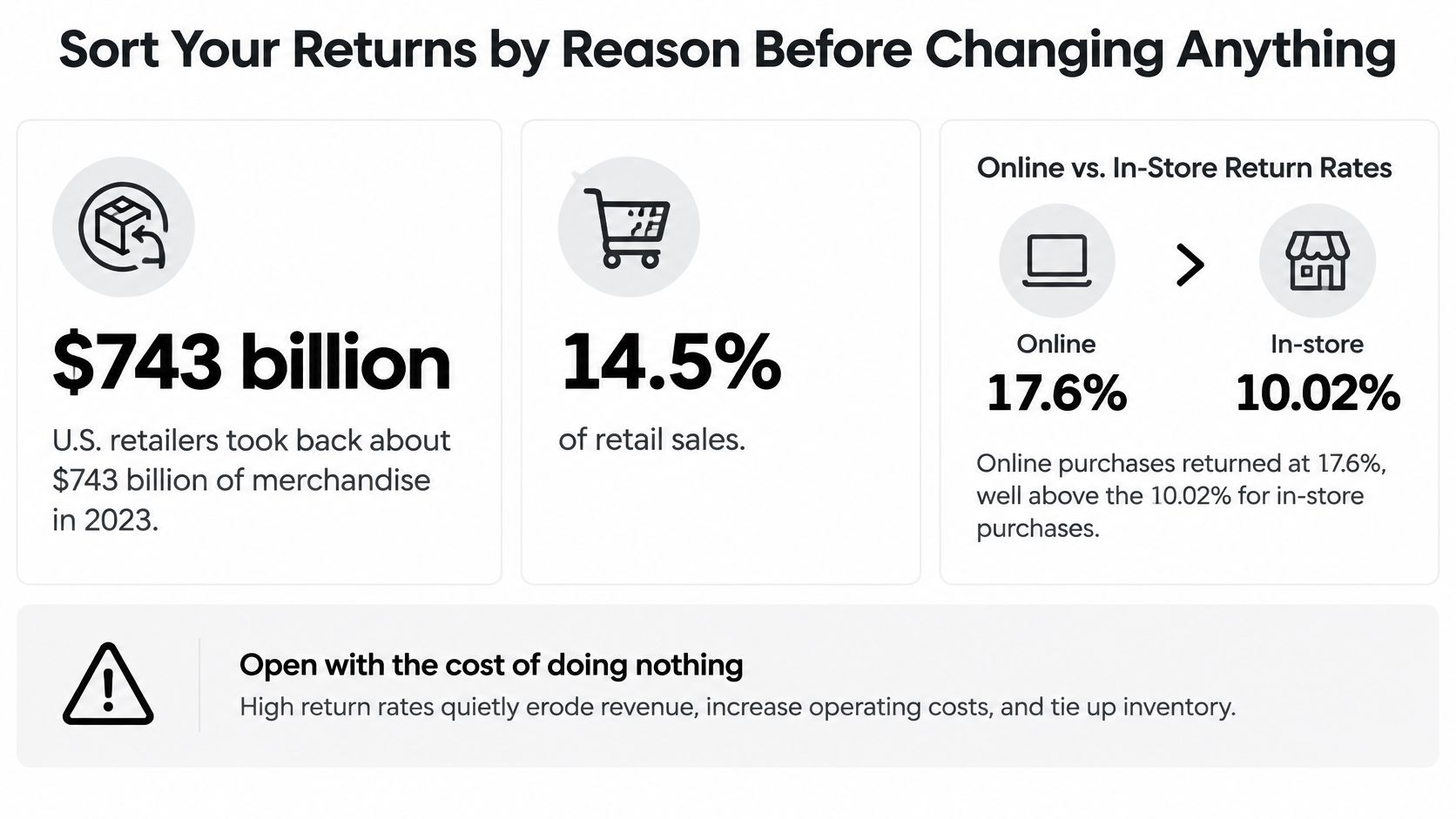
The National Retail Federation and Appriss Retail report estimated U.S. retailers received approximately $743 billion in returned merchandise in 2023, equal to 14.5% of total retail sales. Online merchandise returned at 17.6%, compared with 10.02% for pure brick-and-mortar purchases. That's the cost context for how to reduce product returns in a category where shoppers can't test feel before delivery.
Mattresses sit in the risky part of that gap. The customer can't judge foam layers under the ticking, edge support at the gusset, or whether a 14-inch profile works with an existing headboard. A showroom RSA can correct a bad assumption in two minutes. A product page either prevents it or ships it.
Code Every Return Before You Touch the Page
Don't start by rewriting copy. Start by coding every return into a fixed set your team uses everywhere: fit, firmness mismatch, comfort preference, damage, not as described, missing components, and setup or delivery issues. Free-text fields alone produce noise. One agent writes "too hard," another writes "customer didn't like it," and you've lost the signal.
Calculate each code as a share of orders, not just a share of returned units. A code that looks small inside the returns pile can be a serious leak on a high-volume SKU. The reverse is also true. A low-volume split king can dominate returned units while barely affecting orders. For a disciplined view of this kind of sorting, data-driven decision making for mattress teams is the right starting framework.
Recent UK research reported in the nShift IMRG returns report found 57.6% of consumers cited fit, 50.8% poor quality, 45.9% damage, and 37.6% cited an item not matching its description. Percentages overlap because shoppers can cite several reasons for one return.
Return reasons cited by UK online shoppers
Return reason | Share citing it | What it usually means for a mattress |
|---|---|---|
Fit | 57.6% | Wrong size, height or foundation compatibility |
Poor quality | 50.8% | Firmness or durability below what the page implied |
Damage | 45.9% | Shipping or handling damage, often from compressed or bent packaging |
Item not matching description | 37.6% | Specs, photos or claims that overstate what arrived |
Use the table as a diagnostic, not a benchmark to copy. If your own codes cluster around fit, firmness, and not as described, you've got an information problem. Tightening the trial window won't fix it. Correcting the promise will.
How to Make Product Pages Match the Mattress
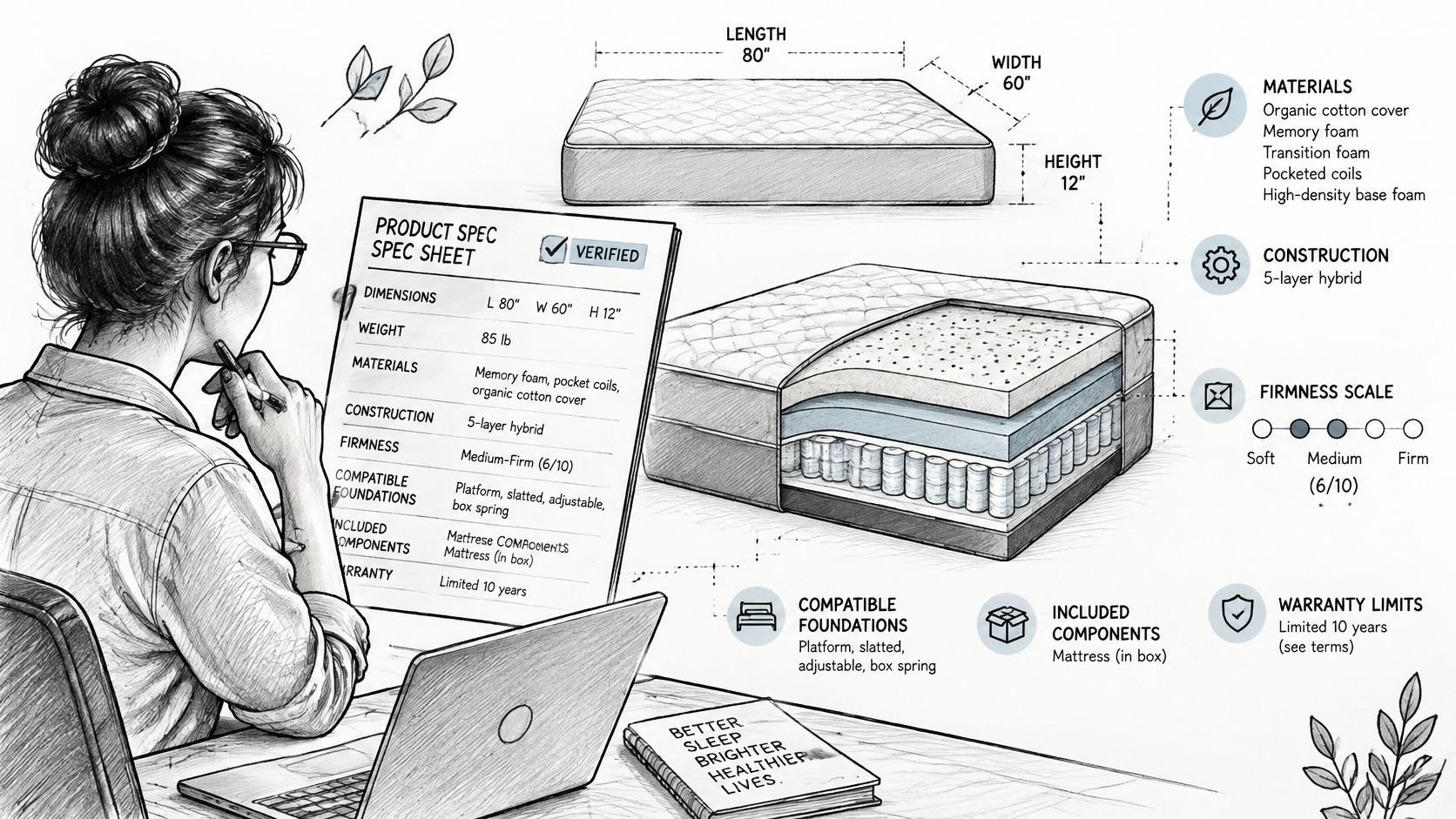
Treat product content as a controlled spec, not marketing copy that each channel can reinterpret. I would start with one verified spec sheet per SKU. It should hold length, width, height, weight, materials, construction, firmness scale, compatible foundations, included components, warranty limits, and delivery constraints. Nothing publishes until that sheet is signed off by product and operations.
Then push the same data everywhere. Your PDP, retailer feeds, marketplace listings, packaging inserts, and floor scripts should not disagree on thickness or slat spacing. Contradictions create returns. A marketplace feed says 12 inches, your page says 13, and the customer measures 12.5 after expansion and assumes they received the wrong model.
That governance matters because 45% of surveyed shoppers across the United States, Canada, and the United Kingdom reported returning an online purchase because of incorrect or misleading information, according to the WisePIM ecommerce returns guide. More content won't save you if it's inconsistent. Controlled content will.
Show Scale, Layers, and What Is Missing
Baymard product page research reports that 42% of users try to determine a product's size from product images. So don't make them guess. Put a dimensioned silhouette or room scene beside the hero image. Label thickness separately from overall height. Distinguish mattress dimensions from box dimensions.
Layered imagery does the same job for construction. A shopper can't see pocketed coils, transition foam, quilt, and cooling fibers from an exterior photo. Interactive layer toggles and a rotating view let them inspect the build themselves. Accurate Digibuns, clean Silhouettes, and realistic Room Scenes earn their keep in that inspection, provided the render matches the production unit. A prettier render than the shipped mattress is worse than an average photo.
Say a page calls a model "plush cooling hybrid" but never explains that the cooling claim refers to the cover fabric, not active temperature control. The customer sleeps warm, feels misled, and codes it as not as described. The fix isn't softer language everywhere. It's naming the layer, the material, and the limit of the claim. The discipline behind that work sits at the core of product detail page optimization.
Product page elements to verify against the spec sheet
Page element | What to publish | Mismatch it prevents |
|---|---|---|
Dimensions | Length, width and height in one consistent format, with thickness labeled | Size and fit returns |
Firmness | Position on the firmness scale plus a plain note that feel is subjective | Firmness mismatch returns |
Construction | Layer-by-layer breakdown of foam, coils, ticking, gussets and quilt | Not as described returns |
Foundation compatibility | Compatible bases, slat spacing requirements and any adjustable-base limits | Setup failures and fit returns |
Included items | Whether pillows, protectors or foundations ship with the mattress | Missing component returns |
Warranty and trial limits | Exact terms shown next to the product, not only in the terms | Expectation gap returns |
Audit the Page and the Production Lot Together
Run a monthly content audit on your highest-return SKUs. Compare each claim against the spec sheet and fix contradictions first. Then check the factory side. Sample units from each production lot for firmness and height, inspect handles, edges, and quilt seams before pack-out, and record the lot number. If returns spike on one lot, you'll know whether the page drifted or the build did.
Practical rule: If the page, the feed, and the physical unit don't agree, believe the physical unit and correct the other two before you spend another dollar driving traffic to that SKU.
Sizing and Comfort Guidance That Cuts Wrong-Fit Orders
Guidance tools help when they're accurate and hurt when they're confident and wrong. In Zalando's SizeFlags experiment, a controlled A/B test involving 720,000 customers per group reported a 3.8% relative reduction in size-related returns. A separate study using data from 496,365 items found users of a size finder were 0.65% more likely to return an item, as summarized in the Size.ly ecommerce return statistics.
That contrast should shape your quiz design. Collect only the inputs you'll use: height, weight range, sleeping position, partner preference, current mattress problem, and foundation type. Don't ask for medical detail you can't act on. Don't hide the logic behind a score.
Explain the Recommendation and Its Limits
Room fit needs the same honesty. A king that fits the frame can still kill walkway clearance and nightstand access. If you're helping shoppers think through the room first, the best mattress size for your bedroom is a useful consumer-facing reference to model your own guidance on. Then make sure your internal size names stay consistent with a clear mattress size comparison so Twin XL, split king, and California king don't get blurred in chat or feeds.
Starting firmness guidance by sleeper profile
Sleeper profile | Starting firmness range | Watch-out to state on the page |
|---|---|---|
Side sleeper | Medium to medium-soft | Shoulder and hip pressure can build on softer models |
Back sleeper | Medium to medium-firm | Softer cores can let the lower back sink |
Stomach sleeper | Medium-firm to firm | Softer models can let hips sag and strain the lower back |
Combination sleeper | Medium | Responsive foam or hybrid construction suits frequent position changes |
Heavier body weight | Firmer than the sleeper's default | Softer models can sag under sustained load |
Couples with different preferences | Dual-firmness or a middle-firm option | Show the trade-off instead of a single score |
Present ranges like these as a starting point, not a verdict. "Medium-firm" isn't standardized across brands. Your medium-firm hybrid with zoned coils will not feel like a competitor's all-foam medium-firm, and pretending otherwise sets up the return.
Test the tool against a randomized holdout before you scale it. Use return rate as the primary outcome. Watch conversion, exchange rate, comfort-related contacts, and repeat purchase as guardrails. If the quiz lifts clicks but kept orders fall, you've built an engagement feature, not a return reducer. Monitor results by recommendation confidence and product family, because a rule that works for hybrids can fail on latex.
Pre-Sale Education and Support That Prevent Mismatch
A customer reads "medium-firm" on the page, hears "pretty soft" from a chat agent, then lies down on a floor model broken in by two years of showroom traffic. Three versions of the same mattress. The customer trusts the one that matches what they already wanted to buy, and the return shows up six weeks later.
That gap is a training problem before it is a product problem. Your RSAs and chat agents should ask the questions your sizing guidance asks: sleeping position, weight range, partner preference, the problem they are replacing, and foundation type. Scripted answers only help when the vocabulary matches the page. Give staff language for firmness as a range, not a label. They should know what medium means in your line, which sleepers it suits, and who should skip it.
Telling an unsuitable buyer not to buy feels wrong on a commissioned floor. It still costs less than a comfort exchange, which pays for reverse logistics twice and usually loses the sale anyway.
Build the Script From Your Return Codes
Build these assets from questions that already reach your team, not from a generic FAQ template:
Top-code FAQ: Answer the questions behind your three biggest return reasons, such as adjustable-base fit, expansion time, or why the mattress feels firmer than the photo suggested.
Short build video: Show the layer stack and a hand-pressure firmness walk-through, using the same terms as the spec sheet.
Foundation check: Give agents photos of acceptable and unacceptable slat spacing, center support, and bunkie board setups.
Floor model labels: Mark any showroom model that isn't in the current online range, or that uses an older ticking or foam spec.
Support needs a prevention script too. Before approving a comfort return in the first nights, have the agent run a firmness check-in, a foundation review, and adjustment guidance. Some customers are sleeping on bowed slats, a worn box spring, or a protector that changes surface feel. Fixing the setup is cheaper than collecting the mattress, and it doesn't read as stonewalling as long as the return option stays clearly open.
Log every pre-sale question that later ends in a return, and feed that log into the monthly audit. When chat keeps answering the same split king foundation question, that answer belongs on the page, above the fold, in plain words. One answer written on the product page replaces the same exchange in chat all month.
Set Return Policy and Delivery Rules Shoppers Can Trust
In the UPS returns executive summary, 88% of surveyed shoppers said they review a retailer's return policy during their online shopping experience, including 66% who review it before purchasing, and 15% said they abandon a cart when the policy is unclear. Burying your terms in a footer doesn't make the policy more generous. It makes the purchase feel riskier.
Present the policy before checkout and state the mechanics plainly. A trial is a product feature in this category, so treat it like one. If you want a sense of how retailers explain trial expectations to shoppers, the Miller Waldrop trial period advice shows the kind of plain consumer framing customers expect to find before they commit. Your own page should connect that trial promise to the buying decision, which is the point of a clear try it before you buy approach.
Return policy elements to state before checkout
Policy element | What to state before checkout | Common mistake |
|---|---|---|
Eligibility window | Number of days or nights and when the clock starts | Clock starting at order date instead of delivery |
Condition | Whether the mattress must be unused, unopened or only undamaged | Vague wording such as 'like new' |
Pickup or shipping | Who arranges the return and how a bulky mattress is collected | Customer expected to return a mattress by parcel |
Fees | Restocking or pickup fees with amounts | Fees revealed only after checkout |
Refund timing | Days from inspection to refund | No timeline stated |
Exclusions | Customized, final-sale or floor-model products | Exclusions buried in the terms |
Write the Physical Process, Not Just the Legal One
A mattress doesn't go back in a poly mailer. State whether pickup is scheduled, how the customer should prepare the product, what condition it must be in, and who pays for collection. For white-glove delivery, explain whether the same crew handles removal and what happens to packaging on day one.
Delivery handling belongs in the same conversation. Give carriers and customers clear instructions for bagged or compressed product. Don't bend a hybrid beyond what the build allows. Don't store a bed-in-a-box compressed beyond the maker's window. Photograph each unit at delivery where your process allows it, so a damage claim doesn't turn into an argument about when a torn gusset or crushed corner happened.
A policy that's easy to find and specific about pickup, fees, and refund timing stops the wrong purchase earlier than a generous policy nobody understands.
Say a customer buys a queen hybrid for a guest room. The checkout summary states when the trial clock starts, what pickup costs, and when the refund lands after inspection. That customer may still return it. But they won't return it because the rules surprised them, and that distinction matters for reviews and repeat purchases.
Track Returns per SKU and Test Changes Safely
A single blended return rate hides the mattress that's hurting you. One high-volume queen hybrid with a firmness problem can sit inside a portfolio average that looks acceptable. Meanwhile media keeps sending traffic to the exact page generating the calls.
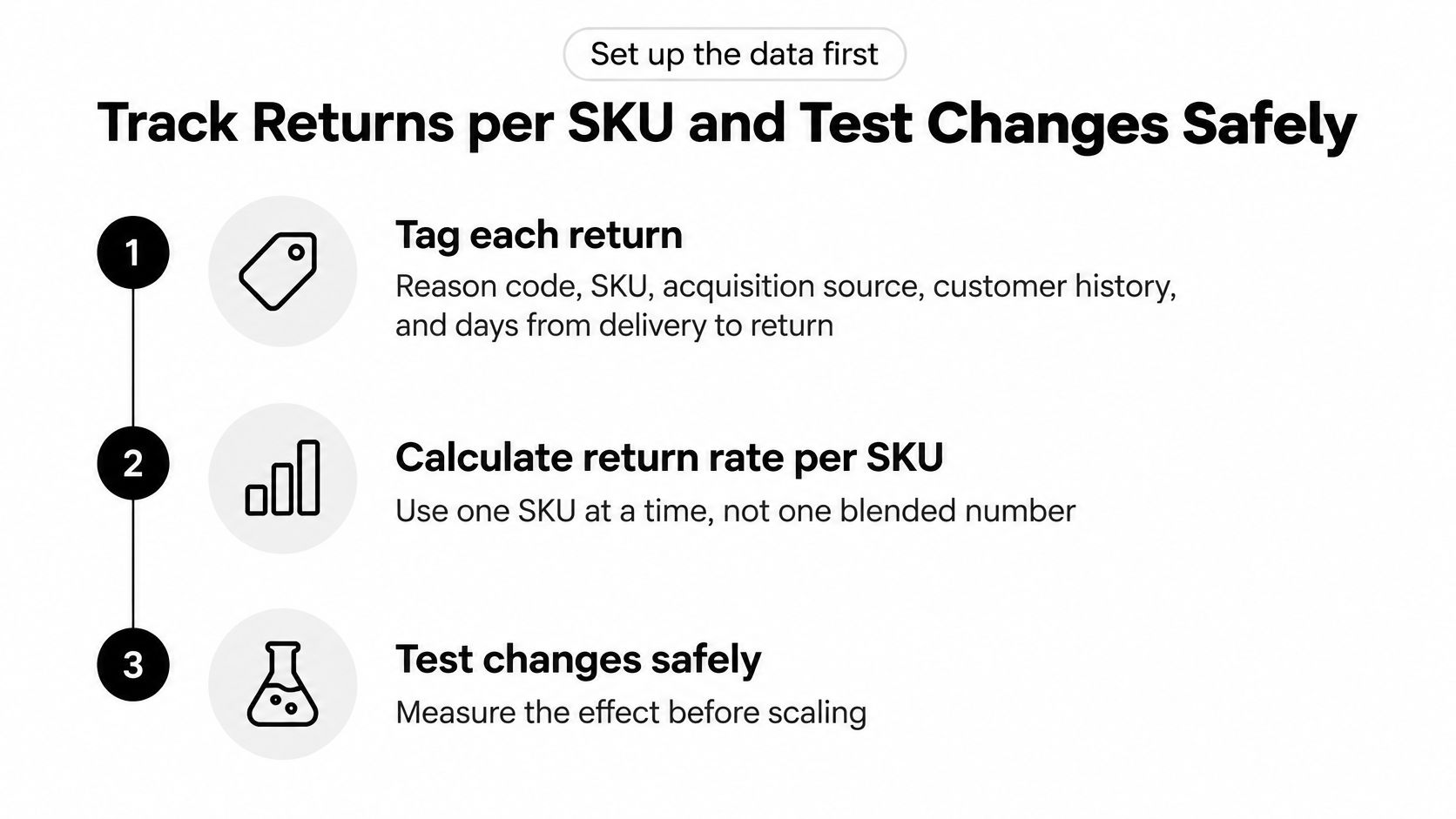
Tag each return with reason code, SKU, acquisition source, customer history, and days from delivery to return. Use the same code set across DTC, marketplaces, and retail partners. Then calculate return rate per SKU as a share of that SKU's orders. Read time-to-return carefully. A return on night three often points to setup or expectation. A return near the end of a trial is more likely a genuine comfort failure.
Change One Element and Protect the Guardrails
Pick one high-return SKU and change one thing. Add a dimensioned render. Clarify the firmness scale. State who shouldn't buy the model. Split traffic at random and keep the old page running for the control group. Return rate is the primary outcome, but it can't be the only number you watch.
Use guardrails that tell you whether you fixed a mismatch or scared buyers off:
Conversion rate: A drop can be acceptable if mismatch returns fall further, but you need the margin math, not a vibe.
Customer-service contacts: Fewer "what size is this really?" contacts suggest the page is clearer.
Reason-code mix: The targeted code should shrink. If damage rises while fit falls, you've moved the problem.
Exchange rate: A fit exchange can be a page failure or a successful save, so read it with the reason code.
Keep a change only when the reduction in mismatch returns beats any conversion or margin loss. Give the test enough delivered orders and enough nights for trial returns to appear. Calling a winner on click data alone is how teams ship persuasive pages that produce more expensive returns later.
Do Not Punish Your Way to a Lower Rate
Check the policy risk before you add fees or shorten windows. The Radial Returns in 2026 report found 61% of consumers say return fees make them less interested in shopping with a brand again, and 49% say they would stop shopping if a legitimate return were incorrectly flagged as fraudulent. A lower recorded return rate bought with friction can cost you the next sale.
Separate preventable mismatch from legitimate trial failure first. Then close the loop monthly. Send reason-code results to product, merchandising, and training. If heavier sleepers keep rejecting one foam build, that's product input. If one ad set drives firmness complaints, that's an acquisition promise to fix.
Fix Stalled Results and Start One Test This Week
When results stall, read the symptom before you add another section to the page. Each pattern below points to a different fault, and each fault has its own fix.
Returns rose after a page refresh? Check whether the new imagery promises more than the mattress delivers. A bright room scene with no scale reference can make a slim profile look substantial, and the customer only learns otherwise on delivery day. Roll back the risky image or dimension it in place. Losing some visual drama is cheaper than paying freight on disappointment.
If fit returns stay high on one size, re-measure the product. Your chart may describe the box, the unexpanded unit, or a spec from two builds ago. Label mattress height, package size, and recommended foundation as separate numbers. Where heavier sleepers drive firmness complaints, publish weight guidance on that SKU and put the firmer alternative within reach before checkout, not in a follow-up email after the sale.
Read Channel and Damage Signals Separately
When damage climbs, start in the warehouse before you touch the product page. Add handling notes for compressed and bagged goods, review corner protection, and photograph units at delivery so a carrier dispute has evidence. If one retailer returns at a higher rate than your own store, audit that partner's feed, floor signage, and sales script against the spec sheet. The mattress may be perfectly fine while the partner's description sells something else.
A falling return rate alongside falling conversion is not a verdict in week one. Watch delivered orders, kept orders, margin, and service contacts through a full review window. Some good fixes reduce unsuitable purchases, and fewer orders with far fewer returns can be the profitable outcome.
Fix the cause of each return, not the customer who made it.
Your One-SKU Plan for This Week
Pick the SKU: take the mattress with the most returns and rank its reason codes as a share of orders.
Audit within five working days: check the spec sheet against the live page, retailer feed, marketplace listing, and packaging. Fix every contradiction you find.
Run one test: change a single page element tied to the top code, split traffic, and set a review date 60 days out.
Treat the result as a test, not a promise. Bedhead does not guarantee specific results from using its services, and marketing outcomes can vary based on numerous factors beyond its control. If your team is short on dimensioned renders, layered cutaways, or a spec-driven page audit, Bedhead Marketing handles that work, along with digital marketing, ecommerce strategy, creative asset creation, product storytelling, high-end visual content, website design, and 3D visualization for bedding brands. For a second read on your return data, reach the team through the contact form at bedheadmarketing.com/contact.