Best Practices for Video Marketing: 9 Mattress Wins
The most popular video advice is to post more often. For mattress brands, that can mean producing more footage that never explains why a shopper should choose the bed. The best practices for video marketing start with a better question: what does the buyer need to understand before they can make a confident decision?
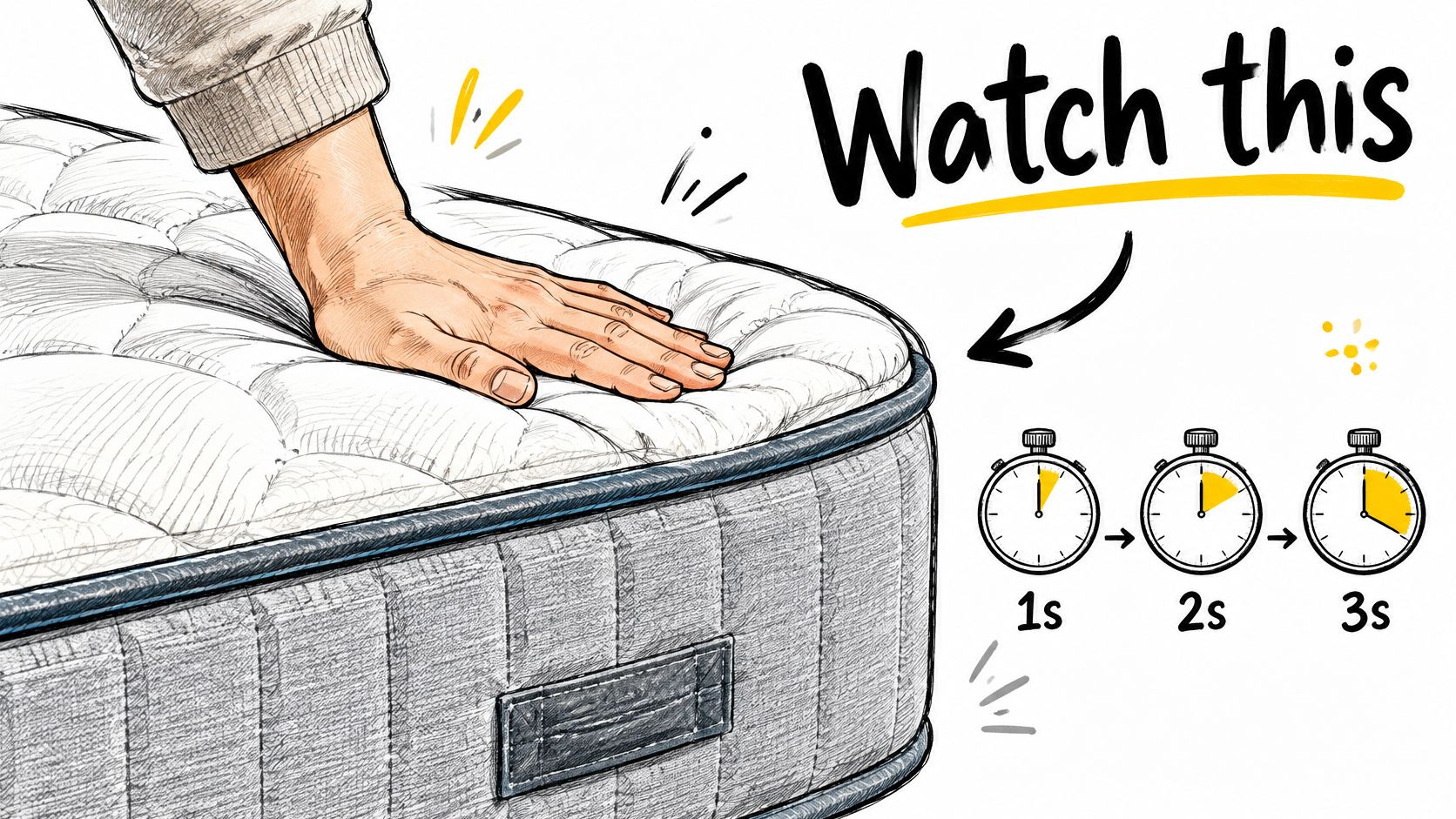
Mattress brands pour budget into videos that open with a logo, hide the construction shoppers want to see, and report views nobody can tie to sales. A beautiful bedroom pan doesn't explain edge support. An animated coil system doesn't prove comfort. Neither helps an associate compare neighboring floor models unless the message matches the selling conversation.
The opportunity is practical, not cinematic. In Wyzowl's video marketing survey, 93% of video marketers said video increased users' understanding of their product or service. For bedding companies, understanding should mean more than remembering a model name.
A shopper should leave the video knowing what the mattress does, what the demonstration actually proves, and what to do next.
These practices connect product storytelling to the realities of selling mattresses: hidden foam layers, subjective feel, expensive showroom space, and returns that can erode margins. Start with the buying question, choose the right demonstration, and measure whether shoppers make better-informed decisions.
1. Hook Viewers in the First 3 Seconds
Treat the opening seconds as an editing constraint, not a guaranteed formula. Show the buying problem before asking viewers to care about your brand. A logo can appear on the product or as a discreet overlay without delaying the explanation.
For a hybrid mattress, open on a partner turning over while the other sleeper watches. Then show the construction relevant to motion isolation. For a retailer, begin with an associate comparing the edge compression of neighboring floor models under the same conditions.
Google's ABCD guidance recommends attracting attention, communicating the brand, connecting with viewers, and directing action. Applied to mattresses, that means showing a recognizable sleep concern, identifying the product early, and demonstrating a specific benefit.
Write the opening before the shot list
Write the question a shopper would ask: will I feel my partner move, or will the edge collapse when I sit down? Avoid opening with a vague promise about better sleep.
Make the picture answer the question. Show surface movement or edge compression, not unrelated bedroom footage.
Add readable captions. Keep the explanation understandable without narration, and keep text away from player controls.
Test the opener separately. Hold the audience, placement, offer, and remaining edit steady while changing the opening.
Judge attention alongside qualified product-page visits. An alarming sagging-mattress visual might attract viewers who want repair advice rather than a new mattress. The right hook attracts the right buyer, not just a longer watch.
2. Show Layer Construction with Cutaway and Digibun-Style Visuals
A shopper cannot feel a coil through a photo. Layer reveals make the construction visible, but they have to explain function, not just display a stack of materials. A cutaway that names every layer without saying what each one does leaves the buyer exactly where they started.
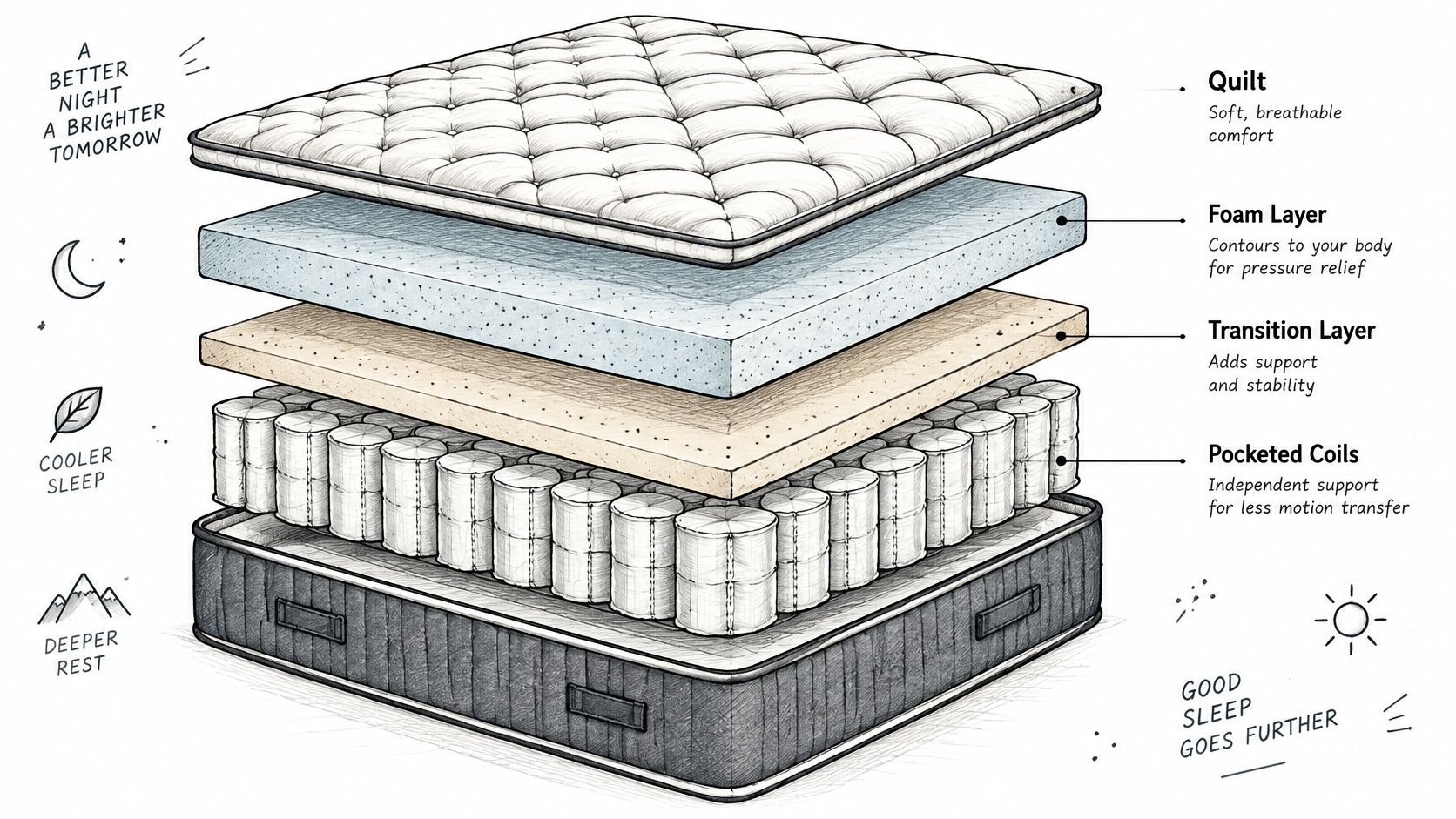
For a hybrid manufacturer, a useful sequence lifts the quilt, separates the comfort foam and transition layer, then exposes the support core. Pair each reveal with a plain-language explanation approved for that specific model. Don't imply that every transition foam reduces motion transfer or that coil count alone establishes quality. Those shortcuts create showroom arguments that a video cannot settle.
BEDHEAD's 3D visualization services can turn an approved construction reference into layered product visuals that support this storytelling. A product video animation can turn the same approved construction reference into a PDP explainer, retailer presentation, or captioned showroom sequence.
Build from specifications, not imagination
Give the animator the current bill of materials, layer order, approved material names, and reference photography. Check quilt loft, gusset details, foam colors, and proportions before approving motion. The visual has to match the model on the floor, not a generic version of the category.
A practical PDP example places the animation above the specification table. The animation explains how the build works; the table preserves the details buyers want to inspect. That split keeps the explanation focused and the specs close to the next question.
Production rule: Reuse the master construction file, but review every model variation before exporting it.
Generative imagery requires care around technical accuracy. The overview of image generation models explained by ImagesArt AI provides background on model types, but generated visuals shouldn't replace an approved construction reference. An attractive layer that doesn't exist creates a product-storytelling problem: the buyer sees a material the build does not contain.
3. Use Feel-Based Demonstration Video to Replace the Showroom Test
Video can't reproduce the sensation of lying on a mattress. It can replace parts of the showroom explanation by showing compression, recovery, edge behavior, and movement under defined conditions.
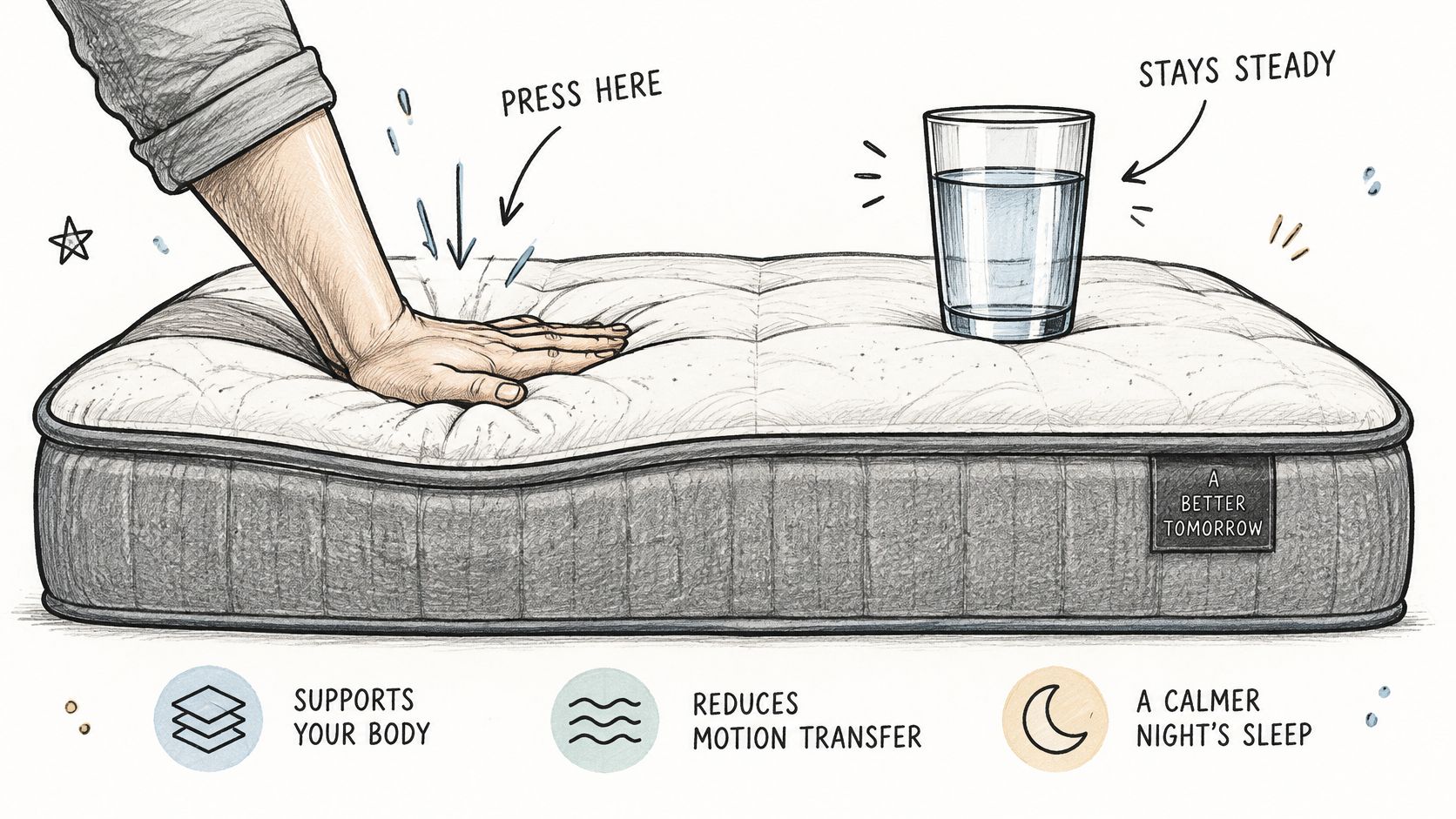
Say a retailer wants to explain a foam mattress's perimeter. Film a person sitting near the edge, standing, and lying near the perimeter. Keep the base, camera position, and demonstrator consistent when comparing another model.
A glass-of-water demonstration can make surface disturbance visible. It doesn't establish how every couple will sleep, and a hand press doesn't prove pressure relief. Explain what viewers are seeing without expanding the claim beyond the test.
Make comparisons fair
Control the setup. Use the same foundation, bedding arrangement, lighting, and camera angle across products.
Identify the firmness scale. Label ratings as the brand's scale rather than implying a universal measurement.
Describe the intended fit. Use approved positioning for sleeper preferences without promising relief from pain.
Keep the unedited reference. Preserve the original demonstration so the team can check whether an edit changes its meaning.
A documented step-by-step product video workflow can help organize the script, capture, and review process. Add a mattress-specific claims review before publication.
Then track returns by reason, not just total volume. If comfort-related returns change after publication, investigate traffic mix, promotions, and policy changes before crediting the video. The useful outcome is better expectation-setting, not a claim that video eliminates returns.
4. Build Silhouette and Room-Scene Video for Lifestyle Context
Use Silhouettes for product clarity and Room Scenes for context. A clean profile helps shoppers inspect mattress height, quilting, and gusset treatment. A bedroom scene helps them understand how the finished bed might look with a frame and bedding.
These formats answer different questions. Don't cover the entire mattress with a duvet when the shopper needs to compare its profile. Don't use a floating product rotation when the campaign needs to show an adjustable base within a bedroom.
For a private label launch, build an approved room scene and create alternate edits with different bedding palettes. Keep the mattress geometry unchanged. The reusable scene can reduce the need to rebuild every campaign from scratch, although initial modeling and approval still require work.
Keep the product more important than the room
Check the relationship between the mattress, foundation, headboard, and nightstands. Use actual product dimensions for overlays, and identify the size shown. Otherwise, a shopper comparing mattress heights may mistake a styling choice for a product difference.
The same discipline applies to delivery formats. Google Ads recommends 1080p assets with distinct horizontal, vertical, and square dimensions, so compose the scene with each destination in mind rather than cropping after approval.
Lifestyle context should help shoppers understand the bed, not conceal the details they need to judge it.
For paid social, a room-scene opening can establish the setting before cutting to construction or feel. On a collection page, a restrained silhouette loop may be more useful than a sweeping bedroom animation.
5. Optimize Product Page Video for Conversion and Load Speed
A mattress product detail page already carries substantial decision-making work: comfort, dimensions, financing, delivery, trial terms, and reviews. Video should answer a question without obstructing the purchase controls.
Start with the question shoppers struggle to resolve from still imagery. For a tall hybrid, that might be profile and bed height. For an all-foam model, recovery or edge compression. Place that demonstration near the relevant information rather than burying every video beneath the reviews.
Say a DTC brand moves a feel demonstration beside the product gallery. Treat the change as a test, not an assumed improvement. Compare purchasing behavior and page performance before rolling the placement across the catalog. A shopper who cannot see how the surface compresses is buying on guesswork, and guesswork is what comes back as a return.
Keep the player lightweight
Use a clear poster image. Show the actual mattress or demonstration, not a black screen or oversized logo.
Load deliberately. Reserve the player's space and defer heavy video resources where appropriate.
Respect the shopper. Avoid unexpected sound and provide visible playback controls.
Test on a phone. Check captions, product selectors, financing messages, and add-to-cart access together.
Don't confuse a production master with a web delivery file. Compress for the placement, inspect the quilt and ticking for lost detail, and test the published page on a constrained connection. Playback that stalls between the gallery and the size picker costs more than a slightly softer image.
Video belongs inside the buying experience rather than beside it, which is why product detail page optimization works better as one design problem than as a video project bolted onto a finished page. The practical priority is clear: shoppers shouldn't have to choose between watching the explanation and using the page.
6. Optimize Video for Search with Mattress-Specific Metadata
Name the question before naming the campaign. A title such as Hybrid vs Memory Foam for Side Sleepers tells the viewer what comparison to expect. An internal launch name doesn't.
Match the title, spoken explanation, description, and destination page. If the video compares construction, link to the relevant comparison article or models. Don't send viewers to a broad homepage and expect them to reconstruct the buying path.
For a retailer, an edge-support demonstration can sit within a product page and a related buying guide. Keep the surrounding copy specific to the model and the demonstrated behavior. Video is useful content, but its presence alone doesn't guarantee a search ranking.
Give viewers useful navigation
Add accurate captions and a readable transcript. For longer explainers, create descriptive chapters such as Edge Support, Motion Isolation, and Trial Policy, provided those topics appear.
Use customer language. Work with phrases from search queries, store questions, and customer service conversations.
Identify the model clearly. Include the current product name and explain which version appears.
Write a useful description. Summarize the answer and provide a direct path to the relevant product or article.
Maintain the details. Review links, specifications, and policy references when the product changes.
Treat file names as asset organization, not an SEO shortcut. Likewise, don't repeat sleeper keywords until the description becomes unreadable.
Our SEO for mattress brands connects product explanations with the pages shoppers need next. The useful test is whether someone arriving from search can identify the mattress, understand the answer, and continue comparing without starting over.
7. Use Video to Support In-Store Sales and Floor Models
A showroom video should help the associate sell, not compete with the conversation. Use it to reveal what the floor model can't show, particularly the support core, foam layers, and differences between closely related builds.
Say a retailer displays neighboring hybrid mattresses with similar ticking. A captioned construction loop can show the meaningful difference while the shopper tests each surface. The associate then connects that difference to what the shopper notices.
Keep the explanation brief enough to use during a live conversation. A looping brand film with music and changing slogans is less useful than a clearly labeled construction demonstration.
Pair the screen with a selling prompt
Provide retail sales associates, or RSAs, with a matching explanation and follow-up question. After showing edge behavior, the associate might ask whether the shopper regularly sits on the perimeter to dress.
Our in-store digital signage guidance fits this role: place the explanation where it supports the product comparison.
Match the floor model. Check the model name, construction revision, and displayed size.
Separate policy details. Link current trial and delivery terms rather than embedding information that becomes outdated.
Track QR destinations. Send scans to the exact model explanation and label campaigns by location or display.
Train the handoff. Associates should know when to show the clip and what question to ask afterward.
A component supplier can use the same approach in manufacturer training, explaining where its material sits and what approved function it serves. Consistent explanations help protect the selling story across manufacturing, retail training, and the showroom floor.
8. Build a Short-Form Content Series Around Real Sleep Questions
Customer service logs and returns notes are a better starting point than a trending audio track. They reveal where shoppers misunderstand firmness, confuse a foundation with a mattress, or expect an adjustable base to change the mattress's underlying feel.
Build a recurring series around those questions. A manufacturer might call it Ask the Build, using layer visuals to explain hybrid construction. A retailer could answer common showroom questions with a floor model and a clear demonstration.
In HubSpot's video marketing statistics roundup, 21% of marketers identified short-form video as the highest-ROI format. That's a reason to test it, not a promise that every mattress question belongs in a short clip.
Batch the capture, not the explanation
Group related filming tasks together, then give each edit a distinct buying question. Capture the edge test, surface recovery, layer visuals, and associate explanation while the correct product and approved materials are available.
The guide to building a short-form video marketing strategy offers a broader planning reference. For bedding, retain enough context that the demonstration remains fair after trimming.
Don't force every destination to use the same edit. A social clip may introduce motion isolation; the linked PDP should provide the fuller explanation and product specifications. A retailer training version may need additional detail about objections and positioning.
Review comments for misunderstandings as well as engagement. If viewers consistently confuse softness with lack of support, revise the explanation. A successful series should make the product easier to understand, not merely familiar.
9. Measure Video Performance Against Revenue, Not Just Views
Choose the commercial question before publishing. A PDP demonstration might aim to improve qualified purchases. A showroom clip might support appointments or stronger model comparisons. A manufacturer's technical video might support retailer inquiries or sales-team adoption.
The metrics shouldn't be interchangeable. Google Ads distinguishes TrueView views from YouTube public views, including differences in billing and what the counts represent. Label the metric in your report instead of treating every view as equivalent.
Separate diagnosis from business outcomes
Watch behavior helps diagnose the edit. Revenue, qualified leads, and returns help evaluate its business contribution.
Record a baseline. Capture conversion behavior, traffic sources, return reasons, and the current merchandising setup before making changes.
Tag the creative. Use campaign-specific UTM parameters and analytics events for starts, engagement, product visits, and inquiries.
Run a controlled comparison. Test the video placement while keeping price, offer, and page structure steady where possible.
Check the economics. Include production, media, discounts, and return-related costs when assessing contribution.
For example, test a feel demo on an eligible PDP audience while retaining a comparable version without it. Avoid comparing people who chose to watch with people who didn't. Interested shoppers may be more likely to watch in the first place.
Use marketing ROI measurement to connect reporting with the original decision. A video with modest reach can still be worthwhile if it helps qualified shoppers choose appropriately or helps retailers explain a premium construction. Views describe exposure, not profitability.
The 9 Video Marketing Practices at a Glance
Practice | Primary Goal | Best Placement | Key Metric to Watch |
|---|---|---|---|
Hook Viewers in the First 3 Seconds | Capture attention and retain viewers | Opening of social ads and product videos | Early hold rate |
Show Layer Construction with Cutaway and Digibun-Style Visuals | Explain internal materials and construction | Product detail pages and showroom displays | Pre-purchase questions |
Use Feel-Based Demonstration Video to Replace the Showroom Test | Help shoppers judge feel and set expectations | Product detail pages and online ads | Product return rate |
Build Silhouette and Room-Scene Video for Lifestyle Context | Help shoppers picture the mattress in their space | Category pages, paid social, and email | Engagement with room-scene videos |
Optimize Product Page Video for Conversion and Load Speed | Improve product-page conversions without slowing the page | Near the hero image and key purchase details | Add-to-cart rate |
Optimize Video for Search with Mattress-Specific Metadata | Increase visibility for relevant mattress searches | YouTube and search-optimized product pages | Search impressions |
Use Video to Support In-Store Sales and Floor Models | Explain products consistently and support showroom sales | In-store screens and QR-linked product tags | QR scans |
Build a Short-Form Content Series Around Real Sleep Questions | Build an audience with useful, recurring content | Social platforms and YouTube | Viewer retention |
Measure Video Performance Against Revenue, Not Just Views | Connect video activity to business outcomes | Product pages and paid video campaigns | Conversion rate |
Pick Two Practices and Ship Them This Quarter
Nine practices is a reading list, not a plan. Picking two and shipping them this quarter beats rolling out all nine at half strength.
Start with a problem-first opening on your top-selling model's demonstration. Show the concern immediately, identify the mattress, and make the construction or feel explanation easy to follow. Keep the original version live so you're comparing a defined change rather than relying on memory.
Then set a revenue-based baseline before adding a new placement. Record purchasing behavior, return reasons, acquisition sources, and the current offer. Decide what would justify keeping, revising, or removing the video before the results arrive.
Give the pilot clear ownership
Product approval. Have the responsible product team verify construction, terminology, and claims. A cutaway that mislabels a foam layer is worse than no cutaway.
Retail alignment. Ask the selling team whether the explanation matches the showroom conversation, particularly on feel and firmness language.
Page performance. Assign someone to check the mobile experience after publication. Video that pushes the add-to-cart button below the fold costs more than it earns.
Commercial review. Evaluate the result against the original business question, including costs and limitations.
Expand only after the first application answers something useful. A strong construction file can support social discovery, a product-page explanation, and sales floor conversations, but each version still needs the right framing and next step.
Bedhead Marketing works with mattress manufacturers, bedding manufacturers, and retailers. Its services cover digital marketing, ecommerce strategy, creative asset creation, product storytelling, high-end visual content, website design, and 3D visualization, including the Digibun layer visuals, Silhouettes, and Room Scenes that carry a construction story. Marketing outcomes can vary based on factors outside any agency's control, which is why one pilot with a clear question and a defined baseline tells you more than a broad rollout.
When you're ready to evaluate a model, demonstration, or product page, describe the buying question you need to answer through the contact form at bedheadmarketing.com/contact. Questions about Terms and Conditions can go to info@bedheadmarketing.com.
BEDHEAD helps mattress brands, bedding manufacturers, and retailers grow. Visit BEDHEAD to discuss how your product construction and feel demonstrations can support a clearer buying decision and measurable business goals.