Examples of Personalization: 8 Mattress Shopper Strategies
A shopper lands on your mattress page at 11 p.m., opens three models in separate tabs, reads the firmness scale on each one, and closes the browser without adding anything to the cart. Nothing on that page knew she'd spent twenty minutes on pressure relief the week before, or that her partner sleeps hot and wants a cooler cover. It showed the same catalog it shows everyone.
That visit was recoverable. Most mattress brands lose it because nothing in the ad, the page, the follow-up email, or the showroom conversation reflects what the shopper needs. Firmness gets listed as "medium firm" with no reference point. Layer builds sit under lifestyle photography. Trial terms hide in a footer link. The shopper leaves and buys the model with the clearest answers, not the best mattress.
The eight examples of personalization below are ones I'd deploy in a bedding business, ordered roughly by how fast they pay back. Each carries a mattress-specific constraint: how firmness drives returns, how partners compromise, how floor models confuse, how ticking and border choices affect the sale, and how comfort complaints land in the first 90 days of a trial.
1. Personalized Mattress Discovery with Sleep Quizzes and Intent-Based Product Pages
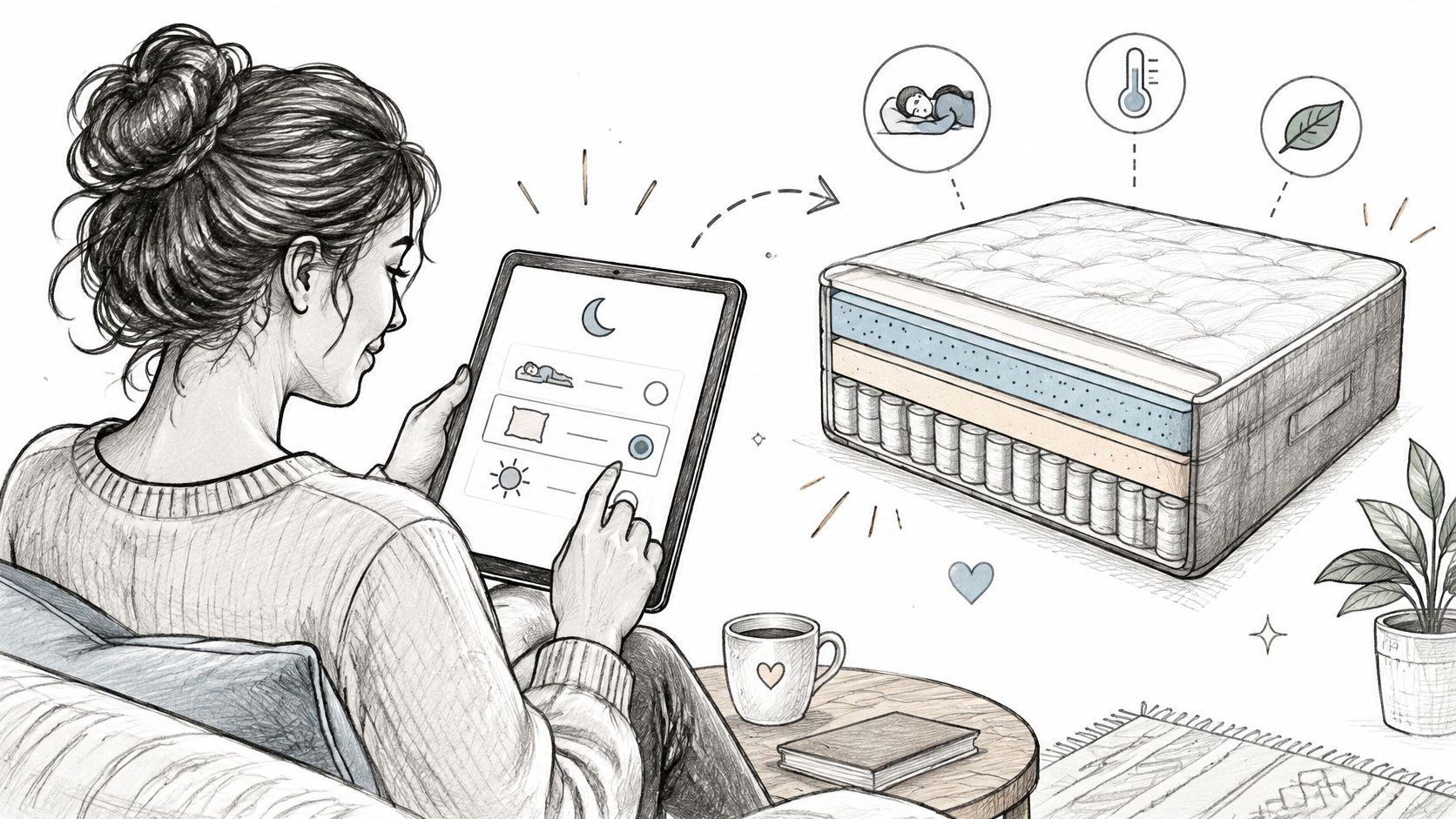
A five-question quiz that asks about sleep position, body weight, pain points, and temperature preference does more than capture an email address. It gives you the language to change what the shopper sees next, from the recommended model to the layer diagram on the product page.
Ask fewer questions and act on the answers
Cap the quiz at five or six questions with a visible progress bar. Build a path for couples and combination sleepers into the first question, because a quiz that assumes one sleeper per bed produces a recommendation neither partner trusts.
Personalization at this level isn't decoration. In a 2017 online survey of 1,000 U.S. consumers aged 18 to 64, Epsilon found that 90% considered personalized experiences appealing and 80% said they were more likely to do business with a company offering them.
Practical rule: If a quiz answer doesn't change what the shopper sees within the next screen, delete the question.
Point the landing page at the search
A shopper who searches for a mattress for back pain shouldn't land on a category page listing fourteen models alphabetically. Lead with pressure-relief specifications, the layer build that addresses the complaint, and the certifications your category verifies, then keep the firmness scale and trial terms in the same viewport.
Pair quiz answers with zero-party data you collect openly, such as preferred firmness, sleeping temperature, and whether the bed is shared. That data feeds the recommendation, the follow-up email, and the showroom conversation three days later.
Quizzes fail when every answer routes to the same bestseller or when the recommendation ignores what's in stock. Retailers can run identical logic on in-store tablets so the associate starts from the shopper's own answers instead of a generic walkthrough.
2. Build-Your-Own Firmness and Comfort Configuration
Some mattress brands let a shopper choose a firmness level, comfort layer, or cover before checkout. That's the difference between selling one SKU and selling the variant that fits the sleeper in front of you.
Fewer choices, shown properly
Saatva offers several firmness options inside its core models, and most direct-to-consumer brands list size and firmness variants on the same product page. The constraint is operational. Every configuration is another SKU to forecast, stock, and absorb as a return at the end of a trial.
Show the options side by side with a layer cross-section rather than a dropdown alone. Someone weighing medium against medium firm needs to see the transition layer thickness and the quilt depth that creates the difference. The Tip Top Furniture & Mattresses firmness guide is a useful reference for language, because it explains the scale the way a shopper uses it rather than in factory shorthand.
Model returns before SKUs: Pull return reasons by firmness selection for the last two quarters before you add a variant.
Render the cross-section at true thickness: A flattering layer diagram creates a showroom objection nobody can answer.
Sync the floor: Train associates on the same options, in the same order, with the same names.
McKinsey's Next in Personalization research, based on a September 2021 survey of 1,013 U.S. adults, found that 71% of consumers expected companies to deliver personalized interactions and 76% became frustrated when they didn't. A configuration page offering one firmness for a shared bed reads as a missing feature, not a simplification.
Map the build logic before you brief a developer. Design for customization covers how to structure variants so the page stays readable at scale.
3. Dual-Sided Adjustable Beds That Adapt to Each Sleeper
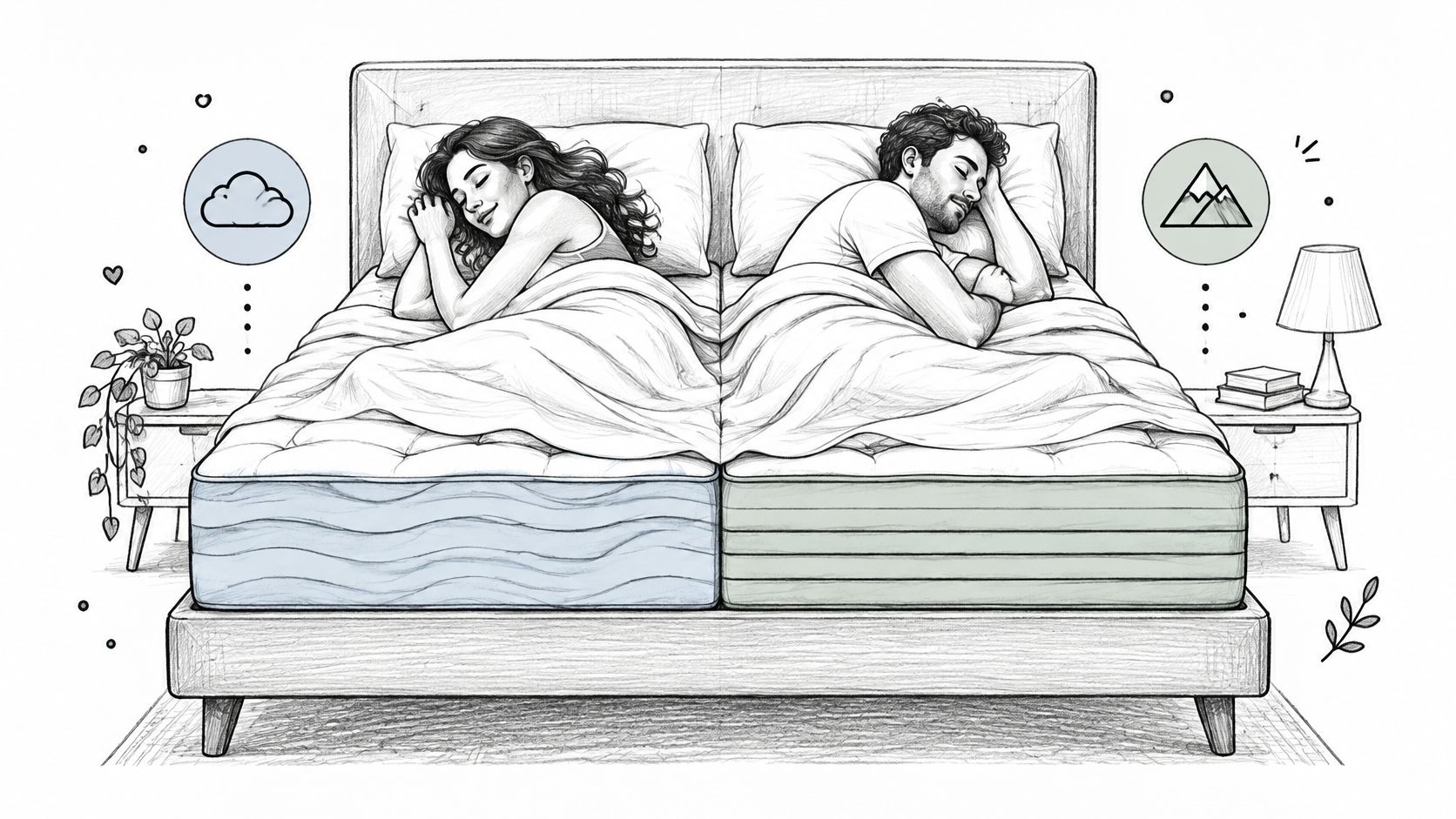
Split-firmness air beds solve the most common compromise in mattress retail: two people, one bed, different needs. Sleep Number lets each side be set separately with sleep tracking through SleepIQ, and showrooms demonstrate the split on the floor because words don't carry it.
Build for a few segments, not one page per sleeper
Sigma Sports used audience segmentation in Google Analytics and Google Optimize 360 to personalize its homepage for returning visitors, swapping a generic carousel for imagery tied to each segment's best-performing brands. The test produced a 32% increase in ecommerce conversion rate and a 28% increase in revenue.
The lesson transfers directly. You don't need a page for every individual. You need four or five segments worth building for: couples with different firmness needs, hot sleepers, heavier sleepers replacing a bed early, and shoppers who abandoned a configuration. Each gets its own hero module, proof point, and call to action.
Demonstrate the setting change
A split-firmness demo fails when the associate says each side adjusts independently and stops talking. Have both partners lie down while the setting changes under them. Carry the same demonstration online with a short split-screen video or an interactive 3D view, because a static photo of a remote control communicates nothing.
Two sleepers with different body weights compress a foam stack differently. One shared firmness setting quietly punishes the lighter partner all night.
If your audience shops as a pair, compromise mattress tips for two sleepers covers the questions they ask before they commit, and it's the right landing page for a split-firmness ad.
4. Personalized Bundles of Mattress Accessories
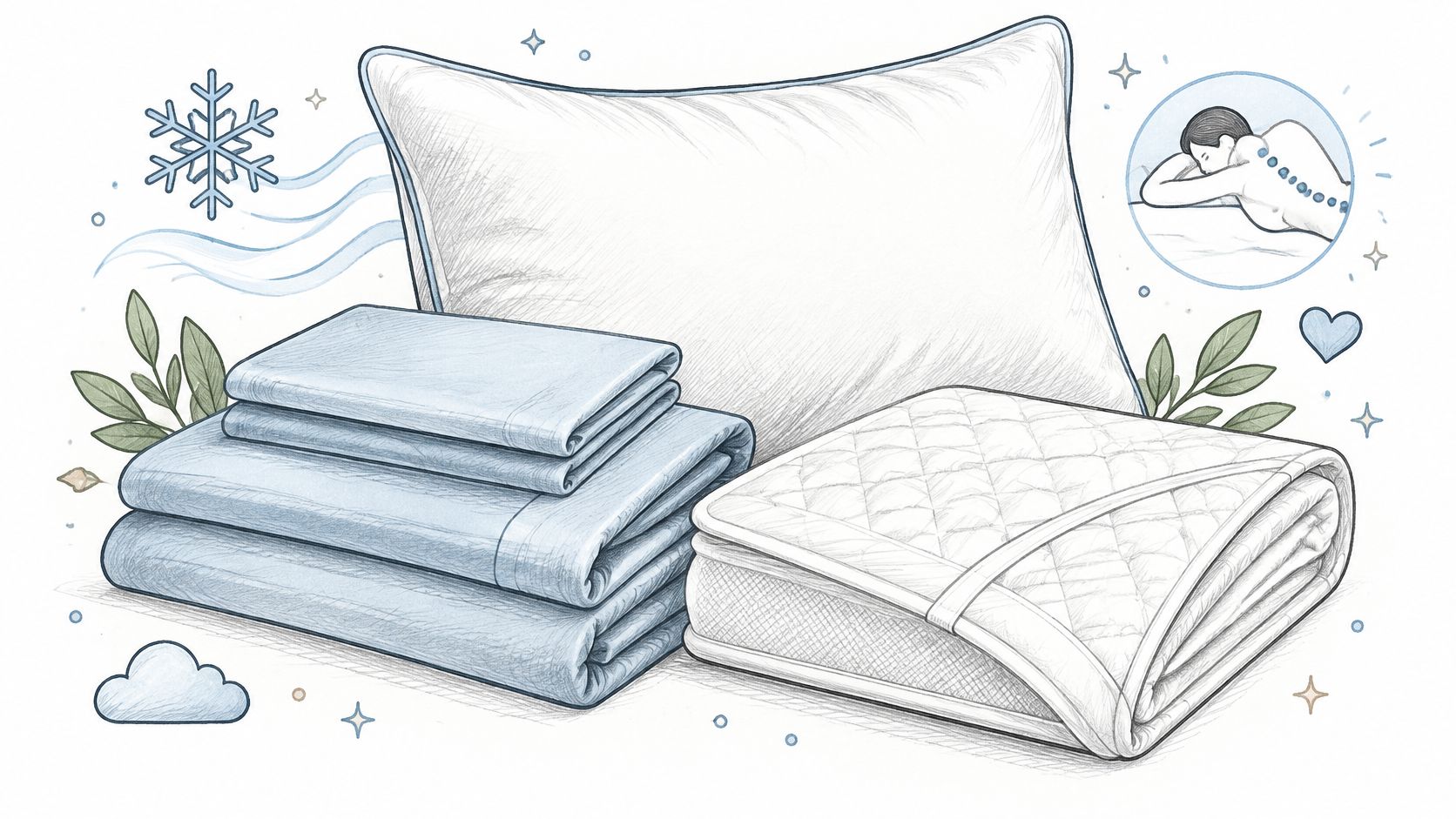
Accessory bundling is the easiest personalization win in the category and the one most brands turn into a discount mechanic. A bundle should answer a problem the shopper already described, not clear out slow-moving protectors.
Put the recommendation where the decision happens
Barilliance's recommendation data shows how much the first interaction carries. Sessions with no recommendation engagement averaged an order value of $44.41, and engaging with a single recommendation was associated with a 369% increase. Those are Barilliance's own research findings rather than a universal benchmark, but the shape holds for mattress carts.
For a mattress order, the moment to recommend is when the shopper picks firmness and size. A hot sleeper needs a breathable protector and a cooling pillow, not a memory foam topper that traps heat. A side sleeper fighting shoulder pressure needs loft and a topper that doesn't flatten the quilt.
Keep the bundle small and the specs honest
One or two accessories at checkout: A four-item bundle gets ignored. A pillow matched to sleep position gets added.
Match depth to the accessory: Sheet pockets and protector skirts have to clear the finished height, including any topper.
Show the change in the sleep surface: A side-by-side of the mattress with and without a topper explains the feel shift better than a paragraph.
Bundle creep is the usual failure. Three add-ons at the cart turn a considered purchase into an upsell and send the shopper back to comparison shopping. Retailers can make the same recommendation during delivery scheduling, when the customer is already thinking about setup and the first night.
5. Personalized Monogram and Custom Embroidery Programs
Monogramming turns a sheet set into a gift. Initials on a pillowcase or duvet cover add perceived value without touching the mattress build, and it gives you a reason to market in November that isn't a discount on a hybrid.
Sell the deadline before the design
Put production windows on the product page and at checkout: Embroidery adds days. A gift that arrives late becomes a refund and a review.
Show placement and thread color: A detail image or a 3D render of the pillowcase corner answers more than a swatch grid.
Keep the program out of core mattress marketing: Gifting runs on its own calendar with its own creative and its own email list segment.
Pottery Barn runs monogramming on select bedding and home textiles, and bedding brands lean on it through the holidays. Timing carries more weight than the offer. Carrefour's personalized campaign program, which spanned more than 250 email, SMS, and website campaigns, included a Black Friday SMS experiment that reported a 260% increase in engagement and a 14.5% improvement in click-through rate after message optimization.
The mattress-specific catch
Custom sheets still have to fit. Confirm pocket depth against every mattress height you sell, including toppers, before promising a monogrammed set on a 16-inch build. Match thread color to the ticking in daylight rather than to a monitor swatch, because ivory and cream read differently on a quilted surface. And keep the embroidery timeline visible for anyone inside a trial window, since the sheets may land after the return period ends.
6. Interactive 3D Configurators for Custom Ticking and Mattress Builds
This is the example most mattress manufacturers should care about, because it shortens a buyer approval cycle rather than a consumer funnel.
Approve the build before the sample run
A manufacturer presenting five ticking and border combinations to a retail buyer used to ship samples and wait. A configurator shows the same five in a browser, with handles, gusset depth, quilt pattern, and border contrast visible on the finished build. The buyer approves faster and the sample budget goes to the two options most likely to survive a line review.
Match rendered layer thickness to production specs: A cross-section that flatters the build will produce a showroom objection nobody can answer.
Use silhouettes for catalog views and room scenes for context: Clean views carry the spec sheet, lifestyle renders carry the brand.
Start with three ticking options: The top three cover most orders and keep the tool from becoming a catalog of everything.
Where the consumer meets it
An ecommerce team can run the same tool as a comparison: a quilted hybrid against a plain-ticking version, same scale, same angle, same lighting. That's the closest thing to running a hand along the border online, and it settles the question a flat photo never can.
A configurator earns its budget the first time a buyer approves a build without a sample shipment.
Read what a product configurator needs to do before you brief a development team, and export the same views into the sales deck so the retail team presents identical options on the floor.
7. Personalized Showroom Consultations for Mattress Shoppers
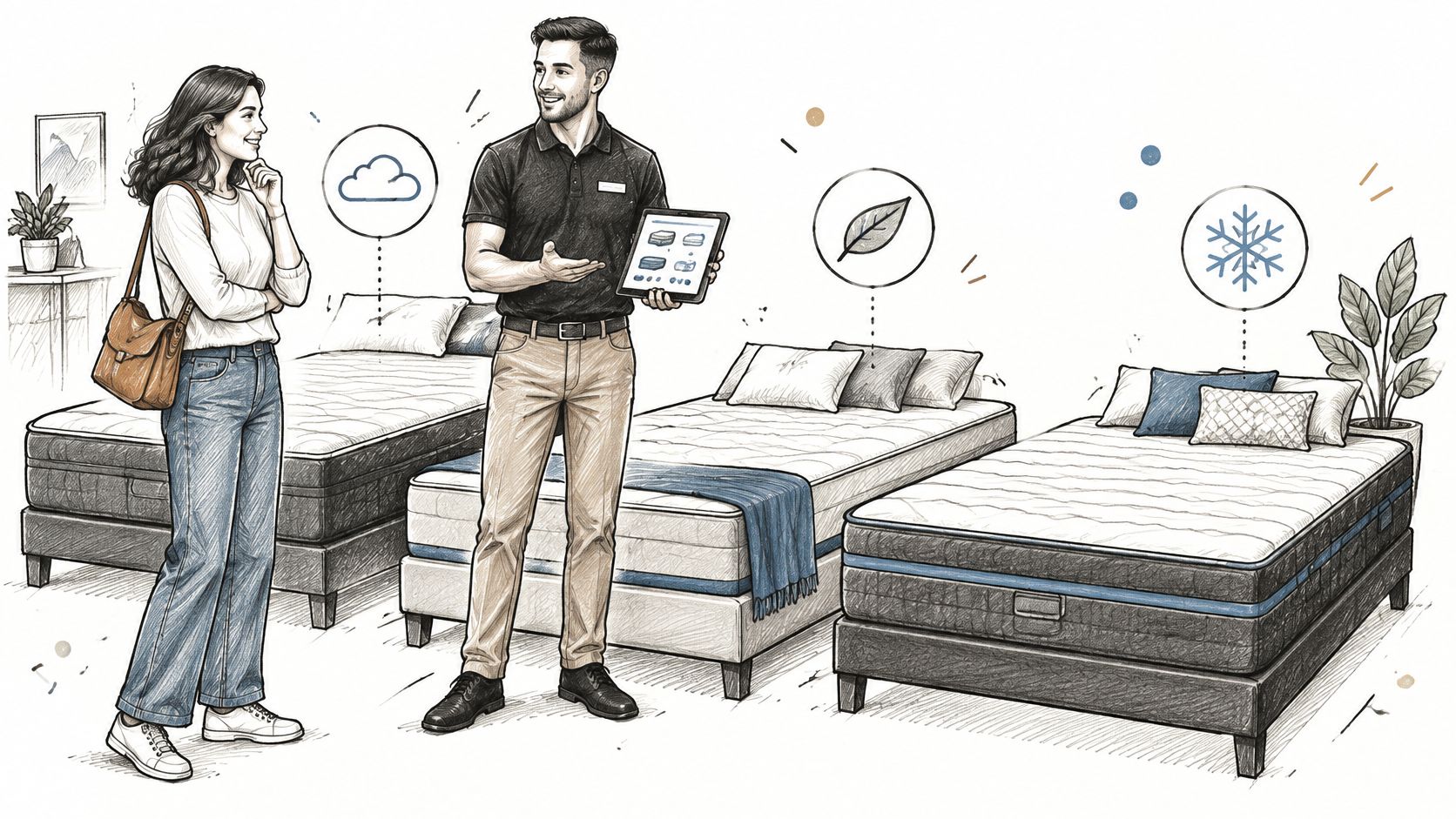
The shopper who leaves a showroom without buying usually isn't unconvinced by the mattress. They stall in front of four floor models that look nearly identical, all carrying the same medium-firm placard, and leave to think about it.
Three questions before any model is shown
Ask about sleep position, pain points, partner preferences, and budget, in that order, then walk the shopper to no more than three models. Fewer options produce a decision. Twelve produce a nap.
The order matters because each answer rules something out. A side sleeper reporting shoulder pressure points toward softer comfort layers. A couple split on firmness narrows the floor to dual-comfort or adjustable builds before anyone lies down.
Adobe's 2025 global research found that 78% of consumers expect consistent experiences across digital and physical channels, while only 45% of brands meet that expectation. A shopper who already answered those same questions online and hears them repeated on the floor is that gap made visible.
What the associate records matters
A consultation collects sensitive information: pain history, body weight, a partner's sleep complaints. Qualtrics XM Institute research found that 53% of consumers are highly or extremely concerned about personal data privacy and only 33% trust companies to use their information responsibly. Write down what changes the recommendation. Skip the rest.
A note about shoulder pain that leads the associate to a pressure-relieving comfort layer earns its place in the record. A note about a disagreement between partners does not.
If an associate's CRM note would embarrass the customer being read it aloud, it doesn't belong in the record.
Signage does quiet work here. A placard listing firmness, layer build, and suitable sleep positions in plain language cuts repeated questions and frees the associate to spend the conversation on the person instead of the spec sheet. A shopper who reads that one model pairs a plush quilt top with a firmer support core asks a better first question.
8. Personalized Replacement Reminders and Sleep Check-Ins
Post-purchase is where mattress brands leave the most value on the table. The sale closes, the emails stop, and eight years later someone buys from whoever advertised loudest.
Build the first 90 days around the trial
Four or five emails is enough. Reference the model and firmness with dynamic fields, explain how the mattress settles (foam softening, quilt loft relaxing), and send a firmness-support article rather than a discount when someone reports discomfort.
Say a shopper buys a medium hybrid and emails on day 12 about lower back pressure. An associate who can see the model, the firmness selection, and the quiz answers can suggest a topper or a foundation change before the customer concludes the mattress is wrong. That's one return avoided and one relationship kept.
If you're building this from scratch, lifecycle marketing covers the sequence logic and where personalization fields belong.
Then move to replacement windows
Set reminders off the model, not a blanket timer. An entry innerspring, a high-density foam, and a latex hybrid don't age at the same rate, and a reminder tied to the original firmness starts the next purchase with information instead of a cold ad. In 2024, Deloitte's Consumer Loyalty Survey found that 60% of U.S. consumers said they were satisfied with the level of personalization in their loyalty programs, which leaves plenty of room to be the brand that does it better. Bedhead Network carries marketing insights, training resources, and an industry directory that can inform how these programs get built.
How the eight personalization approaches compare by channel, use case, and trade-off
Item | Channel | Best For | Key Trade-off |
|---|---|---|---|
Personalized Mattress Discovery with Sleep Quizzes and Intent-Based Product Pages | E-commerce and digital advertising | Matching shoppers to mattresses and relevant product information | Needs ongoing content and data maintenance; recommendations may feel generic |
Build-Your-Own Firmness and Comfort Configuration | E-commerce and showrooms | Shoppers who want to choose firmness or comfort options | More choices can overwhelm shoppers and complicate inventory |
Dual-Sided Adjustable Beds That Adapt to Each Sleeper | E-commerce and showrooms | Couples with different sleep preferences | Higher cost and added electronics, app, and warranty concerns |
Personalized Bundles of Mattress Accessories | E-commerce, checkout, and retail delivery | Relevant accessory recommendations and higher order value | Poor fit or excessive prompts can lead to returns or lost conversions |
Personalized Monogram and Custom Embroidery Programs | E-commerce and gifting campaigns | Wedding and holiday shoppers seeking personalized bedding | Longer production times and custom-order return limitations |
Interactive 3D Configurators for Custom Ticking and Mattress Builds | Manufacturing, retail sales, and e-commerce | Previewing mattress materials, finishes, and construction | Requires upfront investment and accurate coordination with production |
Personalized Showroom Consultations for Mattress Shoppers | In-store retail | Guiding shoppers to a focused set of mattress options | Requires staff training and may slow service during busy periods |
Personalized Replacement Reminders and Sleep Check-Ins | Email and post-purchase marketing | Supporting trial-period satisfaction, care, and repeat purchases | Requires clean customer data and careful message frequency |
Turning Personalization Into Mattress Revenue Next Quarter
Pick the gap that costs the most and fix only that one first. For most mattress brands it is one of three things: firmness-related returns eating the margin on a hybrid, floor traffic stalling in front of four nearly identical models, or a post-purchase list that goes quiet after the delivery confirmation.
If returns are the problem, look at where the firmness decision happens. A quiz that captures sleep position and body weight, a configuration page that shows the layer cross-section, and a check-in during the first month all attack the same failure: a shopper bought a feel they could not evaluate before it arrived. Measure the change in return rate by model and firmness selection, not just conversion. A configurator that lifts conversion and doubles medium-firm returns is a loss.
If the showroom is the problem, the fix is a consultation script and better signage, not more floor models. Three models per consultation, firmness and layer build on the placard in plain language, and an associate who asks about the partner's sleep before recommending anything. Track appointment-to-close rate and the average number of models tested, because both move when the conversation gets structured.
If retention is the problem, build the 90-day sequence before the replacement campaign. Four or five emails that reference the model and firmness the customer bought, explain settling, and offer help during the trial will teach you more about your product than any survey.
Then expand in order of evidence. Add the second segment once the first shows a revenue lift. Add the second configurator view once the first shortens a buyer approval. Add monogramming once your gifting calendar has a production deadline attached to it. Nobody needs all eight running at once, and a half-built program in every channel performs worse than one finished program in the channel where your returns are worst.
One governance note before you start. Every program on this list collects something: sleep position, body weight, a partner's preferences, an embroidered name. Store only what changes a recommendation or a message, write down why you are keeping it, and give the customer a way to opt out of personalization without losing the trial or the warranty. Trust is the constraint that decides whether any of this works twice.
BEDHEAD builds the assets these personalization programs depend on: photorealistic 3D graphics that show the layer stack, interactive imagery for configuration pages, website development, SEO, digital ads, and virtual shopping experiences that put the right mattress in front of the right shopper. If your quiz recommends a mattress nobody can picture, or your showroom consultation has no visual support behind it, that is the gap worth closing first. Visit BEDHEAD to see how the studio and the marketing team work together on mattress-specific programs.