Digital Ads Management for Mattress Brands
A mattress retailer checks the dashboard on Monday morning and sees plenty of activity. Search clicks are coming in, social videos are reaching local shoppers, and a retail partner reports strong sponsored-product performance. Yet showroom traffic feels soft, margins are under pressure, and nobody can confidently explain which campaigns produced new business rather than collecting credit for customers who were already close to buying.
That's the daily reality of digital ads management for mattress brands. The job isn't just launching Google Ads or boosting a social post. It's coordinating budget, targeting, creative, consent, product feeds, showroom outcomes, financing applications, and ecommerce sales across a buying journey that rarely happens in one session.
For manufacturers, retailers, private-label brands, and sleep-product startups, the practical question is straightforward: which advertising activity creates profitable demand, and which activity only looks efficient inside a platform report?
The Reality of Paid Media in the Sleep Category
A mattress buyer may begin with a vague problem, such as waking up hot or feeling pressure at the shoulder. The search can then move through cooling materials, hybrid mattresses, adjustable bases, reviews, financing, local availability, and showroom visits before a purchase happens. A campaign optimized only for the first click misses most of that journey.
Consider a regional retailer promoting a premium hybrid mattress. A generic setup might send every visitor to the same product page, use one broad audience, and judge success by last-click purchases. That approach can produce activity, but it ignores the differences between a shopper comparing foam layers, a returning visitor checking delivery terms, and a local buyer who wants to test the bed in person.
Digital ads management gives each of those situations a defined role. Search can capture active demand, social and video can introduce a comfort story, retargeting can answer objections, and local campaigns can support showroom visits. The manager also has to protect margin by considering discounts, delivery costs, financing fees, returns, retailer agreements, and the difference between a qualified lead and a low-value form fill.
The scale of the market makes casual management harder to justify. U.S. internet advertising revenue reached $258.6 billion in 2024, up 14.9% from the prior year, according to the Interactive Advertising Bureau's 2024 revenue report. Search represented $102.9 billion, or 39.8% of that market, while social advertising generated $88.8 billion, or 34.3%, so mattress marketers are working inside large, competitive environments rather than isolated channels.
Practical rule: If your campaign report can't connect spend to a meaningful business event, it isn't finished. It's only recording platform activity.
A sound operating model maps paid advertising from planning through execution, optimization, and billing. This guide to map paid advertising from planning to billing is useful for clarifying the operational layer behind campaigns. For a bedding company, that layer should also include inventory status, product claims, store locations, lead quality, and the sales process used by retail associates.
Core Components of a High-Converting Campaign
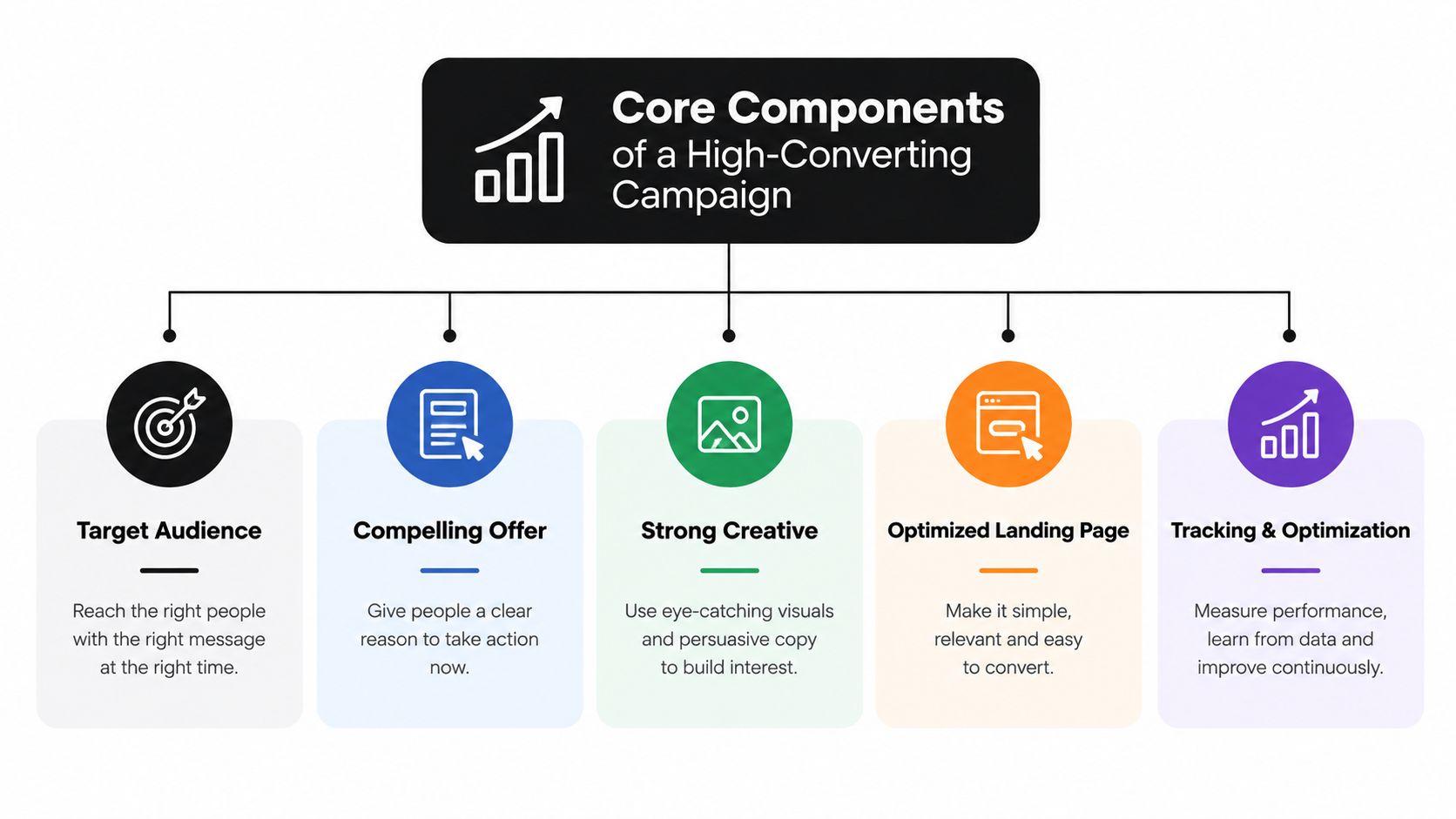
A high-converting mattress campaign usually depends on five connected decisions:
Audience and intent: Reach people searching for a cooling hybrid mattress, a bed for side sleepers, a king mattress with financing, or a nearby showroom. These signals are more useful than relying on broad demographic assumptions alone.
Offer and economics: Decide whether the campaign is selling a product, a trial, a financing option, a showroom appointment, or a qualified retail lead. A discount can attract response while damaging contribution margin if the offer isn't matched to the product and channel.
Creative and proof: Translate comfort claims into understandable evidence. A Digibun can show foam layers, coils, quilt construction, and edge support. A room scene can make scale, styling, and bedroom fit easier to judge.
Landing experience: Send cooling-intent traffic to a page that explains cooling materials, not a generic category page. A shopper searching for financing should find payment information, eligibility details, delivery expectations, and a clear path to purchase.
Tracking and optimization: Define what counts as a sale, qualified lead, call, financing application, store-locator action, or showroom visit. Then use those events to adjust bids and budgets rather than optimizing blindly toward the easiest event to capture.
Campaign structure should reflect the mattress buying cycle. An awareness ad might introduce a breathable cover and a hybrid construction. A consideration ad can compare firmness, support zones, or pressure relief. A lower-funnel ad should make the next step obvious, whether that's booking a showroom visit, applying for financing, or completing an online order.
Match bidding to the commercial outcome
Bidding logic needs more context than a simple click target. A manufacturer selling through retail partners may value qualified retailer inquiries and product-page engagement differently from a DTC brand that can observe online purchases directly. A brick-and-mortar chain may need to import store-level sales or lead outcomes before deciding which local campaigns deserve more budget.
Creative testing should also be controlled. Test one meaningful variable at a time where possible:
Comfort proposition: Cooling, pressure relief, responsive support, or motion separation.
Construction explanation: Foam layers, pocketed coils, quilt, ticking, or gusset details.
Commercial reassurance: Trial terms, delivery, warranty, financing, or return conditions.
Visual treatment: Digibun, Silhouette, room scene, product video, or customer-focused lifestyle imagery.
The point isn't to produce more ad variations for their own sake. It's to learn which message removes a specific buying objection at a specific stage. Teams looking to improve conversion rates should start with the connection between ad promise and landing-page proof, not with cosmetic changes to button color.
Choosing the Right Channels for Mattress Shoppers
Search, social, CTV, and retail media solve different problems. Treating them as interchangeable performance channels usually leads to poor measurement and weak creative decisions.
Channel | Funnel Stage | Best Mattress Use Case | Primary KPI |
|---|---|---|---|
Search | Consideration and purchase intent | Capture searches for mattress types, sizes, financing, and local stores | Qualified sales, leads, or store actions |
Social | Awareness and consideration | Demonstrate comfort stories, product construction, reviews, and lifestyle fit | Qualified traffic, engaged visits, assisted demand |
CTV | Awareness and demand creation | Build recognition for a brand, collection, or retail footprint | Reach quality, branded search, geographic lift |
Retail media | Purchase proximity | Promote products within retailer search and category environments | Retail sales, new-to-brand outcomes, incremental revenue |
Search is usually strongest when the consumer has articulated a need. A query such as “cooling hybrid mattress” gives the advertiser a useful commercial signal. It still doesn't guarantee profitability, because the click may land on a weak product page or a model with limited inventory.
Social and CTV can work earlier in the journey. A short video showing a room scene, a partner testing motion separation, or a Digibun explaining the internal build can make an unfamiliar product easier to understand. Those channels often deserve evaluation against demand-creation measures rather than last-click revenue alone.
Retail media brings the product closer to purchase, especially when shoppers are already browsing a retailer's assortment. U.S. retail media spending is projected to reach $60 billion in 2025 and $100 billion by 2028, with projected growth of 20% in 2025, according to Nielsen's retail media analysis. The same source identifies unresolved issues around deduplication, incrementality, transparency, and cross-platform measurement.
Choose by business model, not fashion
A regional showroom group may prioritize local search, store-locator actions, and geo-based testing. A national manufacturer may need retailer media, branded search protection, product education, and partner-ready creative. A DTC startup may have greater control over first-party data, but it also carries responsibility for returns, delivery expectations, product visualization, and customer support.
Retail media can capture existing demand efficiently, but the retailer often controls the customer relationship and reporting environment. DTC advertising offers more control over the product page and customer data, yet the brand must create demand and carry the full cost of conversion. A balanced plan makes those trade-offs explicit instead of assigning every channel the same return target.
For teams connecting campaign data to operational workflows, a technical reference such as the Google Ads MCP server setup can help clarify how platform access fits into a broader management process. Channel planning should also sit alongside owned and earned activity, including the examples of marketing channels that support mattress discovery beyond paid placements.
Privacy-Safe Tracking and Responsive Search Assets
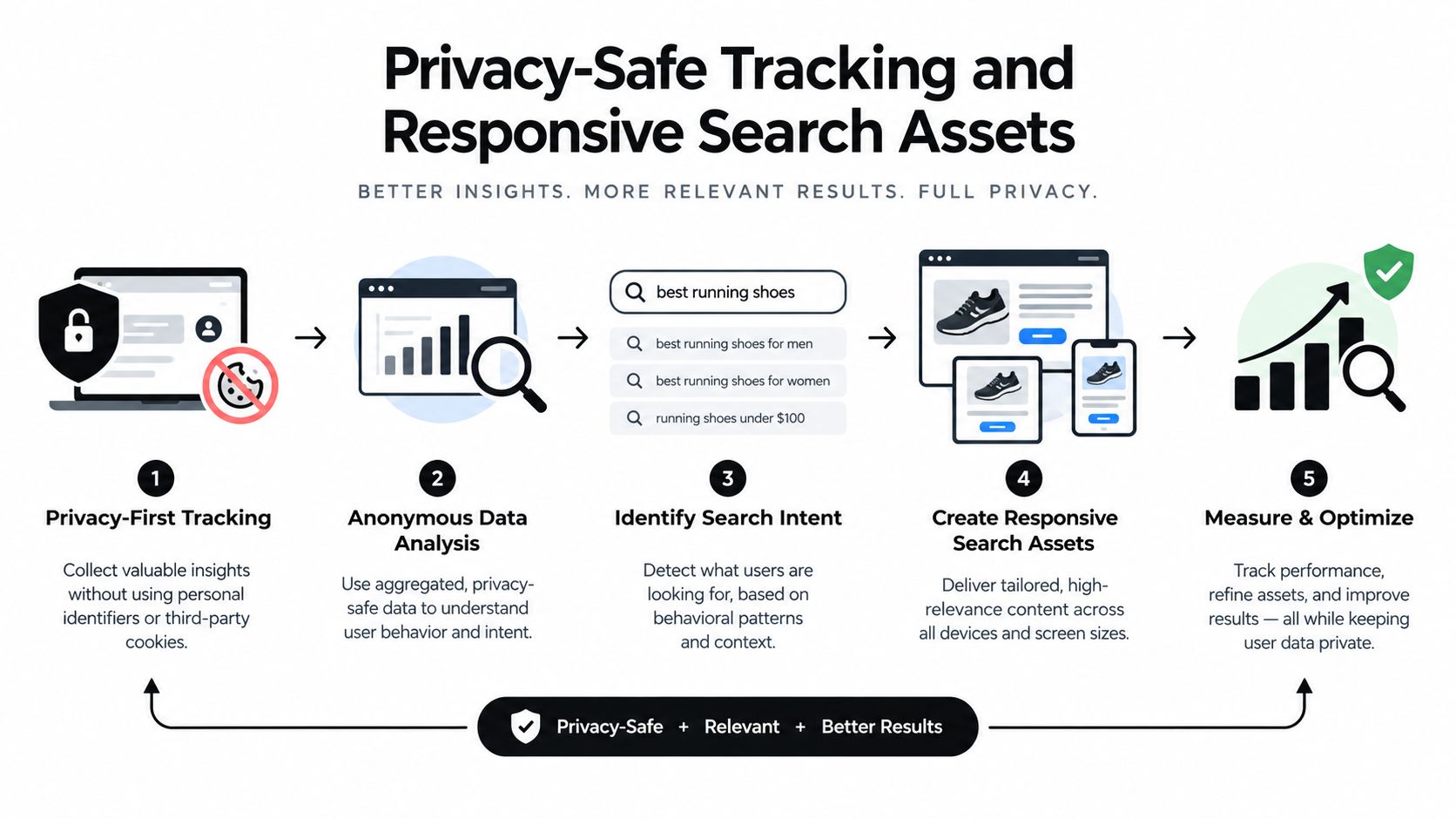
Browser-only measurement is fragile for mattress brands. A shopper may research on one device, submit a lead form, call a store, visit a showroom, and purchase through a retail associate. Consent choices, cookie restrictions, and cross-device behavior can prevent a standard browser tag from showing the complete path.
Google Ads Enhanced Conversions addresses part of that problem by supplementing standard conversion tags with consented first-party data, including an email address, phone number, name, or address. The information is hashed with SHA-256 before transmission, and Google compares the hashed values with hashed data from signed-in accounts to attribute eligible ad interactions, as documented in Google's Enhanced Conversions guidance.
Build the pipeline carefully
Start with the ordinary website conversion tag. Then define which events matter to the business and which fields can legally and ethically support measurement.
Name the events: Purchases, qualified retail-lead forms, phone calls, financing applications, showroom actions, and store-locator engagements may all have value, but they shouldn't all receive the same optimization priority.
Capture consent status: Exclude data when the required consent isn't present. Privacy-safe measurement doesn't mean collecting everything available.
Transmit through an approved method: Google supports implementation through the Google tag, Google Tag Manager, or the Google Ads API. API workflows can send data for up to 24 hours after conversion, according to the Google Ads policy documentation.
Reconcile downstream outcomes: Match leads and financing applications to CRM and sales records. A form that never becomes a sale shouldn't carry the same value as a completed purchase.
A mattress brand should also plan search assets as a system. Responsive search ads allow up to 15 headlines and 4 descriptions, while Google's API documentation requires at least 3 headlines, 2 descriptions, and 1 final URL. That structure supports controlled combinations around cooling materials, firmness, delivery, trials, financing, and mattress sizes, without creating a separate static ad for every message.
Make claims easy to verify
Don't put “sleeps cool” in every headline unless the landing page explains why. Connect claims to the actual product construction, such as breathable ticking, gel foam, coil airflow, or a quilt designed for a specific feel. Financing copy must match current terms, and trial or return language must remain consistent across the ad, product page, retailer listing, and showroom materials.
A practical conversion tracking setup should be documented so marketing, sales, ecommerce, and retail partners agree on event definitions. That shared vocabulary prevents the platform from optimizing toward convenient signals that don't reflect business value.
Measuring True Incrementality Beyond Platform ROAS
Platform ROAS is useful, but it isn't a neutral statement of causality. An ad system may claim credit for a shopper who searched the brand, visited a retailer, or was already likely to purchase. A strong reported return can therefore coexist with weak incremental growth.
The measurement gap is widespread. Only 32% of global marketers reported measuring media spending holistically across digital and traditional channels, with the figure falling to 23% in Europe and 29% in Latin America, according to Nielsen's 2025 annual marketing report. Retail media adds another complication because brands often rely on retailer-owned attribution rather than independent validation.
Use a staged measurement model
Smaller mattress brands don't need to begin with an elaborate modeling program. They do need a measurement discipline that becomes more rigorous as investment grows.
Stage one, define value: Separate purchases, qualified leads, calls, financing applications, showroom actions, and low-value engagement. Assign values based on actual sales quality and margin, not convenience.
Stage two, compare systems: Reconcile platform conversions with CRM records, point-of-sale data, retailer reports, and ecommerce orders. Investigate discrepancies rather than averaging them away.
Stage three, create a holdout: Use geographic or audience holdouts where practical. Compare outcomes in areas or groups exposed to the campaign with a comparable group that isn't exposed.
Stage four, test incrementality: For larger programs, introduce structured incrementality testing or marketing-mix modeling. These methods help estimate the contribution of channels that assist demand without receiving the final click.
A local retailer could hold back a comparable geographic area from a campaign and compare qualified store actions and sales against the exposed market. A manufacturer using retail media could compare retailer-reported conversions with independent sales data and examine whether sponsored placements grow total category sales or only shift shoppers between listings.
The question isn't “Which platform claims the most revenue?” It's “What changed because we paid for this exposure?”
The guide to measuring marketing attribution provides a useful framework for making that distinction operational. Optimize toward profitable incremental outcomes, even when the resulting report looks less flattering than a platform dashboard.
Aligning 3D Visuals with Paid Media Strategy
Mattresses are difficult to sell through a screen because the shopper can't immediately feel the quilt, compress the foam, or test the edge support. Product imagery has to explain what photography often leaves ambiguous, especially when a collection contains similar-looking models with different internal constructions.
That makes creative a performance input, not a decorative layer. A strong media plan can still fail when the ad shows one construction, the product page presents another, and the retailer listing uses an outdated comfort claim.

Assign the asset to the message
Digibuns, or layered product visuals, work well when the buyer needs to understand what's inside the mattress. A paid search visitor comparing a hybrid model may respond to a clear view of foam layers, coils, support zones, ticking, quilt, and gusset construction.
Silhouettes suit cleaner product-led placements. They can keep the mattress shape, surface, and key design details prominent in retargeting or catalog environments where the shopper already understands the basic offer.
Room Scenes add context for social video and CTV. They show scale, styling, bedroom fit, and the emotional side of better sleep without forcing the viewer to interpret a technical cutaway.
The 3D product visualization guide is relevant when a brand needs one accurate product model adapted into multiple paid and owned formats.
Build a creative control system
Start with a source-of-truth product sheet for every advertised model. Record the exact comfort position, material descriptions, trial language, delivery terms, financing message, size availability, and retailer-specific restrictions. Then adapt the presentation by channel without changing the underlying promise.
A useful testing roadmap might compare:
Education versus emotion: Digibun explanation against a room scene.
Feature versus outcome: Foam-layer detail against pressure-relief language.
Product versus reassurance: Mattress construction against financing, delivery, or trial information.
Static versus motion: A clean Silhouette against a short animated layer breakdown.
This process reduces the risk of making a premium mattress look like a commodity. It also helps ecommerce teams address visualization, returns, and conversion concerns before the shopper reaches checkout. When the product page, ad creative, showroom materials, and retailer assets all explain the same product accurately, paid traffic has a better chance of becoming a confident purchase.
Executing Your Strategy with Industry Specialists
Effective mattress advertising requires more than platform knowledge. The manager needs to understand ticking and quilt construction, foam-layer terminology, hybrid mattresses, firmness language, showroom behavior, floor-model economics, retail margins, financing objections, delivery constraints, and the difference between a product inquiry and a sale.
That's why a specialist partner can reduce expensive trial and error. A generalist may know how to configure a campaign, but a mattress-focused team can question whether the offer matches the comfort story, whether the Digibun accurately represents the build, whether the product page answers a side sleeper's concern, and whether the lead will help a retailer close business.
A practical review should cover:
Media structure: Campaigns, audiences, search intent, budgets, bidding, and geographic coverage.
Commercial events: Purchases, qualified leads, calls, financing applications, showroom actions, and CRM outcomes.
Creative consistency: Silhouettes, Digibuns, room scenes, product claims, reviews, and financing language.
Retail alignment: Inventory, floor models, store routing, associate training, and partner reporting.
Profitability: Margin, returns, delivery costs, discounting, and incremental revenue.
Bedhead Marketing operates as a digital marketing agency, 3D design studio, brand-development group, consultation resource, and sales-training organization focused exclusively on mattresses and bedding. Its work spans SEO, paid media, content strategy, product-page optimization, Google and Meta advertising, 3D assets, sales training, USP development, presentation decks, and product activation for manufacturers, retailers, private-label brands, and sleep-product startups.
For continuing education and industry connections, the free BEDNET community is available at BedheadNetwork.com. It brings together mattress professionals through marketing insights, news updates, networking, training resources, an industry directory, and business tools.
If your paid campaigns are generating clicks but showroom sales, ecommerce orders, or qualified retail leads remain unclear, BEDHEAD can review the media structure, tracking pipeline, product pages, and visual assets together. Connect with the mattress-focused team to identify where budget, claims, creative, or conversion data are preventing your campaigns from producing accountable revenue.