3D Rendering Cost for Mattress Imagery Explained
A mattress rendering can range from roughly $250 to $2,500+ per still (rendering cost guidance), depending on what needs modeling and how the image will be used. That number is also the least interesting part of the quote.
The actual budget sits in the work nobody itemizes: building the mattress model itself, governing revisions across teams, and licensing the final files. A single hero image is a receipt. The asset library behind it is the investment.
Mattress brands feel this gap faster than most product categories. A render has to carry ticking, quilting, foam layers, and sometimes a hybrid coil system, and retail partners rarely accept the same composition twice. When the product team changes a firmness tier or a retailer requests a new angle, the cost question becomes simple: does the underlying model exist, and do you own it?
If the answer is no, every campaign starts from zero.
Why the Per-Image Quote Misleads Mattress Brands
A per-image quote can make two studios look easy to compare. One might quote $600 for a hero image and another $1,400, but the prices may cover very different work. One may be starting from a finished, approved mattress model. The other may need to build the product, create materials, develop the scene, and manage reviews.
The useful question isn't "How much for one image?" It's what portion of the quote creates a reusable visual system, and what portion pays for a single campaign? The answer affects what you'll pay when the product team updates a firmness tier, ecommerce needs another angle, or a retailer asks for a version on a different background.
Compare the work behind the image
A lower price can make sense when the model already exists, the brief is settled, and the studio only needs to produce a straightforward view. It can become a costly choice if the quote excludes model cleanup, material accuracy, project coordination, or revisions. If every new campaign requires reconstructing the mattress, you're paying repeatedly for work that could have been done once and reused.
That's especially relevant to mattress manufacturers managing product families. A master model may need to represent the outer silhouette, gusset, quilt pattern, handles, foundation, and internal construction. A cutaway for a sales presentation may require a different level of detail from a white-background silhouette used in a product gallery.
Practical rule: Ask the studio to separate one-time asset creation from the cost of producing each view, variation, or campaign deliverable.
A sound quote should make clear what files you'll receive, what uses are covered, how revisions are handled, and whether future work can use the same model. If the quote only gives a per-image price, ask what happens when the product or campaign changes. The cheapest image today may not be the lowest-cost way to build a dependable content library.
The Five Factors That Drive Mattress Rendering Pricing
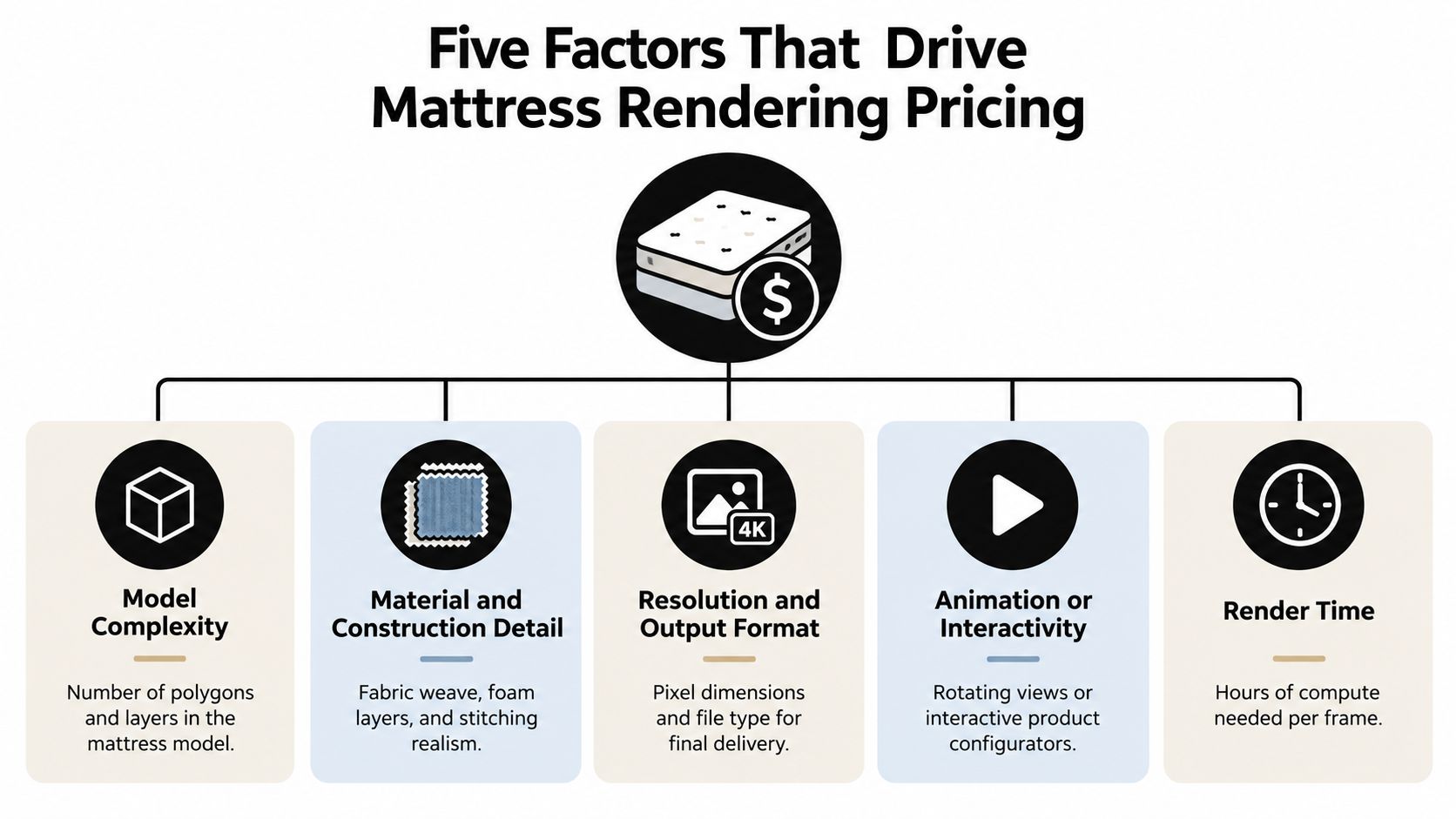
Five practical factors shape a mattress rendering quote: model complexity, material and construction detail, output requirements, animation or interactivity, and render time. The visual rendering process helps clarify why the final still is only one part of the work.
What the quote is paying for
Model complexity starts with the source material. Usable CAD files, dimensions, material references, and approved brand assets can reduce the amount of digital reconstruction. If the artist has only photos or incomplete specifications, they'll need to interpret the shape and build the mattress model before producing polished images. A hybrid mattress with an internal coil unit and multiple foam layers demands a different model from a simple exterior silhouette.
Material and construction detail determine whether the product reads accurately at the intended viewing distance. A quilt pattern that looks convincing in a full-page hero image may need more detailed geometry or texture work for a close-up. The same applies to ticking, seams, handles, gussets, and visible foam layers in a Digibun-style cutaway. For product verification, accuracy matters more than surface gloss.
Resolution and output format depend on where the imagery will appear. A product-page gallery, showroom display, retailer portal, and print piece may need different crops, dimensions, or file formats. Define those uses before production so the studio can plan suitable camera angles and deliverables.
Motion, interactivity, and compute
A static view differs from an animated turntable or interactive product configurator. Animation adds frames and motion decisions. Interactive views may require assets prepared for a website experience rather than a single finished image.
Finally, render time reflects the scene, quality settings, hardware, and number of outputs. A detailed bedroom scene with layered bedding and carefully controlled lighting takes a different production path from a clean silhouette. Ask which costs are fixed, such as building a new model, and which can be shared across multiple views.
Resolution and Compute Hours in Real Dollars
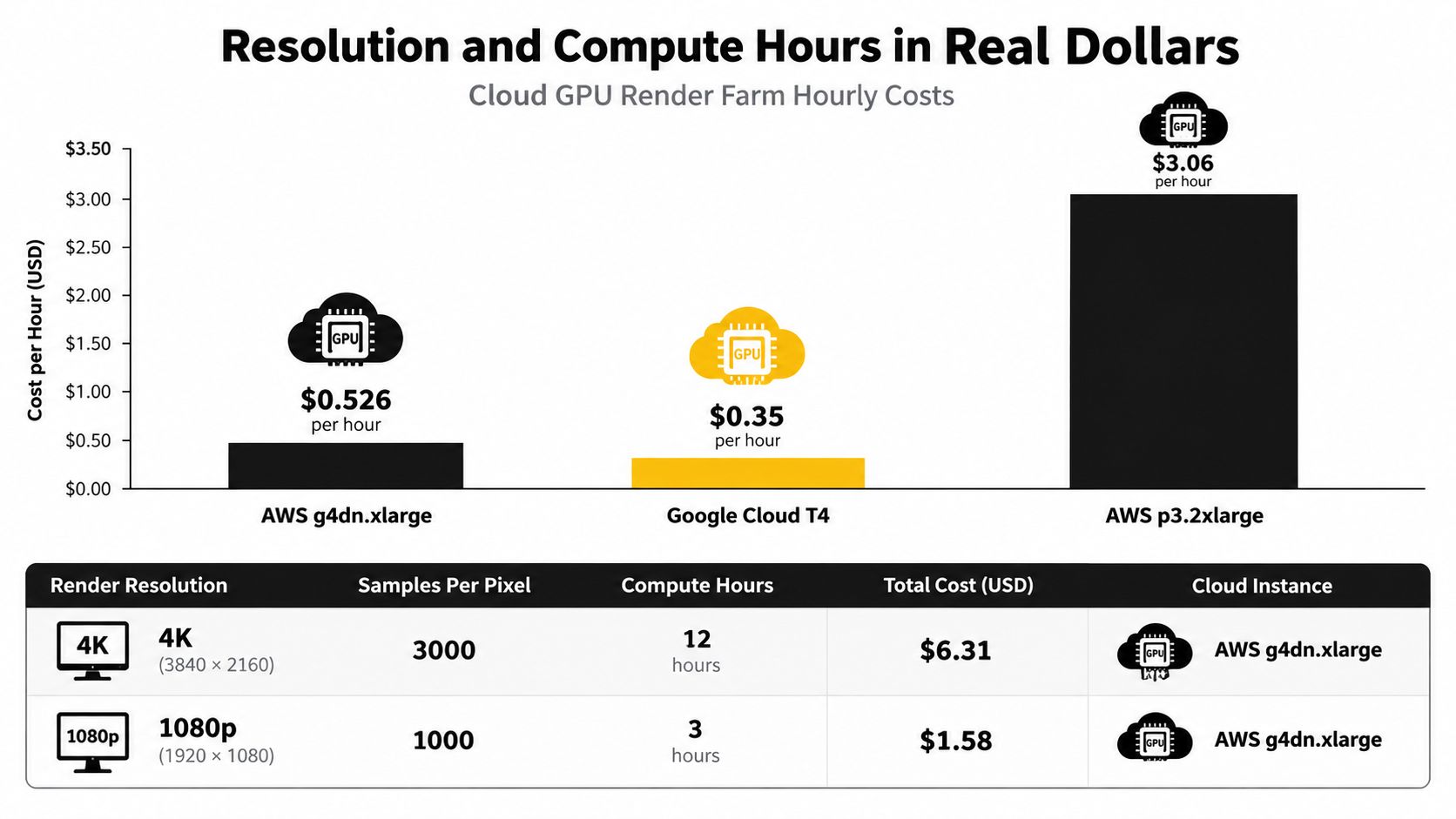
Cloud compute is measurable, but it isn't the whole project price. In an AWS example from August 2017, an Elastic GPU for Windows started at $0.05 per hour for a 1 GB eg1.medium GPU; paired with a t2.medium instance at $0.065 per hour, the total was below $0.12 per hour. AWS compared that with a previous entry-level graphical workstation price of $0.76 per hour, a reduction of more than 80% for applicable graphical workloads (AWS's Elastic GPUs announcement). That historical comparison helps explain the appeal of cloud rendering, but it doesn't price modeling, creative work, software, storage, or revisions.
Google Cloud lists an NVIDIA T4 instance at $0.35 per hour and a P100 at $1.46 per hour for the cited on-demand pricing (Google Cloud GPU pricing). Rates vary by instance, region, and purchasing option. AWS also notes that EC2 usage is billed in one-second increments with a 60-second minimum, and that G4 instances serve graphics-intensive work including CGI and rendering. AWS reports that G4ad instances provide up to 45% better price performance than comparable G4dn instances, while Reserved Instance commitments can lower effective hourly rates (AWS EC2 pricing).
Measure the full job, not just final frames
A useful estimate is hourly cost for compute resources multiplied by actual render duration, then expanded to include storage, data transfer, software, and production labor. Google Cloud's rendering benchmark methodology includes startup, driver and software installation, and shutdown latency, so short jobs can cost more effectively than nominal compute time suggests (Google Cloud's rendering benchmark methodology).
Quality settings matter too. A WebGPU path-tracing benchmark reported about 10 milliseconds per sample on suitable hardware, with 200 samples taking roughly two seconds under its test conditions. A separate stochastic-rasterization benchmark measured 2.7 milliseconds at one sample per pixel, 3.3 milliseconds at four samples, and 6.5 milliseconds at 16 samples (the rendering benchmark). Those results illustrate why cost doesn't scale identically across renderers and hardware.
For mattress imagery, use lower settings for previews, then reserve more compute for hero images, reflective fabrics, translucent materials, and close-up shots of stitching or quilting. Batch angles and material variations into a provisioned job where possible, and record failed or repeated frames as well as finished outputs. The resolution choices in graphics should match the image's job, not default to maximum quality everywhere.
Matching Deliverables to Mattress Storytelling Goals
The right deliverable depends on what the buyer needs to understand. An ecommerce shopper may need a clean view of the mattress profile and its materials. A retail associate may need a cutaway that makes construction easier to explain on the showroom floor. A brand team may need a bedroom scene for a campaign.
Mattress Render Deliverables at a Glance | Typical Cost Tier | Best Use Case |
|---|---|---|
Silhouette or clean product still | Lower, when the model already exists | Product-page gallery, retailer listing, catalog |
Digibun or layered cutaway | Middle, depending on construction detail | Explaining foam layers, hybrid construction, and product features |
Room scene | Middle to higher, depending on environment and styling | Brand campaigns, paid social, lifestyle-led ecommerce |
Animation or interactive view | Higher, depending on motion and functionality | Product education, configurators, sales presentations |
A silhouette isolates the mattress shape and finish. It can work well on white backgrounds and product pages where shoppers need a clear view without lifestyle styling. A Digibun shows what's inside, making construction visible instead of leaving foam layers or a coil system to a paragraph of copy.
A room scene places the mattress in context. It can support brand storytelling and help shoppers picture the product in a bedroom, but it also introduces decisions about bedding, lighting, furnishings, and composition. Retailers thinking about how visual context supports purchasing can also explore using furniture photos before you buy.
Build once, adapt the output
Animation and interactive views suit products that benefit from movement or exploration. A rotating view may help shoppers inspect the profile. A configurator can present product choices, while a short animated loop can explain a construction feature in an ad or sales deck. These deliverables need a clear purpose and technical specifications before production.
Start by listing where the assets will appear: product detail pages, retailer portals, showroom screens, sales tools, and paid media. Then group outputs that can use the same model. A master asset may support several camera angles and placements, but it won't eliminate the need for product checks, new compositions, or channel-specific file preparation.
How Revisions Compound the Original Quote
A mattress launch can begin with an approved model and a straightforward hero image. Then merchandising changes the firmness tier, legal asks the team to adjust a product claim, and a retail partner wants a different composition. Later, the seasonal campaign needs a version with a different headline area or room setting.
None of those requests is automatically a “small tweak.” Changing a claim may only require copy placement, while changing the mattress construction can affect the model, materials, and every image that depicts the product. A new retailer composition may use the same model but still require art direction, review, and fresh output files.
Define revision boundaries before production
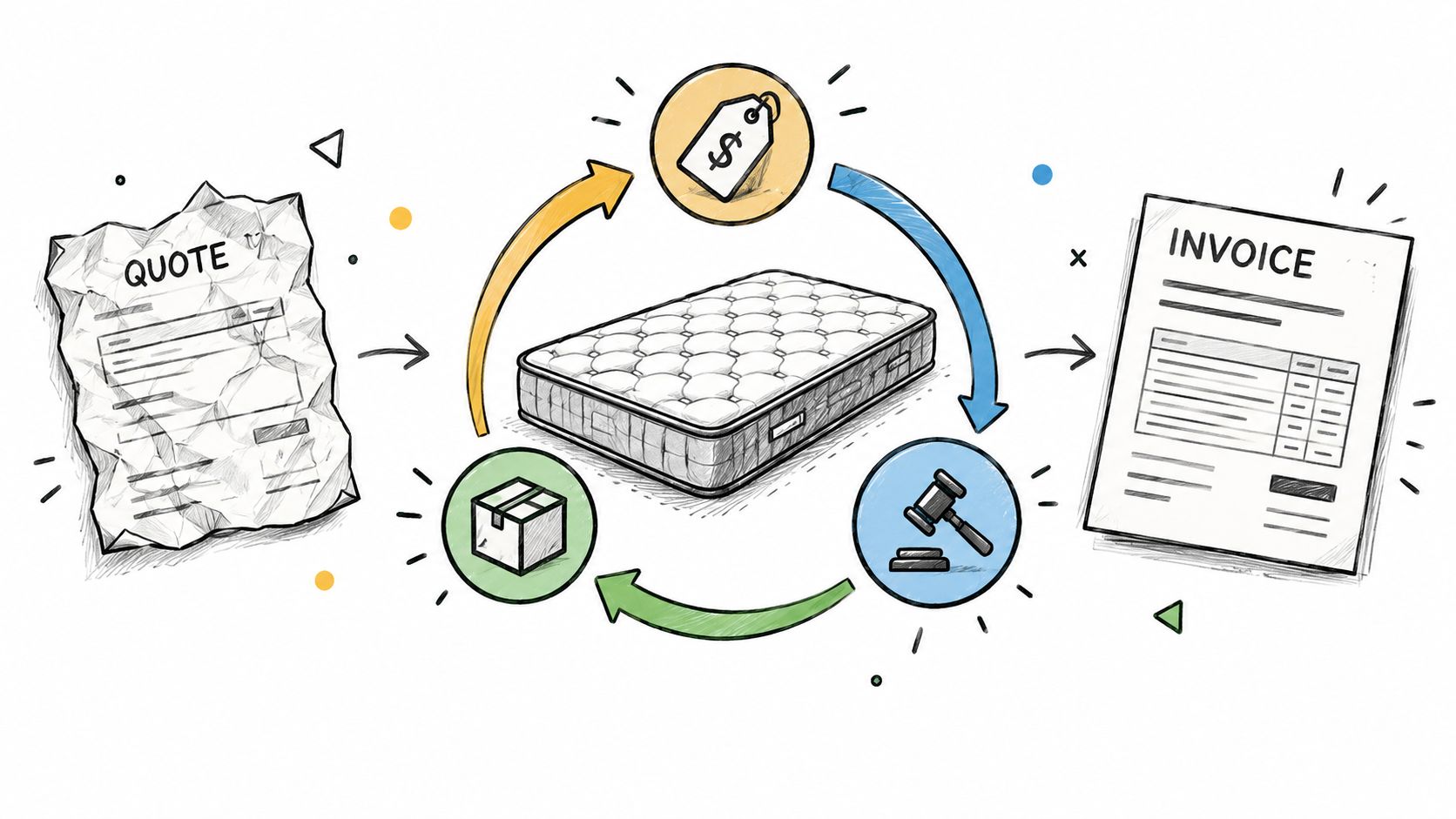
The invoice surprise usually begins with an unclear definition of what counts as a revision. A material correction within the agreed brief may be treated differently from a new camera angle, a changed product specification, or a new campaign format. Studio terms vary, so don't assume that “revisions included” covers every request.
Before approving the quote, ask the studio to identify:
Included review rounds: State how many rounds are covered and who consolidates feedback.
A revision versus new scope: Clarify how product changes, extra views, and new retailer compositions are billed.
Approval ownership: Name the product, merchandising, legal, and marketing reviewers who can sign off.
Version control: Agree how the team will identify approved files and retire outdated imagery.
Practical rule: Put the revision cap and change-request process in writing. Consolidate feedback from internal teams and retail partners before sending it to the studio.
A disciplined approval path protects both the schedule and the product story. For example, have product verify construction, merchandising approve the composition, and legal review claims before final output. That doesn't prevent every change. It makes clear whether a late request is a correction, a product update, or an additional deliverable.
Licensing Ownership and the Case for a Reusable Asset Library
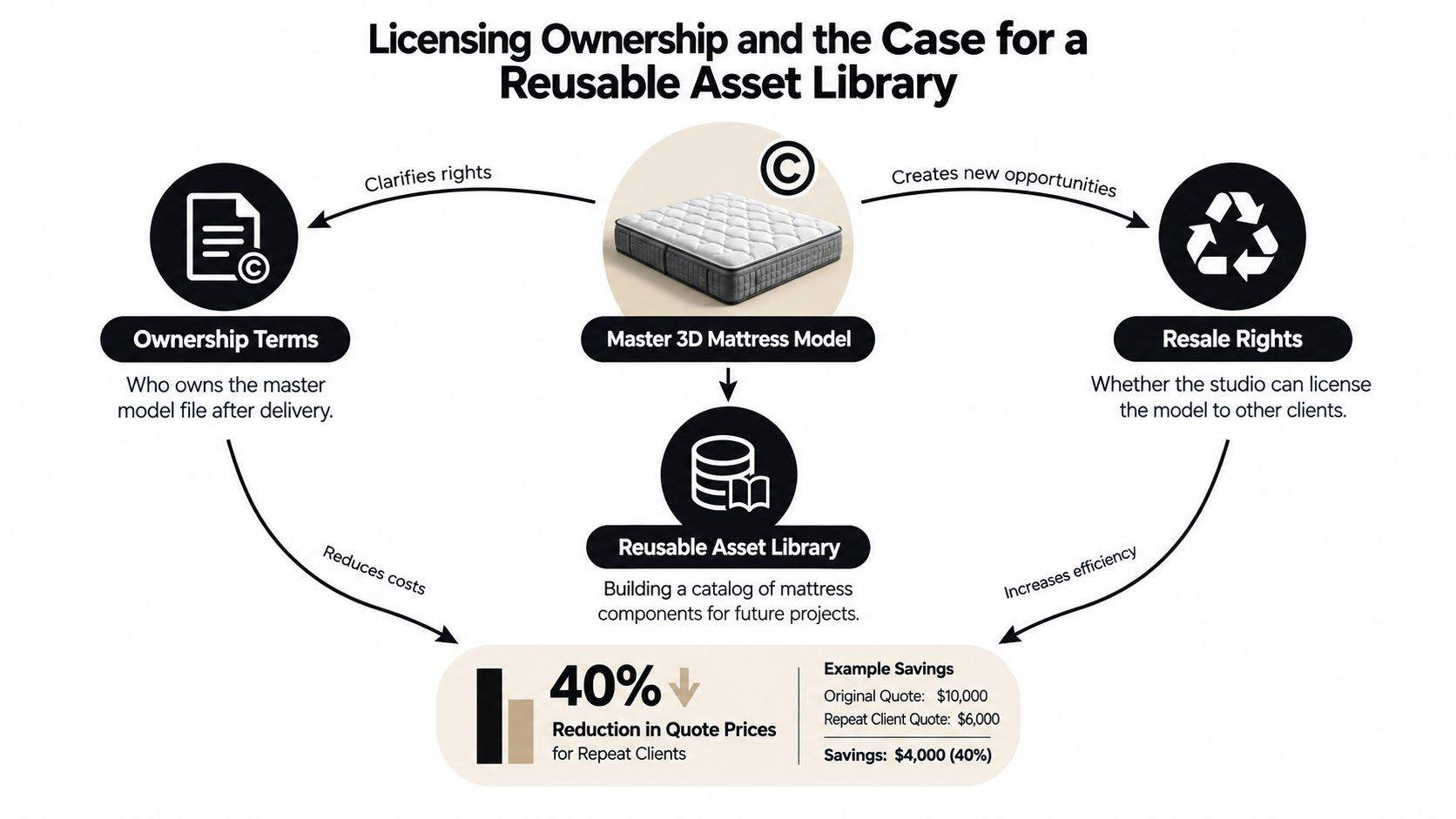
An image license and ownership of the master 3D model aren't the same thing. A quote may let your brand use the finished files for agreed purposes without transferring the editable model or its source assets. Before signing, confirm who owns the model, whether the studio can resell or reuse it, and what happens when the mattress changes or leaves the line.
What a usable library requires
A reusable library isn't just a folder of attractive renders. It needs a controlled master model, accurate product information, approved materials, clear versioning, and usage rights that fit the channels where the brand plans to publish. If the product team updates the ticking or construction, someone needs to identify which assets are affected and approve the revised model.
The payoff comes from reuse across ecommerce, retailer content, social, video, configurators, and sales tools. A new view may still require creative work and review, but it can avoid rebuilding the mattress from scratch. A marketing resource management approach can help teams keep approved files, versions, and channel outputs organized.
For a mattress brand, the useful comparison isn't a large library quote against one image quote. It's the cost of building a controlled asset against the recurring cost and delay of recreating product visuals for each campaign. Ask whether the studio delivers editable source files, documents model components, and supports updates when the product changes. Without that handoff, “reusable” may mean less than the buyer expects.
Budgeting Framework and What to Ask Before Signing
Plan the budget around what you need to build first. A straightforward still from an existing model calls for a different scope from a newly modeled mattress, a layered cutaway, or an interactive experience. The verified pricing guidance puts published single-still ranges at roughly $250 to $5,000+, but mattress brands should evaluate the deliverables and reuse terms behind any quote, not treat that broad range as a package price (rendering cost guidance).
Before signing, confirm:
Modeling scope: Does the fee include new modeling, cleanup of supplied files, materials, and future reuse?
Deliverables: Which views, resolutions, formats, and channel variants are included?
Revisions and approvals: How many review rounds are covered, and what triggers a change order?
Ownership and licensing: Who controls the master model, and where can the finished assets be used?
Inputs: Are product specifications, approved claims, and material references ready?
If the look of ticking and upholstery materials affects the brief, a resource on Lewis and Sheron Textiles upholstery costs can help frame material choices in a related context. For help evaluating a provider's process, compare 3D rendering companies against your product accuracy, approval, and asset-ownership needs.
Start with the product visuals that solve a clear sales or education problem, then scope the reusable model and future outputs. Mattress brands can also find industry education through Bedhead University and connect with peers through BEDNET, the free Bedhead Network for mattress industry professionals, with marketing insights, news, training resources, an industry directory, networking, and business tools.
Bedhead Marketing works exclusively with the mattress and bedding industry, combining 3D product imagery such as Digibuns, silhouettes, and room scenes with brand, digital marketing, and sales-training expertise. If you're reviewing a rendering quote or planning a reusable product library, talk with BEDHEAD about a practical approach built around your products and channels.